Showing posts with label Richard Strauss. Show all posts

Tuesday, 14 December 2021

I've Killed the Ghost

 And so to the opera. I confess that I wasn't at all familiar with the work of Gian Carlo Menotti, who, despite having been at one point the most performed of 20th century opera composers, hasn't been in fashion recently. However, I have now seen two of his works within a week, performed by different companies. He is obviously having a moment back in the limelight.
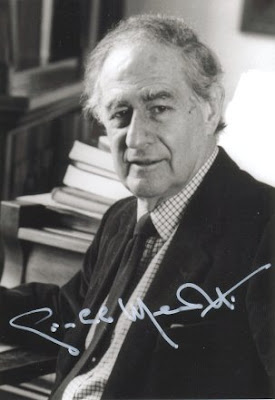
The Rough Guide to Opera uses the term 'overcharged emotion' to describe 'The Medium' and I think that's fair enough. Indeed, I might go so far as to say it was melodramatic. A similar question is posed as in 'The Turn of the Screw': are the ghosts real or the product of overheated imaginations? The usual operatic spoiler alert applies - someone dies in the end - and for some reason the director chose to make that a different person than the one indicated by the composer. I overheard someone speculate that we were thereby to assume that the other character had died offstage at some point and become a ghost himself, but your guess is as good as mine. Obscurum per obscurius.

The travails of the composer when faced with theatrical reality and the egos of producers, directors, performers and, above all, funders is the theme of Richard Strauss' 'Ariadne auf Naxos', which I've also seen; or to be precise I saw the Prologue, the first part of the opera, which deals with the backstage shenanigans before the opera - i.e. the opera within the opera - is performed. Think, 'Kiss Me, Kate' or the Mechanicals from 'A Midsummer Night's Dream'.  It was very well done. I felt that the soprano playing the character of Prima Donna - i.e. the soprano playing the soprano who would have played Ariadne had we got that far - had based her performance on Miss Piggy. My companion for the afternoon demurred on the grounds that she - the soprano - was too young to have heard of the Muppets. Tempus fugit.

The other Menotti piece was 'Amahl and the Night Visitors'. This was a seasonal production as the visitors in question were the Three Kings, bearing the usual gifts plus, a new one on me, a parrot. It was quite charming, although in a world where directors feel free to alter things as they see fit, I might have changed the lyric "Little child, may I touch you?". Tempora mutantur.

Sunday, 29 April 2018

Only Jokanaan, squire


And so to the opera. I have been to see Opera North's concert staging of Salomé, which I found curiously unengaging for all the technical merits of the performances. Last year I saw the original play and didn’t enjoy that much either so I suspect that my issue is with Wilde rather than Strauss. It’s full of the bad (Herod, Herodias), the deranged (Narraboth, John the Baptist) and those who are both (our title character), which all gets rather wearing after a while, even in operatic form.

The narrative arc – spoilt rich girl insists on getting her own way but then gets her comeuppance as well – is familiar enough. Offsetting it with the Baptist’s moral monomania and misogyny ought to provide more drama than it does. Herod seems to be hedging his bets between appeasing his wife’s anger and not doing anything too extreme in case John’s revelations from God are real; modern audiences will probably just be wondering whereabouts on the autistic scale the soi disant prophet sits.

In this production the dance of the seven veils takes place off stage. Just as it became apparent that was how they were going to do it a chap across the aisle got up and left. Sadly, rather than being a dirty old man storming out because he felt short changed by the lack of nudity, he turned out to only have gone to the toilet and shortly returned.  As Opera North – who have no aversion to their sopranos getting their kit off  – shied away from it, let’s have Ken Russell’s version. For the avoidance of doubt, this is not Strauss’s music and nor is it suitable for viewing at work:


The name of the dance isn’t of course mentioned in the bible and originates with Wilde’s 1891 play. I have recently re-read Umberto Eco’s ‘Name of the Rose’, set in the fourteenth century. William of Baskerville refers while in conversation with Adso of Melk to ‘the dance of the seven veils’ performed by Salomé. Given the author’s vast erudition and sense of irony one must assume that this is a deliberate in-joke rather than a mistake.

“Books are not made to be believed, but to be subjected to inquiry. When we consider a book, we mustn't ask ourselves what it says but what it means..." - Umberto Eco

Sunday, 23 October 2016

Mais où sont les neiges d'antan!

 “Die Zeit, die ist ein sonderbar Ding.”

And so to the opera. I'd never seen Der Rosenkavalier before and being both too lazy to do any research and too mean to buy a programme I was surprised to gradually realise that it was a Mozart pastiche, even to the extent of being over long. Still if one is going to find inspiration anywhere then why not start at the very top?

It's not really about the Rosebearer or indeed, as the original title apparently had it, about the Baron for whom he bears the the rose. Instead its central character is surely the Marschallin, a woman sent by her family into marriage with a much older man who willingly sacrifices happiness so others may marry for love. As the Buddha said “In the end these things matter most: How well did you love? How fully did you live? How deeply did you let go?".


Musically the highlight is the trio at the end where the voices of the three sopranos - the male lead is played by a woman and in a Shakespearean twist spends a lot of time pretending to be a woman - combine to mark the turning point in all their lives. For the Marschallin, as she subsequently leaves the stage on the arm of the father of the bride, a recognition that time has passed. As for the wisdom of having an affair with someone the best part of twenty years one's junior in the first place, Strauss and his librettist Hofmannsthal pass no moral judgement; therefore neither will I.