Showing posts with label mathematics. Show all posts

Tuesday, 22 November 2022

Even More Bell Curve Bollocks

 I'm sure everyone is familiar with the remark attributed to a senior French civil servant after something had been explained to him: "That's all very well in practice," he said "but will it work in theory?". I feel somewhat the same about the domino method of determining initiative for games of Piquet. I'd previously been very happy with it, and then I asked myself what theoretical underpinnings it had. I should have let it lie.


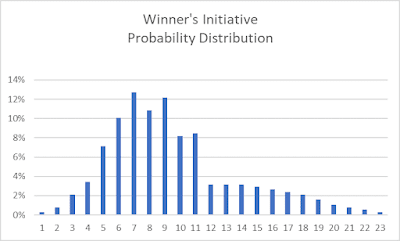
The winner's probability distribution is indeed, as I predicted, right-skewed and the mean (9.5) is higher than the mode (7). There is a long tail of high initiatives, which individually have a low probability, but collectively add up to quite a lot. One third of the time the winner will get 12 or more.

The graph of the loser's initiative isn't particularly illuminating. The loser gets a mean of 3.5, with a mode of 4. The system this replaced was opposed D20s with the winner getting the difference. That produces a mean initiative of 7 to the winner, with 0 to the loser (*). Therefore there's a net benefit of 2.5 to the winner and 3.5 to the loser.

Other points to note: 
  • 7% of the time the loser still won't get any initiative at all.
  • The mode of opposed D20 rolls is of course 1, so there's clearly less overhead involved in drawing dominos.
  • The loser can get as much as 10 initiative. That sounds good until you couple it with the fact that it can only happen if the winner gets 20, 21 or 22. Because of the way the initiative interacts with the card decks the chances are quite high that the winner will end the turn with that much initiative and so winning an initiative of 10 is definitely not the same as getting to use an initiative of 10.
  • D20s only give 20% chance of getting 12 initiative or more. 

So, my feeling that dominos give big swings to the initiative winner more often is (probably) correct. However, on average it's better for the loser, which was always the point. I still think I'd be inclined to take out all dominos with a six on, but basically, however unthought through the theory behind it was, it mostly works OK in practice.
 

* All the analysis excludes either the same domino or the same result on the dice, both of which indicate the end of a turn.


Saturday, 19 November 2022

More Bell Curve Bollocks

 As will have been long apparent, my preferred approach to this blog is to write any old rubbish and then forget it, on the basis that no one reads it anyway. Occasionally this backfires, such as in the case of my recent post about dominos as a means of determining initiative in Piquet. I have been asked if I can justify my assertion that the result follows a normal distribution. In particular, the question was asked as to what specifically I was referring: the winner's initiative, the loser's initiative or the difference between the two? A reasonable question.

Well, the results of drawing a single domino and adding the pips follow a normal distribution. If both sides did the same then subtracting one from the other would be the difference between two independent normal distributions, which would also be a normal distribution. So far so good. But apart from the initial drawing of the dominos that's not actually how we allocate initiative. Even more importantly, what we do with the results of the draw renders the probabilities of the winner's and loser's respective initiatives non-independent. So, the answer to the question is: no, I can't justify it.

The author Michael Green wrote a series of books called 'The Art of Coarse Acting', 'The Art of Coarse Rugby' etc. He never got round to 'The Art of Coarse Mathematics' for some reason (*), but had he done so then I'm sure that he would have drawn the attention of readers to two cop-out phrases beloved of mathematicians who either can't or don't want to work everything out in detail: 'by inspection' and 'result follows'. Therefore, by inspection I'm going to assert that, under our methodology, both initiatives have a right-skewed distribution with the mean being higher than the mode. As for the net initiative - who knows?

This correspondence is now closed.


* I should point out that in geometry and topology 'coarseness' is a real and important concept

Thursday, 17 November 2022

Bell Curve


The refight of Salamanca ended with a pretty overwhelming British victory. I came away thinking, as I often do after wargames, about probability theory. The ongoing rule changes to which I frequently refer are, as I hope you have realised all along, a feature rather than a bug. They are part of our (well James's really) Sisyphean attempt to develop the 'perfect' rules for any given period, usually but not always based on one of the Piquet family; a process which I rather enjoy and think the others do too. There are wargamers out there who indulge in a bit of Free Kriegspiel or in Matrix Games, but we in the Lower Wharfe Valley stick to the turning of cards, rolling of dice, drawing of dominos etc to establish the outcome of events. These randomisers usually involve probabilities which approximate a normal distribution (*). What we and other wargames developers are trying to do - although of course we wouldn't express it in this way - is to make sure that the centre of the bell curve is where it should be (**) on the x-axis, and that the outcomes which occur way along in the extremities of the tails don't ruin the game.


The second of those issues typically manifested itself in the original version of Piquet in the occasional very large swings of initiative leaving one set of players twiddling their thumbs while the other side got to move and fire all their units repeatedly. The second version of Piquet (i.e. FoB) got round this by giving each side the same initiative, while we adopted a domino draw mechanism that, for the most part, suits us by providing different, but mostly acceptable, initiative amounts for each side. It can occasionally go wrong though, and last night it did. The draw which one would most want is to get double six whilst one's opponent draws the six five. The chances of a particular side doing this are 1 in 784. Last night the British did it twice in an evening, say a dozen draws in total. I'll leave you to calculate how unlikely that is for yourselves (***). It did rather skew things. If I had been called in as a consultant by James, and I think you should assume that I haven't, I'd suggest taking out all the dominos with sixes on. As well as reducing the maximum initiative swing from 23:6 to 19:5 it would increase the odds of a turn ending early to 1 in 21, or virtually the same as in the original Piquet rules.

As for the other issue: is the centre of the curve for combat resolution where it ought to be? No, but it is of course still a work in progress. 


*     i.e. are normal in the limit

**   Given both our interpretation of history and our desire for a decent game

*** I believe that the number of times that particular draw of two dominos would be repeated in any given set of twelve draws would itself follow a binomial distribution, but I really can't be arsed to work it out.


Friday, 24 December 2021

The real part of every non-trivial zero of the Reimann zeta function is 1/2

 Or is it?

Otley, the town in which I live, has almost as many churches as it does pubs; and it has a lot of pubs. Because of this - the church bit not the pub bit - I and my fellow citizens regularly get pieces of paper put through our letterboxes informing us of 'the good news'. Indeed one minor upside of Covid is that the various congregations have stopped knocking on the door to tell me all about it in person. Anyway, today being Christmas Eve, I assumed that the home-printed sheet delivered this afternoon was something along those lines. But no, it was someone living relatively locally announcing to the world that they had proved the Reimann hypothesis, a conjecture which as I'm sure you all know dates from 1859 and is one of the most important unsolved problems in mathematics. Now that is good news.

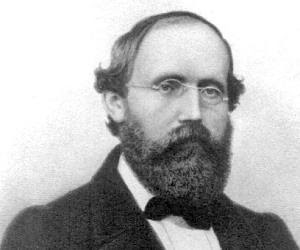
A chap with a beard

After having a celebration cup of tea and mince pie I started to wonder why the door-to-door delivery had been felt necessary, so I re-read the note. It turns out that the writer was appealing for anyone with a modicum of mathematical knowledge to double check her workings prior to her claiming the large prize on offer, which from memory is US $1 million. Sadly, an unimpressive degree in Mathematical Sciences nearly half a century ago is far from sufficient for me to feel qualified to volunteer. Still, it is the season of goodwill to all men, so I wish her joy in her search, even if her chosen method of making it seems a tad unorthodox. If any reader feels better qualified than me to help, then let me know and I'll put you in touch. In any event, when this auspicious event makes the headlines, remember that you read it here first.

It just remains for me to wish you all Gut Yontiff and a happy, peaceful and, above all, healthy time over Christmas.

Wednesday, 16 December 2020

Pythagoras Day

 It's a Pythagoras Day today (16² + 12² = 20²). There will only be a maximum of two more in my lifetime; I'm getting old.


Pythagoras is best known for demonstrating how to squash a hippopotamus, but, according to Wikipedia, among his lesser known sayings was "Do not take roads travelled by the public". Truly a man ahead of his time.

Much more reliable is the story of him going into a bar mumbling to himself "If a right-angled triangle has a short side X, a long side Y and a hypotenuse Z, then the square of Z must be equal to the square of X plus the square of...the square of...the square of...".

The barman says "Y, the long face".

Thursday, 20 August 2020

Pot98bpouri

 Some questions have arrived at the Casa Epictetus, and I am inclined to answer them:

Q1: Can you tell us how you hurt your neck? No, mind your own business, although I will confirm that no horses were involved

Q2: There is previous evidence that you are a Brentford supporter. Can you explain how they went overnight from being the form team not just in the division, or even in the country, but on the planet, to coming fourth in a two horse race? I have absolutely no comment to make on this subject.

Q3: Has any light been thrown on why someone thought it would be a good idea to donate a hand grenade to charity? No.

Q4: Is it the case that you set off the smoke alarm while using the laser cutter and a fire engine turned up? There may possibly be some truth in this. In my defence, setting fire to pieces of wood is an intrinsic part of the activity, and I was wearing a mask and therefore unable to smell anything.

Q5: How can you justify your assertion in the comments section a couple of days ago that there is a mathematical joke to suit all occasions? At last, a sensible question:


A mathematician is tired of maths and decides to become a fireman. At the fire station they give him a test to check his suitability. He is told to imagine a skip full of combustible material, a hose and a tap and asked what he would do if the skip were on fire. 

The mathematician replies, "Well, I put the hose on the tap, turn the water on, and put out the fire." Obviously that is the correct answer so they move on to the second question. The mathematician is asked what he would do if, on a fire inspection, he came across the same skip full of combustible material. "That's straightforward," he says " I would set fire to it."

This causes a certain amount of bewilderment so they ask him why. "Well," the mathematician replies, "that way I reduce the problem to one that I've already solved."

Monday, 17 August 2020

Small bomb thrown by hand

My absence from these pages has been primarily because I hurt my neck and sitting at the computer has been rather uncomfortable. In truth it has also been in part because nothing of interest has happened to me or indeed anywhere near me. However, I was awoken from my torpor today when the centre of town was suddenly sealed off by the police and several buildings evacuated. It turned out that someone had donated a hand grenade to Oxfam. As you do.


A better man than me could probably make a joke out of the fact that since shops are only accepting contactless payment at the moment, anyone who bought the grenade from Oxfam wouldn't need a PIN. However, until that better man comes along, we are left with the one about the mathematician being trained to use grenades. He was told to pull the pin and then count down from three before throwing it. It blew up when he reached minus six.

Friday, 5 June 2020

In Praise of Idleness

 I have been pondering on how little I have managed to achieve in the period in which I have been confined to my home. I have read a great deal, but other than that I have done nothing of any value. I was reminded of the words of Bertrand Russell, who said that he didn't mind the time he spent in prison for his pacifism during the First World War because the lack of visitors and other interruptions meant he could get on and do something useful. Later on, in 1932, Russell wrote an essay entitled "In Praise of Idleness", in which he pointed out something that, judging by the way the UK government's financial response to the crisis has been structured, is clearly still true today: the idea that the poor should have leisure has always been shocking to the rich.


In addition to his fame as a philosopher, his campaigning for nuclear disarmament, winning the Nobel Prize for Literature etc, Russell was of course a very distinguished mathematician. A while ago I formed the intention of writing a post about why so many wargamers are mathematicians; or possibly it was going to be about why so many mathematicians are wargamers. That lack of clarity about the aim might be why I never got very far with the exercise. In fact the only thing I had decided, was to preface the piece with a quote from Russell: "Mathematicians neither know what they are talking about nor care whether what they say is true". I suspect that we all know at least one wargamer like that.

Saturday, 18 January 2020

More 4

Two actuaries are grouse shooting. They see a grouse in the air and they both shoot. The first actuary’s shot is 5 metres wide to the left. The second actuary’s shot is 5 metres wide to the right. The actuaries congratulate each other, because on average they hit it.


So, back to BKC4. The following needs to be read in conjunction with the previous post. Once again our imaginary target is an infantry unit with strength 6 and saving throws are ignored.

In the open attackers need 4,5 or 6 to hit. They therefore expect to kill the unit by rolling twelve dice. For every hit that doesn't kill the unit a dice is re-rolled and the same result (i.e. 4,5 or 6 in this case) on any dice will result in the target being suppressed. They therefore expect to suppress the unit by rolling four dice. There are therefore three suppressions per kill.

In light cover 5 or 6 is required. The equivalent figures are 18 dice, 9 dice and 2:1. In heavy cover, with a 6 required, the figures are 36 dice, 36 dice and 1:1. The progressions are therefore:

Suppress:  4, 9, 36
Kill: 12, 18, 36
Suppressions per kill: 3, 2, 1

So, does it require nine times more firepower to suppress someone in hard cover than someone in the open? Maybe it does. Perhaps the rule designers arrived at that conclusion scientifically following much research and designed a mechanism to deliver the required effect. Or possibly they designed a mechanism that happened to give that result and left it at that. Your money your vote.

Would the ratio of suppressions to kills drop as the target moved into heavier cover? I'm going to come right out and say no; in fact I'm going to assert that the exact opposite would be true. And do you know what, I'm not going to offer any evidence beyond saying that it's bleeding obvious. Now, once again it is possible that after much research the designers have established that I am wrong and have designed the perfect system to deliver the result that they want. On the other hand it is also possible that they have not noticed the arithmetic implications of their design, not understood them, or don't care. Once again you can choose for yourself.

As I said in the previous post, whilst this issue irritates me (and let's be fair I'm a grumpy old man in the first place) it's not that important unless one finds oneself in the fifth circle of hell condemned forever to refight Sidi Rezegh by charging pointlessly at infantry dug in on an escarpment. But overall it does seem to me  that the authors are more interested in the ease of playing the mechanisms contained in their rules than the results which arise from them.

 I will return at some point to the issue raised by Hopalong Freitag as to the size and cause of the intersection between the set of mathematicians and the set of wargamers.

Friday, 17 January 2020

Linear versus exponential in BKC4

I have been asked to expand on my statement yesterday that "the benefits of being in cover increase in an exponential manner while the benefits of better quality or greater quantity are linear". Before I do so, let me clarify a couple of points:

  • The sentence in question is constructed using the rhetorical form of antithesis largely for literary effect. It's really only the cover bit that bothers me. Even then it's the least of the reasons that I don't like Blitzkrieg Commander; it got on the list because it features a lot in the Sidi Rezegh scenario.
  • I haven't actually read the latest version of the rules. I have read BKC2, but for BKC4 we are relying on James, who is umpiring. If there is some error in the way we are playing then I will be the first to hold my hand up and acknowledge that it's all his fault, although obviously I will not be angry with him, just disappointed.
  • I am well versed in the higher mathematics, but clearly can't be arsed to do any heavy number crunching, so have therefore limited myself to first order approximations; specifically I have chosen to ignore the impact of saving throws. Should anyone wish to take me on in the area of probability theory I feel obliged to remind you that my first degree was in Mathematical Sciences and to warn you that in doing so you will be entering a world of pain.
  • As a contrast I claim no particular knowledge of Second World War tactics, equipment, combat or anything else battlefield related really; I'm more of a grand strategy sort of guy. Some things don't look right to me - which is why I'm going to mention them - but if you tell me they are OK then I won't argue.

Blitzkrieg Commander is a D6 based game. Units have a number of attack dice and a range, either or both of which may be different for anti-tank and anti-personnel firing. There are slightly different rules for off-table artillery, but they don't change the overall point being made. As the quality of units increases (e.g. better types of tanks) they gain extra dice and/or longer range. Any unit firing within half of its range gains an extra dice. If more than one unit fires at the same target they add the number of dice together. All this is recognisable, perfectly sensible and, I believe, fits being described as linear.

When a unit or more fires on another the dice are rolled. In the open any 4,5 or 6 counts as a hit. If insufficient hits are made to eliminate the target (hits are only cumulative within the firing players turn; they are removed before the owning player's turn begins) then a number of dice equal to the number of hits made is rolled and any 4,5 or 6 causes the target to be suppressed i.e. it can't activate on its next turn. (Suppression markers are not removed until then end of the owning player's turn.) It is, in essence, a game of suppression; make the enemy keep their heads down and then carry out your own objectives. We can see that, in the open, we would expect to suppress a unit once for every four dice rolled against it. Four dice would, on average, result in two hits, and two hits would, on average, result in one suppression.

When in cover two things happen: the to-hit throw required becomes harder and there may be a saving throw (actually armoured vehicles in the open get a saving throw as well). I'm going to ignore saving throws in the calculation because they complicate matters and actually work to skew the thing even more anyway. So in the next type of cover the roll required is a 5 or 6 to hit, and also subsequently to suppress. The same logic as above shows us that we expect to suppress the target for every nine dice rolled against it. In the hardest cover we have to roll a 6 to hit and afterwards to suppress. We therefore expect one suppression for every thirty six dice. It is my contention that the progression 4, 9, 36 is exponential in the everyday sense that the increase is becoming more and more rapid.


It is also my contention that something isn't right. An infantry unit firing at close range at another infantry unit rolls four dice. The target requires six hits to destroy it. So if you get caught in the open you would expect, on average, to get suppressed if the opposing unit activates and fires once and destroyed if it activates and fires three times. If the target is in hard cover then in order to expect to suppress it on the first activation (I use the term 'expect' in the sense of probability theory) you would have to fire at it with nine units. Now, clearly one would anticipate using a larger number of units, but does nine seem right to you? That point is to some extent moot, because the real problem is how many turns you would expect it take you the eliminate the target. The answer is, of course, also one. Having thrown the thirty six dice one would expect six sixes. In other words firing against infantry in hard cover it is as easy to kill them as to make them keep their heads down; or, if you prefer, it is as hard to make infantry in trenches keep their heads down as it is to kill them. Does that make sense?

In reality I am well aware that if you repeated this unlikely 9 vs 1 scenario many times you would on occasion suppress some units without killing them because the other side of the distribution curve contains a whole number of units killed without being first suppressed. To which I reply, so what? 


Tuesday, 26 November 2019

Cornucopia

This piece, by sculptor Edward Allington, is entitled 'One Unforgiving Moment', which perhaps indicates that the smaller vases result from the breakage of the larger, but for some reason exist as miniaturised replicas; fractals rather than fragments.


Elsewhere in his work Allington differentiates between factory based mass production and large scale craft workshops in which those involved have the opportunity to display pride in their work. Viewing it as a modeller and wargamer it may not be surprising that it made me think of an historical original being reproduced both in miniature and in great number.

Anyway, mention of fractals reminds me of my favourite mathematical joke:

Q: What does the B in Benoit B. Mandelbrot stand for?
A: Benoit B. Mandelbrot

Wednesday, 27 March 2019

I informed you thusly

Your bloggist is not normally one to point out that he told you so. But can I refer you to my post of 19th November 2018, when I drew your attention to the fact that Kenneth Arrow had won a Nobel prize for proving mathematically that it was impossible to design a voting system to obtain a majority decision when faced with multiple alternatives.

What I didn't mention was that there is one exception to that rule - dictatorship.

Monday, 11 March 2019

Antisemitism in the Labour Party

"Seldom, very seldom, does complete truth belong to any human disclosure; seldom can it happen that something is not a little disguised, or a little mistaken." - Jane Austen

If overseas readers will excuse the omphaloskepsis, I intend to return to the carryings on within the UK Labour Party. One of the ironies in my recent post on the splits within the Labour Party was that the quote at the beginning was of course from one of a (fictional) band of Jewish zealots, and those same overseas readers referenced above may be excused for believing from the title of this post that the starting point relates to prejudice against Jewish people, zealots or otherwise. Instead it all actually stems from that old hobby horse of mine: democracy with the party. Antisemitism, to the extent it exists at all, is merely tangential.

I think it was Woody Guthrie who said that one can only write what one can see, and the reason that I haven't before covered this subject is that I have never witnessed any antisemitism within the party. As it happens my own MP, Alex Sobel, is both Labour and Jewish and when asked a few weeks ago he said that he had never experienced any antisemitic abuse, contrasting that with that he received from extreme right-wingers following speeches he made in parliament about the holocaust and the new Polish anti-defamation law. In mathematics there is a concept known as reductio ad absurdam, which basically means that something is disproved if in order for it to be true something patently ridiculous would also have be true. For me we reached that point a fortnight or so when a Labour councillor defected to the Tories citing antisemitic abuse she had received as the cause despite not actually being Jewish in the first place. It turned out that what had actually happened is that she hadn't been re-selected to stand in the forthcoming elections and, her enjoyment of being on the council being stronger than her political principles she had transferred to the opposition on the promise that she would be allowed to stand for them. All that seems to suggest to me is that the comrades made the right call at the selection meeting.

I see four drivers behind all the current furore:

Firstly, and notwithstanding what I have written above, there clearly is abuse going on. I am not going to rehash arguments that you all know about the pernicious effect social media has on discourse of all sorts not just political. And I have myself on previous occasions lamented the lack of historical perspective and intellectual hinterland of our leading politicians; it is obviously not going to be any better amongst their acolytes. The world is full of ignorant bastards and some of them are inevitably going to be found in the Labour Party; when they are identified as such they should be thrown out.

Secondly, there are people who are actively seeking to widen the definition of antisemitism to include any criticism of Israel. Many of the complaints actually relate to such criticism, and if we value free speech these must be rejected. This is an important point of principle which should be defended, Voltaire like, even by supporters of that state.

Thirdly, it is a convenient stick with which to beat Jeremy Corbyn. In this case I think that he, and those who support him will just have to suck it up. If it wasn't antisemitism it would be something else; it it wasn't Jeremy Corbyn it would be someone else. Cast your mind back to the vitriol thrown at the previous leader of the party by the Tories and the right-wing press: he couldn't eat a bacon sandwich properly (if the overseas readers are still with me, as bizarre as it sounds that is absolutely true), he somehow stabbed his brother in the back by standing against him (whilst mysteriously the opposite wasn't the case), and he couldn't be trusted with national security because his father was a foreign (i.e. Jewish, which you have to admit is quite funny in the circumstances) refugee.

Fourthly, it is a lever to try to remove democratic control from the hands of party members who have only recently seized it. Margaret Hodge wants to close down branches that dare to comment on the situation, whilst her and her friends appear daily in the press with their sob stories and crocodile tears. Tom Watson has called for the deselection process for MPs to be 'suspended', thereby rather giving the game away about his real concern. These people see politics as a nice little game for a select coterie - of whom they are of course members for life - while the rest of us are foot soldiers and cannon fodder. This affair is one further (possibly the last?) attempt to turn back the tide; Canute without the self-knowledge. But, as on that occasion, it won't work.

Saturday, 15 December 2018

The Merit of Preservation

I occasionally take a look at what drives readers to the blog (*), hoping in vain for the return of 'gay porn' to the top ten google searches that lead people here. It seems that the latest significant source of traffic is an online plagiarism checker. I don't know whether they are checking the originality of what I write or whether anyone is copying it, but either way the idea is very amusing.

Let's have Tom Lehrer singing about both plagiarism and mathematics:


In other news the festive season has officially started at the Casa Epictetus, as I have won a giant Toblerone in a raffle.


* It is sadly all too obvious what drives readers away from the blog.

Tuesday, 27 November 2018

Ecclesiastes Chapter 1 Verse 2

"The vanity of intelligence is that the intelligent man is often more committed to 'one-upping' his opponent than being truthful. When the idea of intelligence, rather than intelligence itself, become the staple, there is no wisdom in it." - Criss Jami

So, not only has the blog gone missing for a while, but even before that the pseudo-intellectual quotient had sadly fallen away. Well today that changes. But I need to warn you that there were some attendees at the two events I am about to describe who were only there with the intention of showing off during the Q&A session; I was shocked , shocked!, to find pretentiousness involved when people met together to discuss Jean-Paul Sartre and Arnold Schoenberg.


The problem with a talk entitled 'The Existentialism of Sartre' is that even if you find yourself disagreeing with it you also partly suspect that you haven't properly understood it. And yet, the more I listened to the speaker talk about 'Being and Nothingness' the more I came to the conclusion that Sartre didn't know a great deal of mathematics. I find it rather difficult to accept that the lack of something (i.e. nothing) is meaningless unless a human consciousness is pondering its absence. Anyone disagree? What I should have done is what most of those making a point did, which is to start by stating that they hadn't read any Sartre since they were students. Call me a cynic ["You're a cynic!"], but you need to be neither a mathematician or a philosopher to realise that doesn't guarantee that they read any while at university either. I haven't read any Sartre since graduating (*) and I certainly didn't read any while I was there, unless possibly he was reviewing albums for the New Musical Express under a pseudonym. The collective brainpower of a room full of people who forty years ago had existentialism sussed, but had all managed to forget it along the way somewhere eventually came up with the question of what J-P would have made of someone's right to change gender (**). The speaker felt that he would have seen it as a case of essence before existence and therefore been against it. Someone in the audience riposted with Simone de Beauvoir's quote "One is not born, but rather becomes, a woman." and we were left none the wiser.


"It's bad faith to wear my clothes without asking, Jean-Paul."

I learned somewhat more at the Schoenberg, a guided performance of 'Pierrot Lunaire' which was both well planned and executed. The first half was an introduction to the composer, the intellectual milieu of Vienna in 1912, and the original poem by Giraud. There were interviews with the conductor, director and various musicians, although not oddly the singer, who was 'preparing'; who says sopranos are divas? The background to atonality was discussed and there was an interesting, though frankly irrelevant digression into serialism. Questions from the audience were almost subsumed by someone who appeared to be intent on listing every Harrison Birtwistle work he had ever seen (no me neither), but when they came ranged from "Why did sprechstimme disappear after this work was written?" to "What can the collapse of the Austro-Hungarian empire tell us about the UK leaving the European Union (***)?". The answers were along the lines of: it didn't actually, and quite a lot now you mention it.


Theresa May visits Brussels

The second half contained the performance, which was obviously very good in its own terms, but about which I shall only say that I am glad I went along and experienced it - my mind is duly broadened. The staging was simple and effective with the moon of the title being represented by a lantern in a way that wouldn't have been out of place in "A Midsummer Night's Dream". As to what it was about; I'm afraid that I have no idea. There seemed to be a suggestion that despite the part being specifically written for a woman, that the main character is entirely and definitively male; thereby demonstrating that there is nothing  new under the sun. I'm going to say repressed sexuality was involved - the key figure in Vienna at the time was of course Freud - and death - because she did seem to mention it a lot plus it contains episodes called 'Gallows Song' and 'Beheading' - but beyond that you are on your own. One analysis I read said that Pierrot - who may or may not be Pierrot, or a man, or indeed real - ends with no hope of redemption; which gives you some idea of how cheery it was. Schoenberg himself said that it was a mistake to try to work out what it was about, instead one should go home whistling the tunes; I shall interpret that as the famed Germanic sense of humour at work.


"You know how to whistle, don't you Arnie? You just put your lips together and blow."


*      Actually I have in fact read "The Age of Reason", but to say so rather spoils my line of argument.
**    One of two subjects in the UK at the moment that seem to be obligatory on every agenda of every meeting regardless of what is supposed to be being discussed.
***  And there's the other.

Monday, 19 November 2018

The terrible tyranny of the majority

"Democracy is a pathetic belief in the collective wisdom of individual ignorance. No one in this world [...] has ever lost money by underestimating the intelligence of the great masses of the plain people. Nor has anyone ever lost public office thereby." - H.L. Mencken

I continue to plough through 'Numbers Rule'. Regular readers will not be surprised to learn that my original grasp of the higher mathematics involved has been found wanting. Condorcet's Paradox is indeed apposite, but unsurprisingly there have been further theoretical developments since the late eighteenth century. What we in the UK are living through is actually a worked example of Kenneth Arrow's Independence of Irrelevant Alternatives condition. The really bad news is that this condition appears in a paper proving that it is impossible to design a system of voting which can correctly choose between multiple alternatives. I think we all knew that empirically, but it's good to see a mathematical proof.

Citoyen Condorcet

Arrow won a Nobel Prize, but Condorcet didn't fare so well. He was in many ways a man after your bloggist's own heart - mathematician, accountant, revolutionary, married to a beautiful woman twenty years his junior - and in addition he was a friend of Thomas Jefferson and Adam Smith. On the downside he made the mistake of falling out with Robespierre and, well, that was that. One of the book's conclusions seems to be that the only method of government that does away with manipulations, paradoxes and inconsistencies is a dictatorship; in this case it certainly did away with Condorcet.


Citoyen Arrow

As a by-product of all this I have discovered that in dealing with the common problem of dividing a fixed amount unevenly such that each subset is an integer and they add back to the original number (come on, don't pretend you've never had to do it) that the best way to proceed is by rounding on the geometric mean. All these decades I have been rounding on the arithmetic mean. I feel foolish.

Thursday, 15 November 2018

Meantime we shall express our darker purpose

A while ago I saw a broadcast of Sir Ian McKellen's recent 'King Lear'. It was, of course, superb (Sinéad Cusack played a female Kent - I know you like to hear about the cross gender casting), but it was also very long. It started at 7 o'clock and the interval was at ten past nine. A fair number of punters never made it back afterwards. I stuck it out on the basis that if he could do it on stage at his age then I could certainly do it in the audience at mine. The reason for mentioning all this is not to dwell on my numb bum, but because I feel that it behoves me to pass comment on the current omnishambles of a government that we have here in the UK. I find I can do no better than quote Gloucester speaking in that play: "Tis the time's plague, when madmen lead the blind".


It has seemed apparent to me for some time that we are living through is actually a worked example of the Condorcet Paradox. My recent viewing of 'Twelve Angry Men' obviously brought to mind Condorcet's Jury Theorem, and so I sought out a cheap second hand copy of Szpiro's 'Numbers Rule' an interesting book dealing with the mathematics of democracy. I have to confess that I hadn't previously recognised that the balloting system used by the Richard III Society to allocate tickets for the re-internment of a somewhat later lord of Gloucester in Leicester Cathedral - a process which you will recall left me without an invitation - looked suspiciously like one described by Plato in his 'Laws'; yet another reason to dislike the man.

Let's finish with a qualitative rather than quantitative take on democracy: 

"The theory of democratic government is not that the will of the people is always right, but rather that normal human beings of average intelligence will, if given a chance, learn the right and best course by bitter experience." - W.E.B. Du Bois

We shall see.


Thursday, 26 April 2018

Credit where it's due

"I am so changeable, being everything by turns and nothing long" - Byron

My intention to revisit the Great War didn't last, and I have been playing about with the Roman version of Pony Wars. I first outlined what I was intending to do in this post from over a year ago, so I've got round to it pretty promptly for me. Unsurprisingly however it's not as straightforward as it seemed at the time. I like the arrival of Celts being caused by Roman movement (a direct steal from The Men Who Would Be Kings) and have been working on the assumption that one could then just get rid of the cards completely. However, I have been unable to come up with a satisfactory alternative mechanism for either  the activities of the various Roman civilians on the table or for attacks on them to be triggered. Any suggestions would be welcomed.


The post from last January referenced above would appear to contain something that isn't strictly true - gasps of incredulity from the readership - and which I would like to correct. The person to first suggest the idea of programmable computers wasn't Babbage at all, but rather it was Ada Lovelace. I studied the history of mathematics as part of my first degree and should have been more precise. I am very sorry indeed for having misled you. After all, as her father also wrote, you "should envy no one the certainty of his self-approved wisdom". Perhaps Daniel Mersey's AI opponent in the rules should be known as Countess Lovelace instead of Mr Babbage - it still sounds suitably Victorian.

Wednesday, 10 May 2017

Some you win...

It's looking as if there might not be any wargaming for the rest of the month. "What on earth," I hear you ask "will you write about?", which is a question both pertinent and fair; this blog does not willingly stray from its narrow remit of toy soldier related doings. But I am a bloggist, and a bloggist blogs, so I will just have to scratch around to see what else I can find to entertain you with.

Let's start, perhaps controversially, with some wargaming. We had a Crusades game last week, which I have to say probably won't live long in the memory. It did produce an entertaining enough evening's play, despite turning out to be somewhat one-sided. As I've said before the Piquet family of games are chaotic (in the mathematical sense) and ensure widely differing games from the same starting point because of the way the cards and the initiative interact. On this occasion the Franks didn't move very quickly but the Saracens did, and that made all the difference; the Frankish knights didn't manage to charge home, but the horse archers easily got into shooting range. The narrative - as so often - made perfect sense: a small group of crusaders sets off in great heart across the desert, but the going proves slower than they expected, they are overwhelmed by swarms of tribal cavalry who can never quite be brought to hand to hand combat, they are forced to stop moving and make a stand as they are surrounded, and - their morale gone - they accept their inevitable fate.

Unusually, but consistent with the above, the game ended in a clear victory despite the fact that all units were still on the table, none from either side having been destroyed or routed off.