Saturday, 31 August 2013

Miniature Wargames issue 365

Well, no sooner have I pronounced portentously that Miniature Wargames is not what it used to be in my day than I find that I rather like the new issue. "Silence is safer than speech." as a great man (that would be me then) once said.

Firstly, I admire the stance that Henry Hyde has taken in his editorial against the use of the swastika as a decorative device. It is a symbol whose political connotations cannot and must not be ignored.


Secondly, there is the article by two Belgian wargamers, Phil Dutré and Bart Vetters, on the battle of Aspern-Essling in 1809. The twist in their participation game version of the battle is that the model soldiers act as the terrain while the scenery provides the playing pieces. I cannot begin to tell you how much pleasure that element of the game design gives me. Whilst you'll need to read the article (i.e. buy the magazine) in order to read the details, let me just quote Goethe (sneaking the pseudery back in there) to wet your appetite: "We will burn that bridge when we come to it".

All the above doesn't mean that there aren't bad bits. Neil Shuck is a columnist whose point escapes me. His view of wargamers is astonishingly simplistic and procrustean. I have a softer spot for Mike Siggins, although I don't know why. His column in this issue reads like, and quite possibly is, a reprint of one that was published in Wargames Illustrated a decade or more ago. He has had some sort of life-changing epiphany, is going to downsize his collection, focus his efforts more and paint more and game less. I'll bet you a pound to a penny that next month he has found a new period to champion - almost certainly with figures sculpted by the Perry twins - and decided that playing rather than painting is the thing. He is, let's be frank, Mr Toad. However, he is not without some charm. I have long suspected that his column is actually the work of Alan Bennett (a man surely never before mentioned in a wargames blog) and you will no doubt be aware that Bennett wrote an excellent version of 'Wind in the Willows' for the theatre. In the film of Siggins' life (already in pre-production or so I hear) he will be played by Thora Hird; and I defy MS Foy or anyone else to tell me that she's dead.

Mike Siggins gives his 'View from the Armchair'

Friday, 30 August 2013

Browning is back! Hello! Hello!

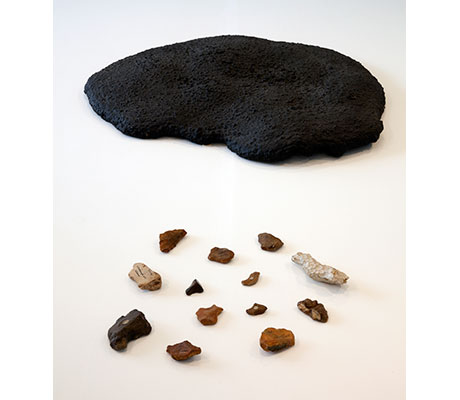
I have been to the new exhibition at the Henry Moore Institute and it is, to use the argot of the professional art critic, pants. The premise of the show, entitled 'Indifferent Matter' is to 'explore how objects resist and are coerced into becoming sculptures' and it does this by including a load of old rubbish - literally in the case of a lump of asphalt, which Robert Smithson wittily named 'Asphalt Lump' when he picked it up from the waste around a steel mill in 1969 and claimed it was a sculpture because he said it was.

That isn't to say that there isn't some nice stuff. There is a Warhol piece 'Silver Clouds' which, if deconstructed could be dismissed as simply some helium filled balloons being blown about by a fan, but which, in place, is actually rather splendid. The best pieces are some exquisite 4,000 year old jade discs from China. They are here because no-one knows their original use, but their effect, far from supporting the exhibition curator's hypothesis, is instead to highlight the importance of craftsmanship. For me the futility of the whole thing is exemplified by the eoliths on display. They are meant to pose the philosophical question as to how there importance has changed now it is known that they are natural rather than man made. Now I, self-evidently, do like a philosophical question, but not one of those for which the answer is bleedin' obvious. They clearly do not now have any importance, except as a minor, minor footnote in the history of how science sometimes gets things wrong.

So why do exhibitions like this get put on? In the words of the Nobel Prize winner Seamus Heaney whose death has been announced today (1).

'Now, you're supposed to be
An educated man, '
I hear him say. 'Puzzle me
The right answer to that one.'

And on the subject of bad science, this is interesting.

I also attended a lecture on the subject of the Cyclops through the ages, starting - reasonably enough - with Homer and moving via Harryhausen to Spongebob Squarepants. Fascinating.


(1) except of course for the Prometheus in Aspic blog, which announced it some years ago

Thursday, 29 August 2013

Hello, good evening and welcome

This blog has once again doubled its number of followers. Admittedly it can only keep doing this by losing some along the way to religious persecution, but surely it's still worth celebrating. So welcome to MS Foy, author of the always interesting (although not completely trustworthy in matters of literary mortality) Prometheus in Aspic blog.

And it's good to finally have a follower from this country; well, near enough as makes no difference.

The namesake of Monsieur le Général, a man who literally fought from Valmy to Waterloo, suggests that I am not keen on readers. I don't believe this to be true.  I basically write for myself, as a sort of therapy. Being creative - no, seriously - is, like taking physical exercise, a method of remaining grounded when all is otherwise not well. I also write a much more serious, work-related blog which gets more readers and in which I have to be more concerned with who those readers are. Here, as long as I don't insult anyone (apart obviously from James, Peter, Mark, Tim, Ken, Euan and any passing god-botherers or Tories) then I don't care.

Salut.


Sunday, 25 August 2013

More meeples

It was Leeds Meeples at the Victoria Hotel today with a very large and very noisy turnout. There must have been thirty people at the peak, which the room coped with mainly because we were able to open the fire door. I'm not sure what would happen in the winter. Like many things the group seems to be a victim of its own success.

Anyway, games played were King of Tokyo, Citadels, Alhambra, Pandemic and a quick couple of rounds of Uno just to finish off. Of the two that I hadn't played before Kings of Tokyo is a very light, but highly enjoyable nonetheless, dice game. Yahtzee with monsters as someone described it. And what's not to like about giant monsters fighting in the middle of the Japanese capital? And I won; as opposed to Alhambra in which I came last by a considerable margin.

Pandemic is a co-operative game, and I'm not especially fond of those, but this wasn't so bad. I'm not sure whether that's despite the fact that we lost and humanity was destroyed by infectious diseases or because of it.

Saturday, 24 August 2013

попурри 10

If there are two certainties about this blog they are that the readers don't like posts about politics and that I don't like Margaret Thatcher. The third of the two certainties is that it's my blog and I'll write what I want and if you don't like it you can sod off. Except of course for the Russian spambots who I would be very sorry to lose as readers and to whom I say "Да, пожалуйста, я хотел бы больше пенис".  Anyway, I have been to an exhibition of cartoons about Thatch which was interesting rather than enjoyable.One observation I would make is that even those cartoonists who might count themselves on her side didn't actually like her, and the others positively hated her.


Re-enactor action at the Royal Armouries has been very medieval during the school holidays, in support of the jousting tournament. This continued today with amongst others a minstrel chap wandering round in silly trousers playing a mandolin type thingy. However, even before the place opened it all seemed rather different when residents were awoken by brass instruments playing raucous, almost military music accompanied by much shouting. It turned out to be an Indian wedding procession making its way across the canal bridge on the way to the Mumtaz. This took a long time because it was apparently against the rules to go more than a metre or so before the men in the party launched into a new highly energetic dance. The climax, on the steps of the restaurant, was a frenzied solo performance by the groom who was whirling in a positively berserk fashion to great applause both from the wedding party itself and the large crowd of onlookers which had been attracted by all the excitement. The bride was, of course, nowhere to be seen. Presumably, wherever she was, she was hoping that the husband-to-be would have at least a little bit of energy left when it was all over.


Like all gamers I have an unhealthy interest in dice. For example there are the non-transitive dice, currently with James Roach who is, no doubt, just about to unveil the use both apposite and elegant use that he has worked out for them. So I am delighted to be able to refer to you these:


Full details are available here; well worth visiting for dice-heads.

 до свидания

Thursday, 22 August 2013

88mm in the a/t role - was it really that good?

I wrote a while ago about the question of whether units that historically performed well should be rated in such a way as they are guaranteed to repeat those exploits or such that it is merely possible that they may do so if the gods are with them. The issue arose again last night when, once again, Rommel's small quantity of 88mm a/t guns rather wiped the floor with the British tanks. I have no in-depth knowledge of the period and can't really comment except to say that it does rather detract from the game. It probably wouldn't be so bad if the British had the better tanks and the 88's strength was just some sort of compensation. But the Panzer IIIs have a better range, they are backed up by Panzer IVs that act as very effective self-propelled artillery against the British anti-tank gun line and then there are all the other, quite handy, German a/t guns.

I had a few of these when I first started wargaming

I say all the above having once again, due to the luck of the draw, commanded the Germans on the second day of Sidi Rezegh. The terrain had been further upgraded - and looks extremely good; check it out at Fiasco if you can - and the forces were already deployed when we started. The latter at least saving me the embarrassment of bringing my tanks on in the wrong place. The other change was that the British had two commanders with James taking the main tank force which under his leadership didn't actually appear all evening. This change meant that it was, for once, Peter who was the recipient of his tactical advice and as usual it was a) aggressive and b) rubbish. The most egregious example was his urging Peter to put the three companies of tanks already on the table in the place where I immediately, courtesy of the 88, destroyed two of them without actually breaking sweat.

James Roach's tactical inspiration

This time round I did follow Rommel's instructions and attack with my infantry - with mixed results - although I still think that this is the flaw in the scenario. In real life Rommel apparently did this to divert Campbell's attention while the armour arrives on his flank. However, in the current scenario it rather does the opposite. If one is the British then one would rather use any initiative won to fire at things and reload than to turn cards. This is because the British don't want to turn their Desert Rats card until after the Germans have turned their Afrika Korps card (this is all to do with the entry of their respective armour) and so, in my opinion, any attack by the German infantry does the opposite of what, one must assume, Rommel wanted.


The other change was the use of dominoes to generate initiative and, so far, I think the consensus is fairly favourable. Initiative has been reasonably even, but there have been large runs (I got 21 at one point), and yet one always gets some on a reasonably regular basis.

...are OK so far

Tuesday, 20 August 2013

One for the malchicks

 Hello droogs; it's been a while.

The legendary wargames room from a rarely seen angle

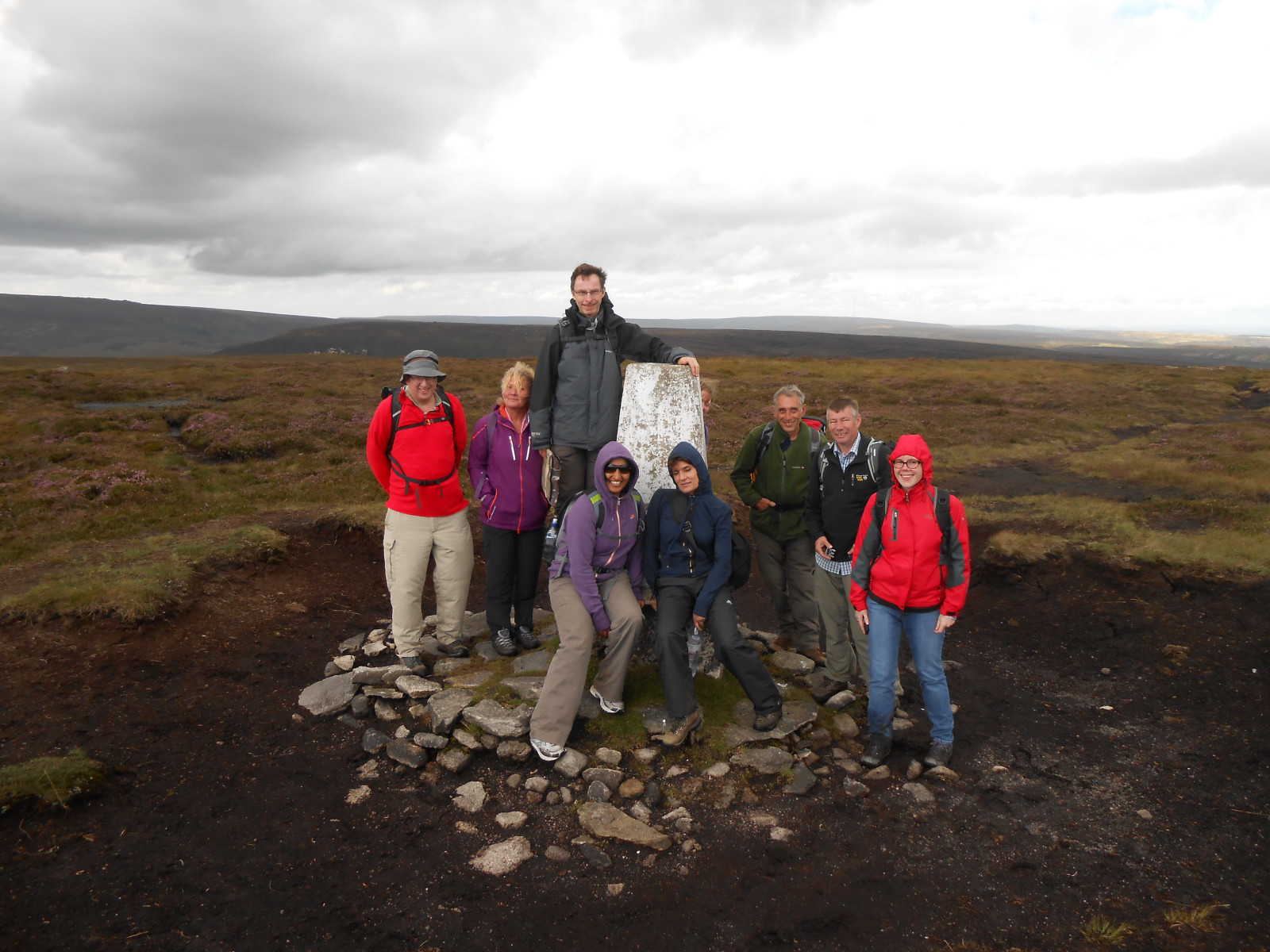
So what have I been doing? Well I went on a walk along Outer Edge from Langsett Barn, which was very pleasant apart from the climb up to the trig point, which nearly rendered me an ex-blogger. Anyway, there were some lovely views, of which this isn't one.


Your correspondent demonstrates his grasp of camouflage

I also went to see 'The Heat'. It's not in the slightest bit original, but I laughed a few times and that'll do me. Sandra Bullock appeared to be intending to enter a Michael Jackson lookalike competition as soon as shooting was over; if you ask me she was a cert to take first prize.

And finally a word about the Guardian. I have long lamented the fact that it isn't anything like the paper it used to be. Only the other week they printed a complete load of nonsense about the US invasion of Grenada, which long-suffering readers will remember is my specialist subject. However, all is forgiven. Yesterday they revealed the scoop that Dante Gabriel Rossetti (whose sister -  those same loyal readers will also remember - appeared in these very pages just a couple of weeks ago) kept a pet wombat, which died after eating a box of cigars. If that's not investigative journalism then I don't know what is.

Thursday, 15 August 2013

Sidi Rezaghhhhhhh!

The refight of the second day at Sidi Rezegh finished in the same way that assumes the original did - no-one had the will or the stamina to continue. At the point this occurred I think there was agreement that the Germans would eventually win. Firstly, they still had their armour pretty much completely intact and the British had no way of attacking them. Given the lack of a turn limit the Germans had all the time in the world to use a combiantion of their off-board artillery and Panzer IVs to reduce the British gun-line of 25 pounders and 2 pounder a/t guns without risking their Panzer IIIs. Secondly, they had some morale left and the British didn't. At one point both sides had zero (the British passing a major morale test at this point) and there had been an outbreak of gaminess as both sides sought to destroy stands just to get the morale advantage rather than further any more strategic objectives. The British artillery failed miserably against the German infantry by rolling rubbish as they had done throughout - although in fairness they had had better luck against the German anti-tank guns - while the 88mm made hay against the British tanks - as it had done throughout.

The initiative was fairly even, as indeed it probably was across the whole game. What skewed things was that in the first week, when Peter won all the initiative, he had nothing much to fire at, whereas in the second week, when I won it all, I was able to use it to destroy about a third of the British armour for no losses in return. my two Brilliant Commander cards for being a skilled leader didn't hurt either.There were no rule changes this week, but the terrain had been upgraded with some nice new wadis and road culverts. Brigadier 'Jock' Campbell had obviously got wind of his impending VC as well because he was mysteriously better than in previous weeks.

The main purpose of playing the scenario is to help prepare it for use as a display game at Fiasco. In the light of all the chuntering about my - highly sensible - reluctance to attack with my infantry, the nice wadi in which they were sheltering is to be removed. The extra space is to be used for a wider space between the 2nd escarpment and the airfield which will give more flexibility to the British deployment.

As for my views on Piquet - I have retrieved my copy of the Master Rules and, I bet you didn't see this coming, I'm actually going to read them.

Tuesday, 13 August 2013

Pot9pouri

Right, having given Piquet an uncalled-for kicking for a few days, it's time to return to random drivel.
  •  A meagre turnout in the White Swan on Sunday meant a chance to get out Revolver, a two player game that I have owned for a while, but not previously had a chance to try. It turns out to be a cracking little game. Playing as Jack 'the Crow' Colty I managed twice to reach the Mexican border against being once gunned down by the law enforcement forces of  Colonel Ned McCready. Very enjoyable.
  • It was the once a month concurrence of the White Swan on a Sunday afternoon and the Leeds Meeples on a Monday evening. Furthering my aim of playing boardgames rather than card games wherever possible I tried Alhambra for the first time, notwithstanding the fact that although there are several boards involved one actually plays on the tabletop. It was another good game and I cam a creditable second courtesy of achieving the longest external wall during the final round.
  • I found myself watching a documentary about The Eagles a couple of days ago. Despite the undoubted musical talents of Don Henley and Glenn Frey neither of them come across as people in whose company one would wish to spend any time. Anyway, that wasn't wanted the point I wished to make. I personally was more struck by Frey's revelation that the genesis of the song 'Lying Eyes' was in Dan Tana's. Now anyone who spent time at Griffin Park in the 1980s and 1990s - and, believe me, I spent many hours at Griffin Park during that period - will have been aware of Tana. However, while I knew that he ran a bar in LA, I didn't realise at the time that he ran the bar in LA. There's an interesting, if old, article here. Sadly, although I drove past it a couple of years ago the circumstances (long day at Magic Mountain, not yet checked into the hotel) weren't conducive to going in.
And finally, and for reasons which require no explanation, here's a photo of Cameron Diaz.


Monday, 12 August 2013

Dog returns to its own vomit

That's from Proverbs 26:11; further proof that I am in touch with my religious side.

So, following yet more lack of interest in my views on Piquet I have decided to revisit the subject. I think my opinion can best be summed up as:

Piquet works best when
  • the majority of command and control issues (such as force composition and deployment) are carried out prior to the game starting i.e. outwith the card/initiative system completely. 
  • during the game c&c is limited to existing plans degrading - or occasionally working better than expected - or to the impact of local commanders rallying troops, fighting in the front line or, and this is especially prevalent when I play the Italian Wars, dying.
  • units typically use ranged fire independently at targets of direct threat to them
  • melee (or the close range fire simulated by melee in Piquet) is the primary cause of units retreating or worse
  • units with two different weapons - typically a missile weapon and a melee weapon - can use them at the same target; or where units with one weapon can use them against different targets - such as guns firing HE or AP.

It works least well when
  • c&c is a major in-game factor (issues such as enemy dispositions becoming better known , artillery spotting, air support and so on)
  • units fire and move in co-ordinated support of each other and to deny movement and firing opportunities to enemy units
  • where ranged fire is the primary means of attack and where melee/close assault is an exception)
  • where the game is significantly about relative maneouvre (e.g. air warfare or fleets in the age of sail)
  • where units have two weapons designed to be used against different targets - such as tanks with both a main gun and machine guns
 I have contrasted Ancient and WWII applications because they, er, offer the biggest contrast. However some of the problems do crop up in Horse & Musket. Piquet played straight doesn't lend itself to artillery barrages at the beginning of battles or indeed to battalion guns. And then there is the  Napoleonic equivalent of denying the enemy opportunities to move or fire, namely the presence of cavalry forcing infantry into square. Now personally I think that Piquet does deal with this perfectly adequately. If you don't put them into square when you get the chance (in other words when the card is showing and you have the initiative) then you're going to get ridden down and it serves you right. However, it's quite clear that many gamers prefer to tweak it to allow a bit of extra c&c (in the from of 'hasty squares') because they believe there is a flaw that needs addressing.

Sunday, 11 August 2013

20th Century Piquet

Absolutely no-one has asked me to elaborate on my theories about Piquet in the modern world and therefore I feel it is incumbent upon me to do exactly that. For the purposes of the exercise I shall treat all Piquet family games (i.e. standard, Command Piquet and FoB) as the same thing even though they are clearly not. And, of course, it's worth remembering that the only Piquet that I've ever played has been with the Ilkley Lads, both before and after the great Old School schism, and for all I know they play it completely wrong.

Anyway, back to the theory. My view is that in a generic ancient style combat ('sticks and stones' in the words of Mark Dudley) there aren't any real opportunities for command and control. After lining them up it's just really about moving them forwards until the battle lines clash. The card/initiative elements of Piquet work brilliantly at modelling the friction and fog of war. How effective will missile fire be? Will both wings and the centre move together or will one part of the army be more aggressive than the other? In those few circumstances where some sort of coordination is appropriate (e.g. the switching of the Hastati, Principes and Triarii in Punic Wars Roman legions) then one will get the required combination of cards/initiative often enough to make it work, but it's not guaranteed. Oh, and even here the three types of cards (Infantry, Cavalry, Artillery) aren't really enough and one has to add in a special one for Elephants.

Zoom forward to the twentieth century and having only three types of cards definitely don't work - why is an 88mm (or 2pdr) a/t gun reloaded on an artillery card, but the same thing on a Tiger (or a Crusader) is reloaded on an Armour card? - and the command and control which is required to be modelled is of a somewhat higher degree of complexity. In this case the necessary card/initiative combination will rarely, if ever, arrive.

I do have thoughts regarding the Horse and Musket period, but can't be arsed to write them. And naturally I don't have any practical suggestions to address the points that I do raise. Although presumably you are all impressed by me being the only person in the world to remember Command Piquet.


Thursday, 8 August 2013

Sidi Rezegh, the tanks arrive


"I shall never complain about not getting any initiative again." is what I said to Peter as we left James' house last night. The previous week had seen him getting the vast majority of the initiative, but last night I basically got it all. We don't count who gets what so one has to rely on impressions, but I think that we all shared the same opinion. And while it's clearly more fun to turn cards and act on them than not, extreme swings do spoil the game for both parties. As I've said before I really enjoy the Piquet family of games, but can understand why others are put off by this aspect. There were some mutterings last night about trying methods involving dominos and I'd certainly be up for trying an experiment.
'The moon stood still
On Blueberry Hill
Because it didn't win any initiative'


Rather than give a blow by blow account of the battle I thought I'd list some of the other things that I don't like about Piquet or, to be more precise, the WWII version.

  • I don't think the card activation system allows the complex activities of 20th century warfare to play out convincingly. It works brilliantly when there are a limited number of types of troops i.e. when the randomness is about how many times one gets to shoot before melee occurs or whether one gets a chance to rally between combats and so on. To my mind this is OK all the way up to Horse and Musket periods, but WWII (on which I claim no particular expertise by the way) is too complicated to be reduced to Infantry, Artillery and Armour. I have no quibble with the work the rules authors (from Bob Jones original concept through to James' constant tweaking) have done in portraying the effect of individual weapons, but I don't think they work in combination.
  • Scenario specific objectives never seem to work in combination with the base Piquet mechanic of morale chips. It might be heresy, but I'm tempted to do away with morale chips in WWII and reward stand losses inflicted with a gain in initiative and base morale challenges on an initiative pip cost. Given the extremely high level of tank losses suffered in the Operation Crusader battles it's difficult, based on my superficial level of knowledge, to see why morale is such a factor. Instead the issue would seem to have been issues of quality of troops and material (which Piquet models well) and momentum (which I think would be modelled by rewarding success in combat with more initiative, which of course is what Piquet already does in those periods where melee is the main method of resolving combat). It's all hypothetical because I shall never run a WWII game, but it's worth noting that James and Peter came to a similar conclusion regarding opportunity fire i.e. that the core mechanism didn't work in WWII.
  • Taking advice from James. I need to clarify this; James is clearly adept at the finer details of Piquet such as which units to fire in which order at which targets etc and worth listening to at such times. However, on the broader subject of tactics his advice is always to attack and it's always bollocks. The longer this game has gone on the more convinced I am that I was right not to attack with my infantry straight away. This is in large part because of the loss of morale chips involved.
So, a prediction is called for. I think the British will win next week because the Germans are going to run out of morale chips. You heard it here first.

Saturday, 3 August 2013

Pot8pouri

  • Did you know that the length of the day at the equator is 12 hours plus a few extra minutes, these being essentially caused by refraction through the atmosphere and the fact that the sun is a disc rather than a point of light. This length of day is constant and doesn't vary throughout the year. The equator is, of course, the only one of the five major lines of latitude (the others being the tropics and the arctic/antarctic circles) whose position is a) unrelated to the axial tilt of the Earth and b) fixed (all the others are migrating slowly as the Earth's axial tilt varies). It is possible that some ill-informed people may believe that the location of the Tropics of Cancer and Capricorn relates in some way to the length of the day at that latitude rather than, as in reality, simply representing those locations furthest from the Equator where the sun can be directly overhead at least once a year. Poor deluded fools.
  • They are jousting at the Royal Armouries at the moment and, almost unbelievably, it continues to be scorchio. I was standing outside the main door this afternoon as one of the participants came past in his armour on his way from the tilt yard, presumably to get changed. I'm not sure that I've ever seen anyone look so hot. He was however accompanied by two buxom wenches carrying all his gear. I'm not entirely clear how authentic that is.
  • My hat with magical properties is proving very useful, especially during the test matches. I get lots of admiring looks, particularly on trains although, as you will appreciate, it doesn't work too well in that environment.

Friday, 2 August 2013

Barbara Hepworth

I have been to the Hepworth in Wakefield; a very pleasant looking building approached across a bridge over the Aire-Calder navigation. It has a permanent collection of items associated with Barbara Hepworth, both finished artworks and examples of the production process, plus various other exhibitions, some visiting and some there all the time.


I've always liked Hepworth's signature sculptures - the smooth ones with the holes - although I couldn't really tell you why and I certainly couldn't give an intellectual justification. And of course anyone growing up in London in the 1960s as I did will have regularly seen her work on Oxford Street. In fact there is a prototype for the Winged Figure on show here and unsurprisingly it looks a lot bigger from close up.


The rest is a mixed bag. One current exhibition is from Haroon Mirza and is frankly rubbish. It is pitched as a successor to Marcel Duchamp's readymades. Now I hold Duchamp in high regard (I bet that makes him rest more easily in his grave) and the more alert amongst you will remember that I included his 'Nude Descending a Staircase, No 2' in a posting a couple of weeks ago. It is indeed the very fact that he could paint that gave him the right to present urinals and the like as pieces of art. Mirza however has given no indication that he can do anything except assemble a load of old tat and surround it with flashing lights.


Of the rest, I liked Michael Andrew's 'A Man Who Suddenly Fell Over' with which I wasn't familiar before. They also have three nice Tissots, a chocolate box guilty pleasure. For those intent on heading to Leeds to look at the Scots Greys and Gordon at Khartoum there is another Tissot on the adjacent wall to the latter. The ones in Wakefield are better, especially 'Portsmouth Dockyard'. For those who need a wargaming fix, the chap in the middle is in the Black Watch.


Thursday, 1 August 2013

Sidi Rezegh, day 2, evening 1, part the first

Yesterday saw an enjoyable, if quiet, first night of the second day at Sidi Rezegh - as it were. Not a great deal happened and casualties were light. next week should, one assumes, see more action as more troops arrive, specifically the German armour.

I came in for a certain amount of stick for not having pressed the attack, despite my briefing saying explicitly that's what Rommel's orders to me were. In my defence there were a number of extenuating circumstances:

  • not much initiative - cliched, but true.
  • my mental picture of how my forces would fit into the space available for deployment didn't work, but I set things up according to my plan regardless; I'm not entirely sure why.
  • the initiative that I did get, I chose to spend on artillery barrages which achieved nothing much. On the other hand if one doesn't use the artillery to soften up defended positions before attacking them then what is the point of having it?
  • When I was persuaded to launch a smoke covered attack the relevant rules were changed before I had even moved the troops and it ended badly. Note to self - ignore James' advice.
The Germans drink coffee instead of attacking
 Anyway, whilst my inactivity has allowed Peter to deploy tanks and guns further forward than I would have wanted, all is by no means lost and we shall see what develops next week. I am also, as it happens, a brilliant commander complete with two wild cards. All I need is the initiative so I turn the bloody things.
Rommel sets a bad example by drinking coffee himself

Tuesday, 30 July 2013

Remember me...

This blog has been rather lowbrow recently and, shock horror, has had quite a high wargames quotient. Apropos of nothing therefore, here is a poem by Christina Gabriel Rossetti.

Remember me when I am gone away,
         Gone far away into the silent land;
         When you can no more hold me by the hand,
Nor I half turn to go yet turning stay.
Remember me when no more day by day
         You tell me of our future that you plann'd:
         Only remember me; you understand
It will be late to counsel then or pray.
Yet if you should forget me for a while
         And afterwards remember, do not grieve:
         For if the darkness and corruption leave
         A vestige of the thoughts that once I had,
Better by far you should forget and smile
         Than that you should remember and be sad.


Can I point out to any god-botherers still reading this that Rossetti was an extremely devout High Anglican and that she acted as the model for her brother's painting of the Annunciation.

Monday, 29 July 2013

Pot7pouri

  • There is an excellent, well-illustrated write up of a Historicon playtest of Eric Burgess's Vauban siege game on his blog. Regular readers will remember that I am very much looking forward to these being released and intend to expand my WSS set-up in this direction. They will also remember that I don't have anywhere to live and that I haven't done any painting/modelling for almost a year. These are, however, mere details.
  • There was a brief boardgaming session at the White Swan yesterday with a game each of Vineta (oddly not such a good game once you know the rules) and The Three Musketeers which I won as the Cardinal at the last gasp. 
  • I seem to have been transferred to the German side for Wednesday's Sidi Rezegh scenario. As Major General von Rammstein my job is to prove that the British can win during operation Crusader whilst at the same time laying down some Neue Deutsche Härte industrial metal riffs.
 
The second escarpment is mine


Sunday, 28 July 2013

Hard fought draw

This didn't happen

The third and final week of the WWII Western Desert game proved to be, for me at least, the most enjoyable. Piquet's initiative swings stayed within the bounds that make it add to the game rather than detract from it and, the game having moved forwards somewhat, we actually had some close fought action between the tanks.

Regular readers will remember that Peter had a plan which hadn't worked very smoothly because he didn't get the right cards, his infantry in particular not appearing very keen to advance towards the central hill. I had a plan which didn't work primarily because it was crap, and in particular because I had brought one third of my armour on in completely the wrong place. I had amended this plan with the intention of concentrating two thirds of the my armour against half of the German tanks. Strangely enough that didn't work either. Plan three was to try to negate the Panzers' superiority by basically charging straight at them; a tactic that has a certain amount of historical validity having been tried in practice by the 8th Army.

This plan actually gained some traction and I manoeuvered myself into a position to launch four close assaults if only the appropriate card could be turned; which astonishingly it immediately was. At this point I had no morale chips left, but Peter didn't have many either so my plan was to win the easy assaults first (tanks vs infantry, Crusaders vs Panzer IIs) thereby moving myself into the position that he was giving me morale chips and press on to destroy his armour. Obviously what actually happened was that despite rolling the higher dice in all four assaults I lost the lot and made the morale position completely safe for Rommel.
This did happen

I was only saved from losing under Piquet's normal rules (lack of morale leading to failing a major morale test) by the specific scenario turn limit. Whilst Peter could destroy/rout any units that I had on or near the central hill I basically had too many of them for him to achieve this in the time available. a draw was called.

I won't comment much on the rule changes because they'll only change again anyway. It was too easy to rally retreating units (it became apparent to me that morale challenging was a waste of time; it was much better to leave enemy units there to be destroyed otherwise they would simply and inconveniently reappear), but that applied to both sides so didn't affect the outcome. I'd rather lost my grip on the artillery and air support rules, but wasn't entirely convinced by how they were working in practice; targeting seems a bit easy in both cases and I wasn't impressed when my air superiority arrived after a very long wait on one card and then immediately left on the following card.

Overall, a good game although I'm not entirely sure one can ever win as the British. If it was revisited I would suggest some sort of Peter Pig style pre-game element so that initial deployments aren't quite so random, but as usual I have no specific suggestions in mind.

Friday, 26 July 2013

Offensive, moi?

Who'd have thought it? Yesterday's post about some late 19th century paintings has caused me to lose 50% of my followers in one fell swoop. I'm assuming it can't be because I was slightly dismissive of religion and those with religious beliefs. Correct me if I'm wrong, but I'm pretty sure that there wouldn't be any Christianity without persecution. You should be bloody grateful to me for giving you a chance to turn the other cheek.

Today's re-enactor at the Royal Armouries is, for some unexplained reason, a dinosaur.

Thursday, 25 July 2013

Myth

"The great enemy of the truth is very often not the lie, deliberate, contrived and dishonest, but the myth, persistent, persuasive and unrealistic." - John F. Kennedy


I could write a whole blog on the irony of that quote coming from JFK of all people. However, I shall restrain myself and address the subject that I had in mind. Last night saw the Operation Crusader game that we have been playing come to a sort-of conclusion. It ended anyway. I shall write about it in due course as no doubt will James. Between weeks two and three James had, as is his wont, changed the rules, including some aspects of the morale/training classes of the troops. Coincidentally this month's Wargames Illustrated contains an article by Barry 'League of Augsberg' Hilton on the questions of which units deserve superior performance status on the tabletop and how is this attained. As one of his examples he takes the Royal Scots Greys performance at Waterloo; his point being that while they performed admirably, no-one could possibly have known this in advance, and so rather than being rated as superior at the start of the battle they should be average and if the luck of the dice/cards are with them they will live up to their illustrious forbears and if it isn't then they won't. he further ascribes part of any reluctance on the part of wargamers to do that to Lady Butler's famous painting 'Scotland Forever!'.


The original of this is, of course, in Leeds Art Gallery and so I decided to go and take another look at it. Painted in 1881, it has no value as a historical record and is - exactly as Hilton implies - simply propaganda. Furthermore, while current day wargamers may take it as supporting the elite status of the 2nd Dragoons, I suspect that it was in fact simply meant to support High Victorian British Imperialism. The curators at the gallery would appear to think so because it is hung on the same wall as another painting that will no doubt be familiar to readers: 'General Gordon's Last Stand' by George William Joy.


Naturally no-one knows how Chinese Gordon met his death, although even those who point to the negative aspects of his character (his religious views were somewhat odd even by the peculiar standards of those who, er, hold religious views in the first place) don't denigrate his physical courage, so it's all at least possible. It has, in any event, become the accepted version and - if memory serves me right - Charlton Heston's demise in the 1966 film owes a debt to this portrayal.
The imperialist apologia is completed by a third painting on the same gallery wall, the truly dreadful 'Drums of the Fore and Aft' by Edward Matthew Hale, depicting the selfless sacrifice of child musicians in order to rally the regiment.


For those wishing for an antidote to all this there is a sculpture in the same gallery by Bob and Roberta Smith which acts as a commentary on the Joy painting and draws parallels between 19th century and 21st century western imperialism in the Muslim world. For those wishing to be reminded of the reality of war I would also recommend, currently to be found hanging in one of the upstairs galleries while on loan from a private collection, 'Night Arrival of Walking Wounded' by C.R.W. Nevinson, the marvellous futurist war painter who served as an ambulance driver in France during the First World War. That's the truth, rather than the myth.


Wednesday, 24 July 2013

Doors and sardines

And so to the theatre. Last night it was 'Noises Off' Michael Frayn's extremely funny farce about a farce. I think the author's stroke of genius is the structure, which enables him to both have his cake and eat it. The play within the play allows him to incorporate scenes of immense cheesiness which, if played straight, would cause embarrassment to both playwright and actors, but which are nonetheless hilarious. The scenes in the 'real' play allow him to mock the concept of farce through its commentaries on the 'pretend' play whilst at the same time delivering, particularly in the second act, a genuine farce of the highest class. 'Nothing On'. the play being performed by the actors that the actors are playing, falls steadily apart across the three acts from a not terribly good start in the first place. One could put forward all sorts of suggestions as to what that disintegration represents, but given Frayn's well known interest in physics, I would suggest that it is no more than the second law of thermodynamics. Although, on reflection, there isn't actually much more than the second law of thermodynamics anyway.


I mentioned in this blog a few days ago that I was prone to superglue accidents. In 'Nothing On' one of the characters superglues one hand to an income tax demand and the other to a plate of sardines. As Oscar Wilde said "Life imitates art far more than art imitates life".


And yes, trousers are dropped.

Monday, 22 July 2013

Loose Windscreen

And so to the cinema. It was perhaps fitting after the great man's disappointing failure to emerge from the helicopter last week that I should go to see 'Springsteen & I'. I had assumed that it was showing in Leeds because Bruce is opening the new Leeds Arena on Wednesday, but actually it was showing everywhere on the same day. I don't have a ticket for the concert, which is made easier to bear by the fact that they were £75 each.


Anyway, the film consists of interwoven concert footage and fan tributes and rather good it is too. One rather striking element is the astonishing cultural divide between the Boss's European and US fans. One set - you must see the film to find out which - are (mostly) staggeringly pretentious whereas the other lot are somewhat more human and self-deprecating. As a clue just let me say that the British audience that I saw it with laughed at one type of fan and laughed with the other. The biggest idiot was, as it happens, a Canadian; possibly combining the worst of both worlds.


The picture above obviously has nothing to do with Bruce Springsteen, but I thought I'd include it before David 'Posho' Cameron's internet police make posting it a criminal offence.

 И, товарищи, я могу только сказать, что вы поступили правильно, когда вы выполнили вашу королевскую семью. Мы должны сделать то же самое.

Sunday, 21 July 2013

Piquet

I have been remiss in posting about Wednesday night's game. Partly that's because not a great deal happened. The anticipated tank carnage didn't happen and will presumably occur next Wednesday instead. Which brings me to the other thing that has delayed me writing about it.

The name of the game, Piquet, is sort of French(ish). The saga of the Battage competition that I won (boring story - I'll write it up when I'm desperate for something to post about) proved that Americans cannot speak French so I don't want to overdo the language dimension. However, my point is that the French are philosophically inclined to rank theory above practice and these days standard Piquet appeals to me more in an intellectual sense than when playing it. This is probably because I have returned to it from playing several FoB type games, which I greatly prefer.

Jean-Paul Sartre reflects on old school wargaming

On Wednesday my plan - such as it was - didn't happen because I didn't get the initiative and the cards. Peter's plan - somewhat more intrinsically sensible than mine - didn't work either. Although he got the significant majority of the initiative on the night the cards didn't fall in the right order for him and he was disrupted by my artillery. All of that is fine; it demonstrates the difficulties of command and control that Piquet seeks to reflect and is why, at an intellectual level, I like the game. If I wanted to play chess then I would (although actually I'm no good at that either) and the aspect that I really like about games from the Piquet family is the fact that one could play the same scenario dozens of times and the game would never play out the same way twice (1).


But, and it's a big but, it isn't always fun to play. To stand there for 20 initiative points in a row doing nothing more than rolling D6s to defend and D8s against the subsequent morale challenge just gets tedious no matter how well the game works in theory. On Wednesday night I turned just two armoured action cards and one infantry action card in three hours. I did get to blaze away with my artillery a couple of times, but overall it was wearisome. Maybe next week's mutual destruction will be more interesting.


(1) This is of course even before one factors in James' propensity to tweak the rules during games as well as between them.

Saturday, 20 July 2013

Pot6pouri

  • I have been looking more closely at the casualty markers that I bought from Warbases at Triples. They are the smaller ones - which is why I bought them - and are numbered up to 6. Mysteriously though, the order of the numbers is 1,2,3,4,5,0,6. No wonder they were on special offer.
  • Miniature Wargames - the verdict on the changes? I'm not that impressed. The graphic design is better, but that's basically down to having black print on white pages rather than white print on black pages. I don't think you had to be a genius to work that out. Otherwise the relaunch seems to entirely consist of Henry Hyde getting his dull mates to write dull articles. I don't know what wargaming universe this Shuck bloke lives in, but it bears no resemblance to mine.
  • Brentford 1 Celtic 2 - there's a score you don't see too often. I was in Glasgow last week and about the only shops airside in the airport were for the two football clubs. At 10:30 in the morning I was walking along Sauchiehall Street and outside a kilt shop I saw a woman drinking Special Brew from a can. It only needed a deep fried Mars bar and the scene would have been complete.
  • I was having dinner in a country house hotel outside Birmingham a couple of days ago and a helicopter suddenly landed on the lawn in front of us. The waitress happened to be serving us at the time and my companion for the evening asked her who it was. "Bruce Springsteen" the waitress replied confidently. It wasn't.


Thursday, 18 July 2013

First blood to the shelf

Most, indeed virtually all, wargamers are as unwarlike as one can get. They do get agitated about historical detail (especially where it is impossible to know the truth either way), about which rule sets are best and, of course, about what constitutes a flank attack. But as a group they are the least likely group of people to ever resort to actual, rather than model, violence.
Wargamers

When wargamers get together it therefore usually falls to inanimate objects to inflict damage. My own nemesis has often been superglue. I will have to leave you to imagine the distress caused by gluing one's fingers together and then realising that one's teenage daughters have pinched one's standby bottle of nail varnish remover. At the legendary wargames room of James Roach the main problem has traditionally been pikes, spears and the like. James finds those provided with the original models too namby-pamby and replaces them with specially sharpened tungsten alloy just for kicks; and very painful it is too. I have always suspected that he dips the ends in poison as well.

Anyway, last night the wargames room had its revenge. The new shelf (which had been updated to an improved version since its first appearance last week - which tells you everything you need to know about the constant quest for perfection that marks out James 'Olicanalad' Roach) lay in ambush and, when James was least expecting it, leapt out and biffed him on the head causing blood to be drawn.
James Roach, on the left, being attacked by the shelf

Sunday, 14 July 2013

Be careful what you wish for

Regular readers of this blog will know that I have had a bit of a yearning to play a more complex boardgame. Today my wish came true and then some as the regular lightweight boardgames session at the White Swan received the jolt of a game of Caylus. I have never seen four more baffled people than those of us sitting round the table as the the fifth - the owner of the game - explained the rules. I use the term 'explained' quite loosely. Several hours of playing later I still don't understand how one can build a castle out of cloth. Still, the board and the pieces are nice.


Also played today were Guillotine (in honour of July 14th) and Ice Flow, which has perhaps outstayed its welcome and needs to be stood down for a few sessions.

Thursday, 11 July 2013

Crusader Cauldron

James had rejigged the previous week's battlefield, forces, decks and rules. The drink remained coke, although there was an exciting new shelf for the British commander to put his glass on, and it was still the Western Desert in November/December 1941. One thing that hadn't changed much was my uncanny ability to bring my armour on in the wrong place; a trait that actually resonates through the ages because I did exactly the same thing with my Seljuk Turk forces a couple of months ago.

The British commander decides that the Sea of Tranquility is the best place to bring on his tanks

Fortunately, this week the initiative split my way and the armour on the British right flank was able to swing unmolested round one of the three objective hills and is currently racing across open terrain towards one of the two German armoured units. It will shortly (?) be joined by that part of my armour yet to arrive which should sweep straight across the middle of the board between the other two hills. The outcome is, I would suggest, in the lap of the cards. If they go my way I shall be able to concentrate all my armour on half of Peter's and destroy it before the other half gets into the battle, to do which it will have to run the gauntlet of a relatively formidable (for the British) anti-tank gun line. The alternative scenario is that the German's get the initiative and are able to use their technical superiority - especially in tank range and anti-tank guns - to shoot up the Brits in a rather historical fashion. Were I a betting man then my money would be on the Hun, but the Brits are by no means out of it.

There hasn't actually been that much fighting yet. A unit of German motorbike troops has been rather badly seen to - mainly because they never managed to get sufficient initiative to get off their bikes and drink their milk - and my 25 pounders have suffered a bit from Stuka attack. I suspect that next week will see the armour of both sides seriously reduced.


I'm taking these cows to Tobruk and you can't stop me

Wednesday, 10 July 2013

t20

And so to the cricket. Yorkshire Vikings (dreadful name) beat Leicestershire Foxes (somewhat better name) quite easily in the sunshine last night and it was all very pleasant; especially given that it was free. It wasn't quite like the IPL - we are British after all. There were no dancing girls, but the choice of music used to celebrate boundaries and dismissals was rather amusing and biased towards the home team.

The Foxes were basically rubbish, especially in the field. The highlight for me was one of their batsmen stepping outside his off stump to sweep and doing so straight on to his stumps. The Vikings (dreadful name) were as good as they needed to be although they did take one absolutely spectacular catch; the fielder running towards the boundary at full speed and taking the ball over his shoulder.

Nothing pleases me more than blogging about something that is of no interest to anyone other than me and what an opportunity this is. I could write about the last time that I went to Headingley, which must have been the England v Australia world cup semi-final (Gary Gilmour's match) in June, 1975; between the first year exams and the results. If I remember right we just turned up on the day and paid at the turnstiles. Happy days.


But instead I shall write about the last time that I saw Yorkshire play, which must have been in 1977 at Bradford Park Avenue, relatively early in the season as well. Two memories stand out. Yorkshire were fielding and every time that the ball went near Geoff Boycott the old men that made up virtually all the sparse crowd would rise unsteadily to their feet and shout "Mind your hands, Geoff, mind your hands.". The other thing was the presence of Joe Cooke, Bradford City's, er, combative centre forward, as a spectator. He was recovering from an injury and during the periods that the ball didn't follow the great opening batsman the same members of the crowd would turn to Cooke and ask him anxiously whether he would still be kicking people for Citaaay next season.

Joe's the one getting stuck in from behind; he'd play about five minutes a match these days before getting sent off

Tuesday, 9 July 2013

Scorchio


It is indeed scorchio in Leeds and has been for some days. Even more astonishingly it looks likely to be so for a few more. Top floor living has come into its own as my apartment is remarkably cool; some sort of recompense for the months being buffeted by blizzards and the tail end of hurricanes. There is one thing that strikes me as being odd though. Why do the young women of Leeds wear more clothes when the temperature approaches 30 Celsius in summer than they do when it is below freezing on a Saturday night in December? I could ask my teenage daughters, but suspect that I would not so much get an answer as abuse. Anyway returning to the unseasonable weather, I seem to have accidentally blagged myself a ticket to the cricket this evening; which is nice.

In preparation for more Western Desert activity tomorrow I have been reading about Operation Crusader. The main criteria for choosing a book were that it had to be on Kindle and that it had to be cheap, so naturally my reading is probably not automatically at the correct level for gaining an insight to a division vs division tactical battle of attrition. The author's view seems to be that the British are doomed, and that it's all Liddell Hart's fault. I knew that it wasn't mine.


Thursday, 4 July 2013

Rommel, my part in his triumph

A welcome return to wargaming after a hiatus caused by various intrusions of reality saw me at James' last night for some WWII action. I don't really like modern wargaming (and if you had grown up playing on bomb-sites as I did then you would also regard 'the war' as modern) not just because it's recent, but because the ground scales are even sillier than other periods and because the combined arms aspects don't really work and because one either has to make everything so complicated that one can never finish a game or so simple that the differences between the sides disappear. And, of course, because the Germans and Japanese were unthinkably evil and many of the rest weren't much better.

Anyway, yesterday we were in the Western Desert. One of my uncles, who died only last year, was a tank commander in the theatre and I have worked with more than one ex-8th Army veteran, including one chap that one had to be very careful from which side one approached him because he had lost an eye at El Alamein. Norman Potter is an exaggeration, but not an invention.

The first president of the Society of Ancients complains to John Alderton about the dreadful behaviour of 5C

All of which brings us to the wargaming. It had been decided that Piquet (the full-on version, none of this lightweight FOB nonsense) would provide insufficient fog of war and we therefore used a playing card driven system to govern unit arrival that was so complicated that even its devisor - the legendary James Roach - was clearly making it up as he went along. It confused Peter 'Rommel' Jackson even more than it did me, which resulted in my brave Brits rushing onto the board to be confronted by basically no-one at all. Eventually, and sheepishly, the desert fox himself turned up with just one battalion of tanks to confront what were essentially an armoured brigade an infantry brigade and plenty of off and on board artillery, complete with air superiority. It had walkover written all over it.


"Wo sind sie?"

And so it proved. The German tanks took advantage of their gun superiority, sat out of range of the British tanks and shot them up. The British advantage in artillery counted for nothing against only armoured targets and by the time the rest of the Bosche arrived it was all over; the panzers were through onto the soft skinned vehicles of the infantry and artillery and it was sauve qui peut.

Other than rather feebly deciding to form a hull down line with one regiment of armour while their sister regiment worked round the German armour's flank I don't think I did much wrong. The flanking movement didn't work because even throwing my snazzy red, white and blue dice I couldn't win any initiative. Standard Piquet can be very cruel sometimes in the way it dishes out the chance to actually do anything; and so it proved last night. Obviously splitting my tanks up so that the third regiment was way over on the right waiting fruitlessly to perform an even grander flanking sweep didn't help. Nor did concentrating my 25pdrs in a grand battery for indirect fire instead of using them to counter the panzers. But it still wasn't my fault. You must see that.