Thursday, 26 September 2013

Stop me if you've heard this one

'Everything has been said before, but since no-one listens we have to keep going back and beginning all over again' - André Gide


A chap with a beard


So, Sidi Rezegh then. The final two sessions of the game were easily recognisable to the connoisseur. There were rule changes before, during and after the game and the scenery (to be specific the markers) was upgraded as well. In the end the result was a decisive victory for the Germans, but the British could conceivably have won until quite late in the day. And, in my opinion, the dominoes work.

It's a rather good looking game and well worth a look at Fiasco on October 27th. Exactly what rules will be being used (there are rumours of a rewrite of the use of smoke for example) is a mystery to all, including James, but it will definitely be easy on the eye.

'He travels best that knows when to return.' - Thomas More

Wednesday, 18 September 2013

Mexican Independence Day

A pedant has not written to point out that I wrote a blog posting about Mexico on September 16th without drawing your attention to the fact that it was Mexican Independence Day. For once I have an answer - I didn't know. But now not only I do, but you do as well. You're welcome.


A wargamer also didn't write to ask the inevitable question that arises at times like this - are you going to start a new period? For once I have an answer - yes and no. Yes, because it is definitely my intention to game the Mexican Revolution at some point. No because it always has been my intention to do so and, in fact, I already have some, er, stuff. This, in my usual 20mm scale, basically consists of plastic WWI US infantry plus Ravensthorpe, Irregular and, I think, Jacklex metal regulars and irregulars plus a shed load of cacti from Pegasus and Irregular. Not much is painted except the cacti,which is odd because I cannot possibly use them in any other period that I game (a).


Anyway, I'm not happy with the metal figures (very, shudder, old school) and in the absence of Imex's Villistas and Pershing expeditionary forces being released (they have been in the upcoming section of the catalogue for about ten years now) I'm not sure 20mm is the way to go. There are however a fair number of 28mm options and so, possibly, I may break the habit of a lifetime and go large. After all, the cacti will still work.


Whilst Zapata is clearly the figure that one can most identify with politically (in fact he is probably the only person out of the whole ten years that one could have any regard for of any sort) the theatre to game has to be the North, including the US involvement. Apart from anything else John Reed's 'Insurgent Mexico', the only eyewitness account in English that I am aware of, was based on his experiences embedded with the División del Norte.

(a) it must of course be understood that the last game I laid on was some years ago now (the siege of Blude Nora featuring Hussite warwagons and - a little anachronism that nonetheless went down well - a crow) and seeing as I don't have anywhere terribly permanent to live let alone a wargames room this isn't going to change soon.

Tuesday, 17 September 2013

Silence is more musical than any song

And so to Tate Britain for their exhibition of the works of L.S. Lowry, the 'Pendlebury Utrillo'. After yesterday's observation about the small size of the Royal Academy's exhibition I am pleased to report that this one is huge. According to the Tate, 'painting was Lowry's obsession' and indeed it must have been to produce this lot; it's a mystery where he found the time to do any rent collecting. Six galleries are full of Lowry's work plus a Van Gogh, a Pissaro and a couple of paintings by Utrillo (not, as far as I know, ever referred to as the 'Montmartre Lowry') for a bit of context.


Lowry as an artist is smothered by misunderstandings: the sentimentality of those who don't look at the paintings and/or don't bother to think about them, the false belief that he was ignored and undervalued during his life and the somewhat redundant debate about whether his Toryism reduces the social commentary of his subject matter. I personally wasn't surprised to find that the biggest scrum of visitors was around 'Going to the Match', a painting that is a) full of his trademark figures and b) nostalgic from the perspective of Premier League, prawn sandwich football crowds. To Lowry, of course, it was simply the way things were.


As for not being recognised, the exhibition brings together for the first time five large works that were commissioned from the artist by the Festival of Britain; a fairly significant accolade I would have said. His political beliefs were middle of the road and of their time. In the early part of his career he certainly saw the bleak, industrial landscapes as inevitable, but that doesn't necessarily imply he thought them a good idea. And later on, when he painted them in the knowledge that they were disappearing, did he mourn their loss per se or the economic incompetence that failed to replace them with any other source of employment or wealth creation?


While the heavy industry may have disappeared, the other aspects of working class poverty that he documented are inevitably still with us: pawn shops, loan sharks and the like. Nothing sentimental there. Mind you, the Tate does its crass best to trivialise all this; in the shop one can buy a special exhibition flat cap - seriously!

I didn't have much time to look at the Tate's standing collection. Regular readers - at least those who read to end of postings such as this - may recall me praising a piece by Nevinson hanging in Leeds Art Gallery, and so I did go to look at the Nevinson work on show here. It is called 'The Soul of the Soulless City' which is a damn fine name quite apart from anything else.


Monday, 16 September 2013

A Revolution in Art

I have been to the Royal Academy's exhibition of Mexican art from the period 1910-1940. The title obviously alludes to the 20th century's first great revolution, which convulsed the country between 1911 and 1920, but also to the fact that Mexico played an important part in the development of art globally during the period covered. The upheavals in the country fed into the art which in turn played a key part in the social changes taking place as it sought to reflect the real Mexico of indigenous peoples and geographic variety. All of this attracted overseas visitors: artists, photographers, writers and the like who saw what was going on and took it back with them when they returned home.


The exhibition, which it must be said is quite small, contains artists of whom you will have heard - Diego Riviera, Frida Kahlo, Cartier Bresson, Robert Capa - plus many that you won't have.


The relatively limited size of the exhibition prevents me from recommending a long journey to see it, and in any event it closes in two weeks. However, if one is doing a Burlington Bertie along Piccadilly (having risen at ten thirty, natch), then it would be well worth popping in.


Sunday, 15 September 2013

Pot12pouri

Yesterday's posting's reference to Benjamin Britten led to a conversation with someone who said they had just returned from Aldeburgh. When asked what it was like, she replied that it was OK unless one was a vegetarian. This, of course, tells us nothing about Britten, music or East Anglia, but will provide some comfort to anyone having doubts about Abraham Maslow's famous theory.

If you were self-actualised you'd laugh too

The blog has acquired yet another follower, and this time without having insulted the religious sensibilities of any previous follower; welcome John Preece. As a Malburian gamer you sit right in the area of my main project. Obviously I have made no progress on that project (which in any case I only took up after being stitched up by Mark Dudley) for a yonk, and far from having somewhere to carry it out I am actually moving to a smaller flat shortly. However, these issues are a mere bagatelle, the War of the Spanish Succession has called out to you, and you have answered.

The WSS beckons seductively

To the Leeds Meeples for some boardgame action. We started with Apples to Apples and I followed up with 7 Wonders (with both expansions) and Small World. The latter two met my current, though loose, criterion of being games that I'd never played before and I think that both would be worth playing again. As will all first plays I had no idea what was happening, chose a strategy blindly and came last.

A wonder, albeit not one of the original seven

Here's a t-shirt (or possibly a tank top; not my area of expertise) that seems to have been designed with wargamers in mind; except possibly for the cut. Hopefully they do XXXXL versions as well.


Saturday, 14 September 2013

I hear those voices that will not be drowned

And so to the opera. Opera North opened their season with a revival of the 2006 production of Peter Grimes as part of their 'Festival of Britten' to mark the composer's centenary. I've seen this twice before, but it remains excellent.


When horror breaks one heart
All hearts are broken

The previous times I had seen the production I had sat in the stalls. Today I bought a ticket on the day and was in the Upper Balcony. It was interesting that certain things were actually better from that perspective. The chorus, as ever one of Opera North's strengths, sway collectively at times to represent storms and gales and this effect gains hugely by being viewed from above. Also there is an episode where a dance hall is erected from pallets and inside it people, well they dance. From the stalls one can't see much, simply movement through the slats. From above one can see the movement clearly and it was notable that tonight one of the fishermen was dancing gangnam style. And why not?

I complained in a post earlier in the week about operatic characters that I don't like. So in this, who is the most simpatico? I'd go for Auntie and her 'nieces'; no reason, just because.

Friday, 13 September 2013

All-request Friday

There are two main types of request that I get regarding the blog. Firstly, there are the people who want more politics, on a wider range of subjects, with my point of view more firmly expressed. To those, I can only say "Be patient, but watch this space.". The second group are those who say "That Sidi Rezegh, that's a cracking little battle; isn't it about time that you played it again?". And, for those people, it's Christmas.


Father Christmas assaults the second escarpment


So it was, as you might expect, all change. This week Peter and I were the Germans and James took the British. Peter claimed the infantry in order to show me how to attack properly and, sure enough, he ended the night in control of the central hill. Certainly the terrain changes (see below) and the refined rules regarding smoke made a difference, but largely it was simply by being more aggressive. My own handling of the armour was also affected by rule changes as the 'Action' cards were replaced by more traditional 'Move', 'Reload' and 'Deploy' cards; a change that affects tactical decision making rather than the overall outcome. We played one full turn, but neither side's armour was activated until quite late on so not that much has happened.

There were significant terrain changes as James develops his thinking for Fiasco. The hills in the second escarpment have grown larger and have spread out and the third escarpment has disappeared completely, leaving more space for the tanks. I think the latter will be to the benefit of the British, possibly allowing them to bring their weight of numbers to bear to compensate for their inferior quality. At the death the British got a 19 point initiative run and, had the cards been with them, they could have inflicted severe damage on the panzers. But they weren't and they, er, didn't.

I should also mention the upgrading of the terrain in modelling terms. Considering that we started with paper wadis it has come on hugely and is clearly pretty much ready for the show. The only thing that looks odd to me is the airfield runway, although as James demonstrated it looks much worse if you actually put any aircraft on it. To be honest it resembles nothing so much as the foam underlay for a set of model railway points. However, I understand that Project Runway will soon kick off with the aim of replacing it.


James Roach ponders the dichotomy between ground scale and figure size


I'm still quite happy with the dominoes. In the weeks since we started using them we haven't had any of those long, one-sided periods that can so spoil standard Piquet. What we really need though is a double twelve set, or at least a double nine set. At the moment there is just too little scope for continually changing the rules surrounding the drawing of them.

Thursday, 12 September 2013

Proverbs - Chapter 28: Verse 13

 Another wargaming blog, which I decline to identify, has been having a competition to choose a name for the author's newly acquired English Civil War siege mortar. For some unaccountable reason my own rather fine entry - 'The Mighty Phallus of Puritanism' - did not win. Now for most people this rebuff would be enough to put them off blog based competitions for life. But I am made of sterner stuff and have decided to arrange my very own competition.
 
MS Foy's ECW Siege Gun

Yesterday Google nearly broke under the strain as pretty much the entire blogosphere searched for a particular Biblical reference and were rewarded with the following: 'Every word of God is pure: he is a shield unto them that put their trust in him.'
 
Does anyone know why he isn't wearing a Codpiece of the Peace of God?


The competition question is: 'What did Epictetus mean to tell us by obliquely using those words as the title to a blog posting?'

Possible answers are:

a) He has accepted Jesus Christ as his personal saviour
b) He is sending a coded message that Lee Harvey Oswald was, in fact, the last of the Merovingian kings of France.
c) He is pseud and a charlatan who was bound to drop a humiliating bollock at some point and this is it.
d) He typed 'Proverbs' when he meant to type 'Psalms'

Competition Rules
 1) Anyone responding c) may well be right, but they're deluding themselves if they think they are going to get a prize from me
2) There are no prizes

Wednesday, 11 September 2013

Proverbs - Chapter 30: Verse 5

And so to the theatre. It was Harrogate Theatre to be precise, for the latest Northern Broadsides production 'A Grand Gesture'. One of the characters, a Marxist postman, declares that hyphens are more proletarian than colons, and I find that this is strangely handicapping my punctuation today.  


"Who are you calling bourgeois?"

The company were on fine form with the usual music and dancing (Irish rather than clog) and despite neither appearing in nor directing it, Rutter was holding court in the bar before and after. The play itself is an adaptation by Deborah McAndrew of Erdman's 'The Suicide' with the action transferred from the pre-war Soviet Union to a contemporary North West of England. Notwithstanding the original title it is actually an affirmation of reasons to live even when our environment and even our companions might indicate otherwise. Like any play about the choice between life and death it alludes to, and indeed directly quotes, Hamlet, but perhaps the first reference point for modern British audiences would be films set in the previous period of appalling Tory economic misrule such as The Full Monty, Brassed Off or Billy Elliot. It never fails to amaze and disgust me how the current neo-liberal orthodoxy mirrors so closely the official attitudes of Stalinist totalitarianism. In both cases human beings are regarded as having worth only if they are participating in 'productive' work and any failure to do so, even when caused by factors such as wider economic forces or even by disability , illness and the like is proclaimed as a 'fault' of which one should be ashamed and for which one should be punished. It' the rest of us that go along with this nonsense that should be ashamed of ourselves; not least for having forgotten the lessons of history.


Words fail me

The author clearly takes the view that killing oneself for exogenous, abstract reasons such as politics or love is absurd; and one can take his point. However much one admires the individuals concerned self-immolation of Buddhist monks has not made the Chinese leave Tibet and the deaths of Bobby Sands and his comrades are now merely a footnote, if remembered at all. And as for love, don't get me started. Opera - which revels in this type of thing - still can't make it work. Massenet's Werther is one of the most unsympathetic characters in the whole of the art form - no mean achievement given the competition - and, even with the advantage of better tunes on her side, I doubt anyone really thinks that Cio-cio San does the right thing.


"Women killing themselves - now that's art."


Which leaves us with despair. And whilst Erdman and McAndrew don't have originality on their side they do make the point well. If we focus treasure the small things in life - as the birds in the dawn chorus do - and don't get seduced by dreams of learning to play the tuba, then we have our answer to the question "Why live?". The play does have an ambiguous twist, but I think it is more a commentary on our collective willingness to avoid reality at all costs than undermining the main message. It made me at least think of that famous scene towards the end of 'Who Shot Liberty Valance'.

Monday, 9 September 2013

Gone farmin'

It was a truncated session at the White Swan yesterday with just two games played. First up was Ice Flow, a game which non-one has ever heard of, but when they play it, everyone really likes. There is a depth to it that isn't obvious while listening to the rules being explained. I believe it's currently available for £7.99 in some branches of The Works. I'd recommend it.


Second was Carcassonne, which needs no introduction - except to me because until yesterday I'd never played it. I have spent substantial time, over the last year especially, proselytizing about the current generation of board games to those who define the genre by Monopoly and yet had never played what must be the definitive game, the one that apart from anything else introduced the term meeple. Well, I finally did and, funnily enough found it to be very good. Hold the front page! My only problem was unfamiliarity with the tile distribution and therefore with likely probability of completing anything, but other than that I was sold. So that's today's shock news: bloke who likes board games likes popular board game. You read it here first.

Sunday, 8 September 2013

Dance me to the end of love

And to the new Leeds Arena for my first visit. I was suitably impressed and that wasn't just because I got a seat upgrade; the door staff obviously recognising in me a man of some distinction. The sight lines were good and the sound was really excellent. I've sat through many concerts, particularly going back a couple of decades, ruined by muddy and indistinct acoustics, but this was crystal clear. One problem at many public venues is the huge queues for the ladies while there are none for the gents. The arena deals with this by having an inadequate number of toilets for either sex, thereby ensuring equality of wait time.


When the building of the arena was first mooted I was rather cynical, wondering whether Leeds was large enough to attract big names to perform. Well, now it's open and the first three concerts have been by Bruce Springsteen, Elton John and Leonard Cohen; evidence, in case further proof were needed, that I don't know what I'm talking about.

Anyway, Cohen was simply brilliant - seven stars out of five at least. From the opening 'Dance Me to the End of Love' through three hours to the final encore of 'Closing Time' his charm and charisma were astonishing. Obviously he doesn't sing terribly well in any normal sense (when in 'Tower of Song' he reaches the line 'I was born with the gift of a golden voice' the audience erupts in a manner reminiscent of the point on the 'Before the Flood' album when Dylan sings 'even the president of the United States must sometimes have to stand naked') , but compensates in any number of ways. The words are, as they have always been, at the centre of the performance; indeed on a couple of occasions lyrics are declaimed as poetry over the most minimal of musical backing.

'Everyone knows the fight was fixed
The poor stay poor, the rich stay rich
That's how it goes
Everyone knows'

And, as you would if you were him, he surrounds himself with top class musicians from places as diverse as Moldova, Mexico and Catalonia. And then there's the timbre of the voice. I haven't heard anything so deep since the occasion when I found myself sharing a hotel in Casablanca with the Red Army Choir. You don't so much hear it as feel the reverberations.

I need one of those hats

So, a great experience, both the location and, most of all, the man. He's knocking on a bit - a subject that he frequently jokes about - so catch him while you can.

'I loved you when our love was blessed
I love you now there's nothing left
But closing time'

Thursday, 5 September 2013

In the last ditch

The British demonstrated last night that they can win the tank battle at Sidi Rezegh. They had a fair wind in terms of initiative and cards, and had knocked out the 88 and another unit of a/t guns at a handy time, but I had previously had reservations about whether they could win at all. It all seemed fairly balanced to me and one could easily see how, given different combinations of dominoes, cards and dice the result would have been very different.
Vy do I alvays play Jermans

There will be yet another run through of this next week with a slightly different terrain layout as James polishes it ready for Fiasco. The purpose, as I understand them, of the changes will be to allow more space for the British tanks to deploy - actually even more space because that was also the purpose of the first terrain change - and to allow the German infantry to attack each of the hills being defended by the British without being fired at from the other. The latter change will perhaps make it more worth the Germans' while to attack though I remain to be persuaded.

As one would expect there have been various tweaks to the rules, none of which seem problematic to me. In fact my list of outstanding issues is a short one:

  • The German use of anti-tank guns in support of their attack is very difficult. They have to be limbered to move forwards, but as such they just get picked off by the British artillery.
  • I don't understand why the Panzer IVs roll better dice when firing armour piercing against tanks than when firing HE against a/t guns.
  • The off-board battalion artillery attached to the infantry is too weak to have any impact against dug in infantry and doesn't seem to serve any purpose. The same is true for the small on-board infantry gun. Perhaps they'll come in to their own for laying down smoke if the Germans do attack properly. The divisional artillery is rather good however, as is the Bison.
A last thought for the domino system, with which I am so far quite impressed. I always thought it was worth a go, especially as the previous run through of the scenario had definitely been marred by two successive weeks of completely distorted initiative. And it has worked surprisingly well, particularly in conjunction with the lull cards. Most initiatives are below ten to the winner and below five to the loser with the occasional very large run. However, the more cards turned the higher the chance of turning a lull.

Wednesday, 4 September 2013

Donald Featherstone

Well, I certainly didn't intend to post about death again so soon. I was watching 'Annie Hall' with my elder daughter yesterday - an attempt to counteract years of anti-Woody Allen  prejudice from her mother - and, as you will no doubt remember, the subject crops up frequently therein. Diane Keaton's Annie refers to 'Death in Venice' and in the ensuing conversation she complains that Allen only ever buys her books with death in the title. Allen replies to the effect that death is a serious business. Quite so.

I am not a religious man. By and large I'm with Marx on this subject (as with a surprisingly large number of other subjects, especially given what I do for a living) when he wrote "The first requisite for the happiness of the people is the abolition of religion.". However,  I envy the religious the strength their faith gives them during bereavement and, whilst I cannot share their belief in an afterlife, I often share the sentiments they express, but in a less literal way. And so when Conrad Kinch writes of Donald Featherstone that "In death he is reunited with those that were taken from him in life" I simply say "Amen".

Donald Featherstone's books gave me immeasurable pleasure both when I was young and upon re-reading more recently. I, like most of us, have moved on from the specific rules, but not from the enthusiasm engendered and for that I thank him. I also honour him, as I do his comrades-in-arms, for being one of those who served to defeat facism and save the world. And furthermore I note with no surprise at all that like many successful people he achieved that success in two completely disparate fields; in his case the other one being sports physiotherapy.

Marx also said that "Religion is the impotence of the human mind to deal with occurrences it cannot understand." and perhaps death is therefore the exception that proves that rule. For surely it is the knowledge that we shall at some point die that above all separates man from other sentient beings. As Hamlet says "if it be not now, yet it will come". As well as my own recent family bereavement, there have been a series of deaths of people that I only knew by their work and reputation and yet whose names I instantly recognised: Heaney, Frost, Jacobs and now Featherstone. As one read about their lives and the impact that they had made on others one common thread came across - a kindness and generosity with time and support. It seems to me quite clear that their success in life was not achieved despite this attitude, but because of it. By being nice to others, they caused others to be nice to them. If I were founding a religion then I might adopt that as a rule for my adherents to live by; one could do worse.


Monday, 2 September 2013

Pot11pouri

  • Only a few days ago I arbitrarily used as a title for a blog posting "Hello, good evening and welcome", the catch phrase of Sir David Frost. And then yesterday he suddenly had a heart attack and died. Spooky. Using a wargames blog to foretell, or maybe even cause, someone's death; that's just wrong. And it's certainly a power that should never be abused.
  • It's Seamus Heaney's funeral today in Dublin. As he himself wrote in 'The Harvest Bow', 
"The end of art is peace."
  • This is in danger of becoming a bit morbid. I am going to a funeral myself on Friday - an aunt - and perhaps that has made me slightly more reflective than usual. But of course, the dogs will bark and the caravan will move on. As Heaney's fellow Irish poet W.B.Yeats put it
 "O mind your feet, O mind your feet,
Keep dancing like a wave,
And under every dancer
A dead man in his grave."
  • And just a heads up that the title of tomorrow's blog posting will be 'Vote Conservative'

Sunday, 1 September 2013

'Under a woman's leadership'

Have no fear, this is not another post about Thatch.


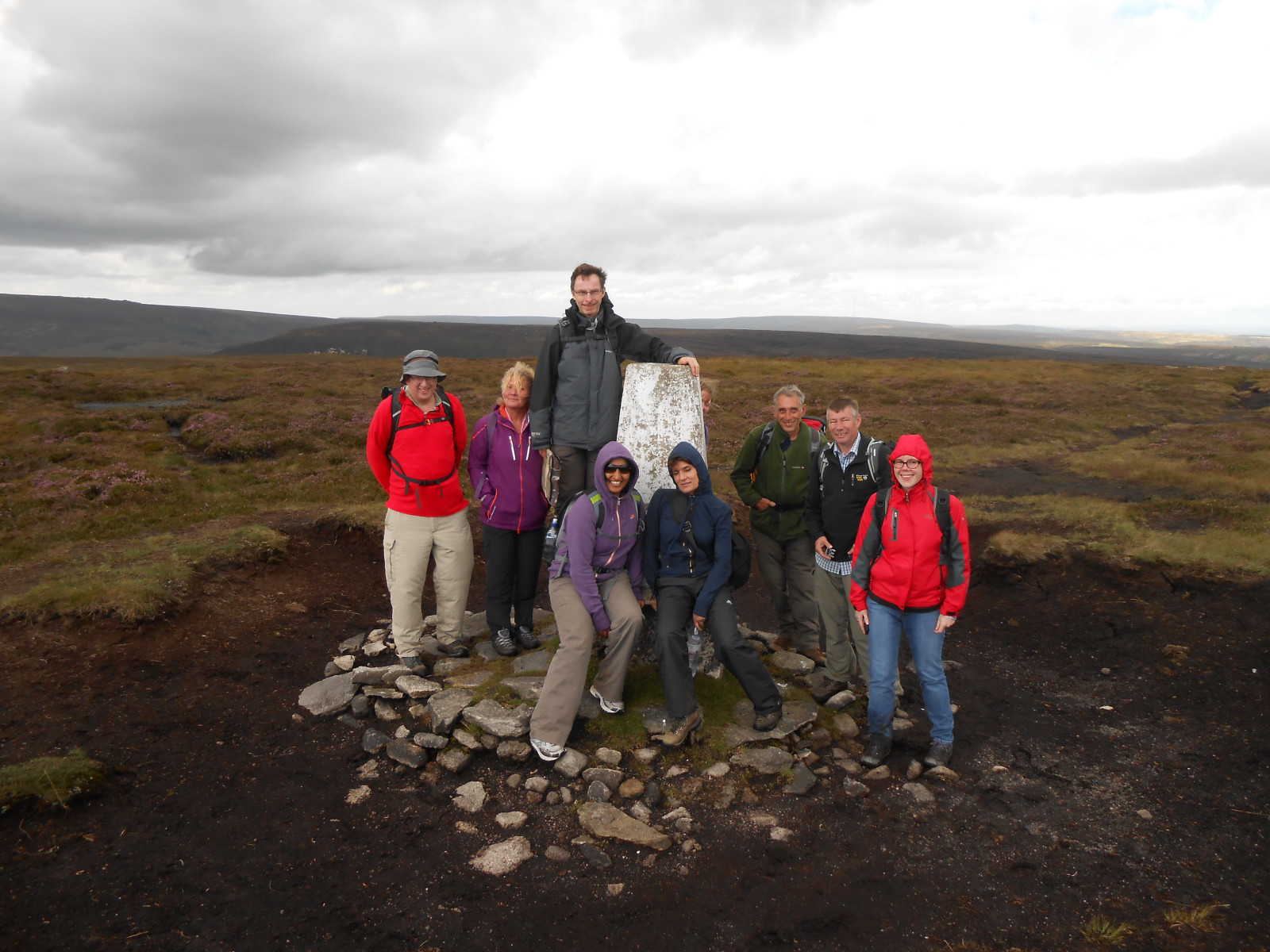
It comes about partly because I have been walking a couple of times this week, both around Thruscross Reservoir - between Skipton and Harrogate - and then a rather longer route from Knaresborough to Ripley and back.

Your intrepid bloggist is front right, still rocking that hat

It is also partly because of yesterday's post on playing the scenery rather than the troops. I was reminded (by myself) that I already possess a set of rules that actually do that: Peter Pig's 'Patrols in the Sudan' where the restless natives get to both relocate and hide in various pieces of terrain as the game develops. In fact they can disappear into one piece and reappear from another and the intention is to represent their superior knowledge of the locale.

Now I have two daughters and, many years ago when they were young and enjoyed board games, I foolishly imagined that I might also get them to play figure based games with me. But which period? And what sort of game? I decided, and can't for the life of me remember why, that the best bet would be some sort of colonial affair. However, especially against a background of modern day imperialism aimed at muslim countries and living in Bradford, I really didn't want a lot of white men with superior weaponry massacring brown people in droves. So that ruled out Zulus, Fuzzy-wuzzies, the Northwest frontier, the US cavalry vs the Indians; in fact pretty much everything.

Eventually, it came to me. We lived close to Ilkley, and the girls had on many occasions seen the remains of the Roman fort that may or may not have been Olicana (I know opinions are divided, but the name does seem to be a bit of a coincidence if it isn't) and had learned about the local Celtic tribe, the Brigantes. The solution therefore was obvious - I would build armies of Brigantes and Romans and rather than 'we' being the invaders and oppressors 'we' would be the freedom fighting local inhabitants nobly fighting against the forces of civilisation who had would do nothing for us except for sanitation, the medicine, education, wine, public order, irrigation, roads, a fresh water system, and public health. We would seek to win back what they had taken from not just us, but from our fathers, fathers, fathers, fathers.

And so I started to paint various 20mm plastic sets of Celts and some Romans, and also hunted for a set of rules. The ones that I most liked were the aforementioned 'Patrols in the Sudan'. Clearly they'll require some bodging but, I was rather taken by the thought of turning the scenery that I see all around me while walking, into movable pieces of terrain. Now, obviously the girls were never in a million years actually going to play the game so I've never tried it out in practice. However, I now have a large collection of Celts and various things to create scenarios such as a villa, civilians, gladiators, etc. I do have Romans, but they're crap even by my standards so will need replacing at some point. When the glorious day comes that I have my own wargames room (cries of 'Ha' mark the happy return of the rhetorical pedant) then I shall give it all a go.

And what of all this 'under a woman's leadership' guff? That was Tacitus referring to the Brigantian queen, Cartimandua and the inclusion of a warrior queen in her chariot was another part of the plan to get my daughters interested.

Saturday, 31 August 2013

Miniature Wargames issue 365

Well, no sooner have I pronounced portentously that Miniature Wargames is not what it used to be in my day than I find that I rather like the new issue. "Silence is safer than speech." as a great man (that would be me then) once said.

Firstly, I admire the stance that Henry Hyde has taken in his editorial against the use of the swastika as a decorative device. It is a symbol whose political connotations cannot and must not be ignored.


Secondly, there is the article by two Belgian wargamers, Phil Dutré and Bart Vetters, on the battle of Aspern-Essling in 1809. The twist in their participation game version of the battle is that the model soldiers act as the terrain while the scenery provides the playing pieces. I cannot begin to tell you how much pleasure that element of the game design gives me. Whilst you'll need to read the article (i.e. buy the magazine) in order to read the details, let me just quote Goethe (sneaking the pseudery back in there) to wet your appetite: "We will burn that bridge when we come to it".

All the above doesn't mean that there aren't bad bits. Neil Shuck is a columnist whose point escapes me. His view of wargamers is astonishingly simplistic and procrustean. I have a softer spot for Mike Siggins, although I don't know why. His column in this issue reads like, and quite possibly is, a reprint of one that was published in Wargames Illustrated a decade or more ago. He has had some sort of life-changing epiphany, is going to downsize his collection, focus his efforts more and paint more and game less. I'll bet you a pound to a penny that next month he has found a new period to champion - almost certainly with figures sculpted by the Perry twins - and decided that playing rather than painting is the thing. He is, let's be frank, Mr Toad. However, he is not without some charm. I have long suspected that his column is actually the work of Alan Bennett (a man surely never before mentioned in a wargames blog) and you will no doubt be aware that Bennett wrote an excellent version of 'Wind in the Willows' for the theatre. In the film of Siggins' life (already in pre-production or so I hear) he will be played by Thora Hird; and I defy MS Foy or anyone else to tell me that she's dead.

Mike Siggins gives his 'View from the Armchair'

Friday, 30 August 2013

Browning is back! Hello! Hello!

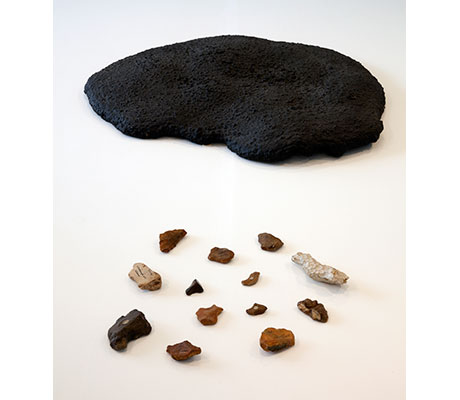
I have been to the new exhibition at the Henry Moore Institute and it is, to use the argot of the professional art critic, pants. The premise of the show, entitled 'Indifferent Matter' is to 'explore how objects resist and are coerced into becoming sculptures' and it does this by including a load of old rubbish - literally in the case of a lump of asphalt, which Robert Smithson wittily named 'Asphalt Lump' when he picked it up from the waste around a steel mill in 1969 and claimed it was a sculpture because he said it was.

That isn't to say that there isn't some nice stuff. There is a Warhol piece 'Silver Clouds' which, if deconstructed could be dismissed as simply some helium filled balloons being blown about by a fan, but which, in place, is actually rather splendid. The best pieces are some exquisite 4,000 year old jade discs from China. They are here because no-one knows their original use, but their effect, far from supporting the exhibition curator's hypothesis, is instead to highlight the importance of craftsmanship. For me the futility of the whole thing is exemplified by the eoliths on display. They are meant to pose the philosophical question as to how there importance has changed now it is known that they are natural rather than man made. Now I, self-evidently, do like a philosophical question, but not one of those for which the answer is bleedin' obvious. They clearly do not now have any importance, except as a minor, minor footnote in the history of how science sometimes gets things wrong.

So why do exhibitions like this get put on? In the words of the Nobel Prize winner Seamus Heaney whose death has been announced today (1).

'Now, you're supposed to be
An educated man, '
I hear him say. 'Puzzle me
The right answer to that one.'

And on the subject of bad science, this is interesting.

I also attended a lecture on the subject of the Cyclops through the ages, starting - reasonably enough - with Homer and moving via Harryhausen to Spongebob Squarepants. Fascinating.


(1) except of course for the Prometheus in Aspic blog, which announced it some years ago

Thursday, 29 August 2013

Hello, good evening and welcome

This blog has once again doubled its number of followers. Admittedly it can only keep doing this by losing some along the way to religious persecution, but surely it's still worth celebrating. So welcome to MS Foy, author of the always interesting (although not completely trustworthy in matters of literary mortality) Prometheus in Aspic blog.

And it's good to finally have a follower from this country; well, near enough as makes no difference.

The namesake of Monsieur le Général, a man who literally fought from Valmy to Waterloo, suggests that I am not keen on readers. I don't believe this to be true.  I basically write for myself, as a sort of therapy. Being creative - no, seriously - is, like taking physical exercise, a method of remaining grounded when all is otherwise not well. I also write a much more serious, work-related blog which gets more readers and in which I have to be more concerned with who those readers are. Here, as long as I don't insult anyone (apart obviously from James, Peter, Mark, Tim, Ken, Euan and any passing god-botherers or Tories) then I don't care.

Salut.


Sunday, 25 August 2013

More meeples

It was Leeds Meeples at the Victoria Hotel today with a very large and very noisy turnout. There must have been thirty people at the peak, which the room coped with mainly because we were able to open the fire door. I'm not sure what would happen in the winter. Like many things the group seems to be a victim of its own success.

Anyway, games played were King of Tokyo, Citadels, Alhambra, Pandemic and a quick couple of rounds of Uno just to finish off. Of the two that I hadn't played before Kings of Tokyo is a very light, but highly enjoyable nonetheless, dice game. Yahtzee with monsters as someone described it. And what's not to like about giant monsters fighting in the middle of the Japanese capital? And I won; as opposed to Alhambra in which I came last by a considerable margin.

Pandemic is a co-operative game, and I'm not especially fond of those, but this wasn't so bad. I'm not sure whether that's despite the fact that we lost and humanity was destroyed by infectious diseases or because of it.

Saturday, 24 August 2013

попурри 10

If there are two certainties about this blog they are that the readers don't like posts about politics and that I don't like Margaret Thatcher. The third of the two certainties is that it's my blog and I'll write what I want and if you don't like it you can sod off. Except of course for the Russian spambots who I would be very sorry to lose as readers and to whom I say "Да, пожалуйста, я хотел бы больше пенис".  Anyway, I have been to an exhibition of cartoons about Thatch which was interesting rather than enjoyable.One observation I would make is that even those cartoonists who might count themselves on her side didn't actually like her, and the others positively hated her.


Re-enactor action at the Royal Armouries has been very medieval during the school holidays, in support of the jousting tournament. This continued today with amongst others a minstrel chap wandering round in silly trousers playing a mandolin type thingy. However, even before the place opened it all seemed rather different when residents were awoken by brass instruments playing raucous, almost military music accompanied by much shouting. It turned out to be an Indian wedding procession making its way across the canal bridge on the way to the Mumtaz. This took a long time because it was apparently against the rules to go more than a metre or so before the men in the party launched into a new highly energetic dance. The climax, on the steps of the restaurant, was a frenzied solo performance by the groom who was whirling in a positively berserk fashion to great applause both from the wedding party itself and the large crowd of onlookers which had been attracted by all the excitement. The bride was, of course, nowhere to be seen. Presumably, wherever she was, she was hoping that the husband-to-be would have at least a little bit of energy left when it was all over.


Like all gamers I have an unhealthy interest in dice. For example there are the non-transitive dice, currently with James Roach who is, no doubt, just about to unveil the use both apposite and elegant use that he has worked out for them. So I am delighted to be able to refer to you these:


Full details are available here; well worth visiting for dice-heads.

 до свидания

Thursday, 22 August 2013

88mm in the a/t role - was it really that good?

I wrote a while ago about the question of whether units that historically performed well should be rated in such a way as they are guaranteed to repeat those exploits or such that it is merely possible that they may do so if the gods are with them. The issue arose again last night when, once again, Rommel's small quantity of 88mm a/t guns rather wiped the floor with the British tanks. I have no in-depth knowledge of the period and can't really comment except to say that it does rather detract from the game. It probably wouldn't be so bad if the British had the better tanks and the 88's strength was just some sort of compensation. But the Panzer IIIs have a better range, they are backed up by Panzer IVs that act as very effective self-propelled artillery against the British anti-tank gun line and then there are all the other, quite handy, German a/t guns.

I had a few of these when I first started wargaming

I say all the above having once again, due to the luck of the draw, commanded the Germans on the second day of Sidi Rezegh. The terrain had been further upgraded - and looks extremely good; check it out at Fiasco if you can - and the forces were already deployed when we started. The latter at least saving me the embarrassment of bringing my tanks on in the wrong place. The other change was that the British had two commanders with James taking the main tank force which under his leadership didn't actually appear all evening. This change meant that it was, for once, Peter who was the recipient of his tactical advice and as usual it was a) aggressive and b) rubbish. The most egregious example was his urging Peter to put the three companies of tanks already on the table in the place where I immediately, courtesy of the 88, destroyed two of them without actually breaking sweat.

James Roach's tactical inspiration

This time round I did follow Rommel's instructions and attack with my infantry - with mixed results - although I still think that this is the flaw in the scenario. In real life Rommel apparently did this to divert Campbell's attention while the armour arrives on his flank. However, in the current scenario it rather does the opposite. If one is the British then one would rather use any initiative won to fire at things and reload than to turn cards. This is because the British don't want to turn their Desert Rats card until after the Germans have turned their Afrika Korps card (this is all to do with the entry of their respective armour) and so, in my opinion, any attack by the German infantry does the opposite of what, one must assume, Rommel wanted.


The other change was the use of dominoes to generate initiative and, so far, I think the consensus is fairly favourable. Initiative has been reasonably even, but there have been large runs (I got 21 at one point), and yet one always gets some on a reasonably regular basis.

...are OK so far

Tuesday, 20 August 2013

One for the malchicks

 Hello droogs; it's been a while.

The legendary wargames room from a rarely seen angle

So what have I been doing? Well I went on a walk along Outer Edge from Langsett Barn, which was very pleasant apart from the climb up to the trig point, which nearly rendered me an ex-blogger. Anyway, there were some lovely views, of which this isn't one.


Your correspondent demonstrates his grasp of camouflage

I also went to see 'The Heat'. It's not in the slightest bit original, but I laughed a few times and that'll do me. Sandra Bullock appeared to be intending to enter a Michael Jackson lookalike competition as soon as shooting was over; if you ask me she was a cert to take first prize.

And finally a word about the Guardian. I have long lamented the fact that it isn't anything like the paper it used to be. Only the other week they printed a complete load of nonsense about the US invasion of Grenada, which long-suffering readers will remember is my specialist subject. However, all is forgiven. Yesterday they revealed the scoop that Dante Gabriel Rossetti (whose sister -  those same loyal readers will also remember - appeared in these very pages just a couple of weeks ago) kept a pet wombat, which died after eating a box of cigars. If that's not investigative journalism then I don't know what is.

Thursday, 15 August 2013

Sidi Rezaghhhhhhh!

The refight of the second day at Sidi Rezegh finished in the same way that assumes the original did - no-one had the will or the stamina to continue. At the point this occurred I think there was agreement that the Germans would eventually win. Firstly, they still had their armour pretty much completely intact and the British had no way of attacking them. Given the lack of a turn limit the Germans had all the time in the world to use a combiantion of their off-board artillery and Panzer IVs to reduce the British gun-line of 25 pounders and 2 pounder a/t guns without risking their Panzer IIIs. Secondly, they had some morale left and the British didn't. At one point both sides had zero (the British passing a major morale test at this point) and there had been an outbreak of gaminess as both sides sought to destroy stands just to get the morale advantage rather than further any more strategic objectives. The British artillery failed miserably against the German infantry by rolling rubbish as they had done throughout - although in fairness they had had better luck against the German anti-tank guns - while the 88mm made hay against the British tanks - as it had done throughout.

The initiative was fairly even, as indeed it probably was across the whole game. What skewed things was that in the first week, when Peter won all the initiative, he had nothing much to fire at, whereas in the second week, when I won it all, I was able to use it to destroy about a third of the British armour for no losses in return. my two Brilliant Commander cards for being a skilled leader didn't hurt either.There were no rule changes this week, but the terrain had been upgraded with some nice new wadis and road culverts. Brigadier 'Jock' Campbell had obviously got wind of his impending VC as well because he was mysteriously better than in previous weeks.

The main purpose of playing the scenario is to help prepare it for use as a display game at Fiasco. In the light of all the chuntering about my - highly sensible - reluctance to attack with my infantry, the nice wadi in which they were sheltering is to be removed. The extra space is to be used for a wider space between the 2nd escarpment and the airfield which will give more flexibility to the British deployment.

As for my views on Piquet - I have retrieved my copy of the Master Rules and, I bet you didn't see this coming, I'm actually going to read them.

Tuesday, 13 August 2013

Pot9pouri

Right, having given Piquet an uncalled-for kicking for a few days, it's time to return to random drivel.
  •  A meagre turnout in the White Swan on Sunday meant a chance to get out Revolver, a two player game that I have owned for a while, but not previously had a chance to try. It turns out to be a cracking little game. Playing as Jack 'the Crow' Colty I managed twice to reach the Mexican border against being once gunned down by the law enforcement forces of  Colonel Ned McCready. Very enjoyable.
  • It was the once a month concurrence of the White Swan on a Sunday afternoon and the Leeds Meeples on a Monday evening. Furthering my aim of playing boardgames rather than card games wherever possible I tried Alhambra for the first time, notwithstanding the fact that although there are several boards involved one actually plays on the tabletop. It was another good game and I cam a creditable second courtesy of achieving the longest external wall during the final round.
  • I found myself watching a documentary about The Eagles a couple of days ago. Despite the undoubted musical talents of Don Henley and Glenn Frey neither of them come across as people in whose company one would wish to spend any time. Anyway, that wasn't wanted the point I wished to make. I personally was more struck by Frey's revelation that the genesis of the song 'Lying Eyes' was in Dan Tana's. Now anyone who spent time at Griffin Park in the 1980s and 1990s - and, believe me, I spent many hours at Griffin Park during that period - will have been aware of Tana. However, while I knew that he ran a bar in LA, I didn't realise at the time that he ran the bar in LA. There's an interesting, if old, article here. Sadly, although I drove past it a couple of years ago the circumstances (long day at Magic Mountain, not yet checked into the hotel) weren't conducive to going in.
And finally, and for reasons which require no explanation, here's a photo of Cameron Diaz.


Monday, 12 August 2013

Dog returns to its own vomit

That's from Proverbs 26:11; further proof that I am in touch with my religious side.

So, following yet more lack of interest in my views on Piquet I have decided to revisit the subject. I think my opinion can best be summed up as:

Piquet works best when
  • the majority of command and control issues (such as force composition and deployment) are carried out prior to the game starting i.e. outwith the card/initiative system completely. 
  • during the game c&c is limited to existing plans degrading - or occasionally working better than expected - or to the impact of local commanders rallying troops, fighting in the front line or, and this is especially prevalent when I play the Italian Wars, dying.
  • units typically use ranged fire independently at targets of direct threat to them
  • melee (or the close range fire simulated by melee in Piquet) is the primary cause of units retreating or worse
  • units with two different weapons - typically a missile weapon and a melee weapon - can use them at the same target; or where units with one weapon can use them against different targets - such as guns firing HE or AP.

It works least well when
  • c&c is a major in-game factor (issues such as enemy dispositions becoming better known , artillery spotting, air support and so on)
  • units fire and move in co-ordinated support of each other and to deny movement and firing opportunities to enemy units
  • where ranged fire is the primary means of attack and where melee/close assault is an exception)
  • where the game is significantly about relative maneouvre (e.g. air warfare or fleets in the age of sail)
  • where units have two weapons designed to be used against different targets - such as tanks with both a main gun and machine guns
 I have contrasted Ancient and WWII applications because they, er, offer the biggest contrast. However some of the problems do crop up in Horse & Musket. Piquet played straight doesn't lend itself to artillery barrages at the beginning of battles or indeed to battalion guns. And then there is the  Napoleonic equivalent of denying the enemy opportunities to move or fire, namely the presence of cavalry forcing infantry into square. Now personally I think that Piquet does deal with this perfectly adequately. If you don't put them into square when you get the chance (in other words when the card is showing and you have the initiative) then you're going to get ridden down and it serves you right. However, it's quite clear that many gamers prefer to tweak it to allow a bit of extra c&c (in the from of 'hasty squares') because they believe there is a flaw that needs addressing.

Sunday, 11 August 2013

20th Century Piquet

Absolutely no-one has asked me to elaborate on my theories about Piquet in the modern world and therefore I feel it is incumbent upon me to do exactly that. For the purposes of the exercise I shall treat all Piquet family games (i.e. standard, Command Piquet and FoB) as the same thing even though they are clearly not. And, of course, it's worth remembering that the only Piquet that I've ever played has been with the Ilkley Lads, both before and after the great Old School schism, and for all I know they play it completely wrong.

Anyway, back to the theory. My view is that in a generic ancient style combat ('sticks and stones' in the words of Mark Dudley) there aren't any real opportunities for command and control. After lining them up it's just really about moving them forwards until the battle lines clash. The card/initiative elements of Piquet work brilliantly at modelling the friction and fog of war. How effective will missile fire be? Will both wings and the centre move together or will one part of the army be more aggressive than the other? In those few circumstances where some sort of coordination is appropriate (e.g. the switching of the Hastati, Principes and Triarii in Punic Wars Roman legions) then one will get the required combination of cards/initiative often enough to make it work, but it's not guaranteed. Oh, and even here the three types of cards (Infantry, Cavalry, Artillery) aren't really enough and one has to add in a special one for Elephants.

Zoom forward to the twentieth century and having only three types of cards definitely don't work - why is an 88mm (or 2pdr) a/t gun reloaded on an artillery card, but the same thing on a Tiger (or a Crusader) is reloaded on an Armour card? - and the command and control which is required to be modelled is of a somewhat higher degree of complexity. In this case the necessary card/initiative combination will rarely, if ever, arrive.

I do have thoughts regarding the Horse and Musket period, but can't be arsed to write them. And naturally I don't have any practical suggestions to address the points that I do raise. Although presumably you are all impressed by me being the only person in the world to remember Command Piquet.


Thursday, 8 August 2013

Sidi Rezegh, the tanks arrive


"I shall never complain about not getting any initiative again." is what I said to Peter as we left James' house last night. The previous week had seen him getting the vast majority of the initiative, but last night I basically got it all. We don't count who gets what so one has to rely on impressions, but I think that we all shared the same opinion. And while it's clearly more fun to turn cards and act on them than not, extreme swings do spoil the game for both parties. As I've said before I really enjoy the Piquet family of games, but can understand why others are put off by this aspect. There were some mutterings last night about trying methods involving dominos and I'd certainly be up for trying an experiment.
'The moon stood still
On Blueberry Hill
Because it didn't win any initiative'


Rather than give a blow by blow account of the battle I thought I'd list some of the other things that I don't like about Piquet or, to be more precise, the WWII version.

  • I don't think the card activation system allows the complex activities of 20th century warfare to play out convincingly. It works brilliantly when there are a limited number of types of troops i.e. when the randomness is about how many times one gets to shoot before melee occurs or whether one gets a chance to rally between combats and so on. To my mind this is OK all the way up to Horse and Musket periods, but WWII (on which I claim no particular expertise by the way) is too complicated to be reduced to Infantry, Artillery and Armour. I have no quibble with the work the rules authors (from Bob Jones original concept through to James' constant tweaking) have done in portraying the effect of individual weapons, but I don't think they work in combination.
  • Scenario specific objectives never seem to work in combination with the base Piquet mechanic of morale chips. It might be heresy, but I'm tempted to do away with morale chips in WWII and reward stand losses inflicted with a gain in initiative and base morale challenges on an initiative pip cost. Given the extremely high level of tank losses suffered in the Operation Crusader battles it's difficult, based on my superficial level of knowledge, to see why morale is such a factor. Instead the issue would seem to have been issues of quality of troops and material (which Piquet models well) and momentum (which I think would be modelled by rewarding success in combat with more initiative, which of course is what Piquet already does in those periods where melee is the main method of resolving combat). It's all hypothetical because I shall never run a WWII game, but it's worth noting that James and Peter came to a similar conclusion regarding opportunity fire i.e. that the core mechanism didn't work in WWII.
  • Taking advice from James. I need to clarify this; James is clearly adept at the finer details of Piquet such as which units to fire in which order at which targets etc and worth listening to at such times. However, on the broader subject of tactics his advice is always to attack and it's always bollocks. The longer this game has gone on the more convinced I am that I was right not to attack with my infantry straight away. This is in large part because of the loss of morale chips involved.
So, a prediction is called for. I think the British will win next week because the Germans are going to run out of morale chips. You heard it here first.

Saturday, 3 August 2013

Pot8pouri

  • Did you know that the length of the day at the equator is 12 hours plus a few extra minutes, these being essentially caused by refraction through the atmosphere and the fact that the sun is a disc rather than a point of light. This length of day is constant and doesn't vary throughout the year. The equator is, of course, the only one of the five major lines of latitude (the others being the tropics and the arctic/antarctic circles) whose position is a) unrelated to the axial tilt of the Earth and b) fixed (all the others are migrating slowly as the Earth's axial tilt varies). It is possible that some ill-informed people may believe that the location of the Tropics of Cancer and Capricorn relates in some way to the length of the day at that latitude rather than, as in reality, simply representing those locations furthest from the Equator where the sun can be directly overhead at least once a year. Poor deluded fools.
  • They are jousting at the Royal Armouries at the moment and, almost unbelievably, it continues to be scorchio. I was standing outside the main door this afternoon as one of the participants came past in his armour on his way from the tilt yard, presumably to get changed. I'm not sure that I've ever seen anyone look so hot. He was however accompanied by two buxom wenches carrying all his gear. I'm not entirely clear how authentic that is.
  • My hat with magical properties is proving very useful, especially during the test matches. I get lots of admiring looks, particularly on trains although, as you will appreciate, it doesn't work too well in that environment.

Friday, 2 August 2013

Barbara Hepworth

I have been to the Hepworth in Wakefield; a very pleasant looking building approached across a bridge over the Aire-Calder navigation. It has a permanent collection of items associated with Barbara Hepworth, both finished artworks and examples of the production process, plus various other exhibitions, some visiting and some there all the time.


I've always liked Hepworth's signature sculptures - the smooth ones with the holes - although I couldn't really tell you why and I certainly couldn't give an intellectual justification. And of course anyone growing up in London in the 1960s as I did will have regularly seen her work on Oxford Street. In fact there is a prototype for the Winged Figure on show here and unsurprisingly it looks a lot bigger from close up.


The rest is a mixed bag. One current exhibition is from Haroon Mirza and is frankly rubbish. It is pitched as a successor to Marcel Duchamp's readymades. Now I hold Duchamp in high regard (I bet that makes him rest more easily in his grave) and the more alert amongst you will remember that I included his 'Nude Descending a Staircase, No 2' in a posting a couple of weeks ago. It is indeed the very fact that he could paint that gave him the right to present urinals and the like as pieces of art. Mirza however has given no indication that he can do anything except assemble a load of old tat and surround it with flashing lights.


Of the rest, I liked Michael Andrew's 'A Man Who Suddenly Fell Over' with which I wasn't familiar before. They also have three nice Tissots, a chocolate box guilty pleasure. For those intent on heading to Leeds to look at the Scots Greys and Gordon at Khartoum there is another Tissot on the adjacent wall to the latter. The ones in Wakefield are better, especially 'Portsmouth Dockyard'. For those who need a wargaming fix, the chap in the middle is in the Black Watch.