a smile upon your face

Epictetus - Discourses on Wargaming
Monday, 29 June 2015
Friday, 26 June 2015
Oh, it all makes work for the working man to do.
I have been asked why my review of Klute in yesterday's post was so peremptory. Why, people say (possibly rhetorically, who knows?), didn't I bang on about how Bree Daniel's seeming journey of self-discovery only actually reinforces the patriarchy that was doing her down in the first place? Well the simple answer is that, just as I was getting into my critical flow, the plumber unexpectedly arrived. Sadly Flanders and Swann don't mention plumbers, but that's no reason not to listen to this classic.

I have been to see last season's Globe production of 'Comedy of Errors' on the big screen; actually not that big a screen because Otley Courthouse was designed by the Victorians for dispensing justice rather than setting up makeshift cinemas. I have always found this a very funny play, which is not something which one can say about all of Shakespeare's comedies. It's farce pure and simple and doesn't rely on the sort of clever wordplay which would have had the Elizabethans rolling around, but leaves us scrabbling for the footnotes to the script. I have mentioned here before my theory that a good farce requires the appearance of sardines. I may have to extend that to seafood in general, because the director in this case decided that an octopus was the way to go.

In any event it was very good and quite up to the standard of Julius Caesar and Antony and Cleopatra which I saw in situ this time last year.
Thursday, 25 June 2015
Out of the Hurly-Burly
"So we had no fire in the range upon that day, and the family breakfasted again upon cool viand without being cheered with a view of the plumber. Upon calling at the plumber's shop to ascertain why he had not fulfilled his promise, I was informed by the clerk that he had returned, but that he was compelled to go over to Wilmington. The man seemed so thoroughly in earnest in his assertion that the plumber positively would attend to my boiler upon the following morning that we permitted the range to remain untouched, and for the third time we broke our fast with a frigid repast. But the plumber and his assistants did not come." - Max Adeler
I'm waiting for the plumber. Now obviously that means I have time to write a novel, if not a series of novels plus the screenplays for the films to be made from them, but I shall content myself with a short blog post.

The try out of TtS! for WotR was cancelled last night due to a combination of the common cold, decorating and professional cycle racing. (Not an especially odd combination. Earlier in the week in response to news of the death of a university acquaintance I found myself typing a sentence containing the words Diddy David Hamilton, labrador dog and split foreskin.) I'm tied up next Wednesday so I'm not sure when we shall revisit it.
I have watched Klute for the first time - a mere 45 years or so after it was released - and whilst enjoyable as film noir I find it astonishing that it was originally seen as either liberal or feminist.

And coming fashionably late to the whole Waterloo anniversary thing as well, here's a report of the re-enactment from what seems to be an unimpeachable source..

 |
| If it's the WotR it must be Tewkesbury |
I have watched Klute for the first time - a mere 45 years or so after it was released - and whilst enjoyable as film noir I find it astonishing that it was originally seen as either liberal or feminist.

And coming fashionably late to the whole Waterloo anniversary thing as well, here's a report of the re-enactment from what seems to be an unimpeachable source..
Tuesday, 23 June 2015
A Shallot
The full cloves
Of your buttocks, the convex
Curve of your belly, the curved
Cleft of your sex—
Out of this corm
That's planted in strong thighs
The slender stem and radiant
Flower rise.
- Richard Wilbur
Of your buttocks, the convex
Curve of your belly, the curved
Cleft of your sex—
Out of this corm
That's planted in strong thighs
The slender stem and radiant
Flower rise.
- Richard Wilbur
Saturday, 20 June 2015
Pot41pouri
As well as being behind in reporting boardgames played, I have been remiss in recording my experiments with asparagus. Therefore let me present sweetcorn, sweet pepper and bacon.

Jonathan 'Palouse' Freitag has asked me to justify my assertion that it's harder to get the tactics right in grid based games (as an aside, his blog is well worth a read, with some quite lyrical non-wargaming posts; although those of us living in the 21st century might be puzzled by measurements expressed in feet and degrees Fahrenheit), but I'm not entirely sure that I can. My view is based on the fact that James, Peter and I struggled somewhat at first with C&C and appear to be doing the same with TtS!. Inasmuch as I have a theory, it is that grid based games afford far fewer options, because movement is in discrete chunks and there are typically fewer range bands. In a traditional game some infantry may be able to move say 20% further than others in a turn; in a grid based game they all move the same or one type can move twice as far. The same goes for differences between weapon ranges. Game designers therefore seek to represent the smaller differences that can no longer be built in to movement distances and ranges by other unit specific mechanisms. It's the use of these rule nuances that I mean when I say tactics.
And here is a photograph of a large Dalek making its way along Kirkgate. There is no panic among the townspeople.


Jonathan 'Palouse' Freitag has asked me to justify my assertion that it's harder to get the tactics right in grid based games (as an aside, his blog is well worth a read, with some quite lyrical non-wargaming posts; although those of us living in the 21st century might be puzzled by measurements expressed in feet and degrees Fahrenheit), but I'm not entirely sure that I can. My view is based on the fact that James, Peter and I struggled somewhat at first with C&C and appear to be doing the same with TtS!. Inasmuch as I have a theory, it is that grid based games afford far fewer options, because movement is in discrete chunks and there are typically fewer range bands. In a traditional game some infantry may be able to move say 20% further than others in a turn; in a grid based game they all move the same or one type can move twice as far. The same goes for differences between weapon ranges. Game designers therefore seek to represent the smaller differences that can no longer be built in to movement distances and ranges by other unit specific mechanisms. It's the use of these rule nuances that I mean when I say tactics.
And here is a photograph of a large Dalek making its way along Kirkgate. There is no panic among the townspeople.

Friday, 19 June 2015
Hot street tongs
So, we had a third game of To The Strongest!, and once again discovered that we hadn't been playing it properly before. Basically it seems to be a well thought through, internally consistent set of rules hidden within a somewhat disjointed and oddly laid out document. Every time we think that something doesn't quite seem quite right as it plays out on the tabletop we dive into the text and discover that it doesn't feel correct because it isn't correct. So far the problems seem to be on our part rather than the rules.
Of course one not only has to learn the rules, but also the tactics that the designer had in mind. This seems to be especially true in grid based games (that's a personal opinion, I have no empirical evidence that I could point to). I'm not sure that we are there yet and it took us quite a while with C&C. The first games of To The Strongest! were Punic Wars and this one moved us on to Early Imperial Romans against Celts. With hindsight the best tactics for the latter are hit and run rather than trying to slug it out, with even the ordinary auxiliaries saving on a six. Things weren't helped by the forces being created by using all the Romans that I had and then just adding more warbands to the Britons until the points matched. I also overdid the veterans on both sides, which possibly accounted for the stalemate that ensued along much of the table, and massed the barbarian cavalry rather than spreading them out as disruptive skirmishers. For the record the Romans won in the end.

So, they are definitely good fun, but a final decision on them has to be postponed until we're clear that we're playing the rules properly with at least vaguely optimal tactics. Next up for this period is to buy some more chariots I think. Next up for the rules is to give them a go next week with my Wars of the Roses figures.
 |
| The posh bases are no longer required |
Of course one not only has to learn the rules, but also the tactics that the designer had in mind. This seems to be especially true in grid based games (that's a personal opinion, I have no empirical evidence that I could point to). I'm not sure that we are there yet and it took us quite a while with C&C. The first games of To The Strongest! were Punic Wars and this one moved us on to Early Imperial Romans against Celts. With hindsight the best tactics for the latter are hit and run rather than trying to slug it out, with even the ordinary auxiliaries saving on a six. Things weren't helped by the forces being created by using all the Romans that I had and then just adding more warbands to the Britons until the points matched. I also overdid the veterans on both sides, which possibly accounted for the stalemate that ensued along much of the table, and massed the barbarian cavalry rather than spreading them out as disruptive skirmishers. For the record the Romans won in the end.

So, they are definitely good fun, but a final decision on them has to be postponed until we're clear that we're playing the rules properly with at least vaguely optimal tactics. Next up for this period is to buy some more chariots I think. Next up for the rules is to give them a go next week with my Wars of the Roses figures.
Thursday, 18 June 2015
kg m/s
Until yesterday the only thing that I knew about Jean Buridan was that he had a donkey; possibly a dead donkey that had starved to death through indecision, but a donkey nevertheless. Having researched him for the purposes of my last blog posting I now know somewhat more:
It is perhaps timely therefore to report that my own investigations into Basic Impetus have come to a dead halt. They have, as it were, run out of momentum. I didn't get to play through a full test game (and nor sadly have I caught much of what has clearly been an excellent ODI series), but what I did find time to do convinced me that these were not the rules for me. My own interest in wargaming stems from the game part; fair enough I like a bit of visual aesthetic pleasure and also some historical references thrown in, but basically it's a game. And as a game Basic Impetus just doesn't float my boat. The combat resolution seems fine, if a bit dice heavy, but the command and control rules don't match my own tastes, which are for decision making within a framework of constraints. These decisions are not in any way meant to mimic the decisions made by real life commanders, they're just the sort of choices that occur in tabletop games: allocation of limited resources, stick or twist, guess what the opponent can/will do - you know the sort of thing. And because of that, and nothing else, I abandoned plans for a game of Basic Impetus when James and Peter came round last night. Instead I rejigged it into a game of the current new, shiny ruleset 'To the Strongest'. I may, or may not, find time to write that game up in due course, but a good time was had by all in any event.
- If you're not careful Google confuses him with the actor chappy who won an Oscar for 'The Artist'. As good as that film was, please don't make the same mistake.
- He was, apparently, assless. Who knew?
- He had something against William of Occam. Hiss.
- He was a crucial figure in the development of scientific thought in Europe, paving the way for Copernicus, Newton et al. In fact he developed a theory of the quantity of motion, which he referred to as impetus.
 |
| On m'a promis un âne |
It is perhaps timely therefore to report that my own investigations into Basic Impetus have come to a dead halt. They have, as it were, run out of momentum. I didn't get to play through a full test game (and nor sadly have I caught much of what has clearly been an excellent ODI series), but what I did find time to do convinced me that these were not the rules for me. My own interest in wargaming stems from the game part; fair enough I like a bit of visual aesthetic pleasure and also some historical references thrown in, but basically it's a game. And as a game Basic Impetus just doesn't float my boat. The combat resolution seems fine, if a bit dice heavy, but the command and control rules don't match my own tastes, which are for decision making within a framework of constraints. These decisions are not in any way meant to mimic the decisions made by real life commanders, they're just the sort of choices that occur in tabletop games: allocation of limited resources, stick or twist, guess what the opponent can/will do - you know the sort of thing. And because of that, and nothing else, I abandoned plans for a game of Basic Impetus when James and Peter came round last night. Instead I rejigged it into a game of the current new, shiny ruleset 'To the Strongest'. I may, or may not, find time to write that game up in due course, but a good time was had by all in any event.
Wednesday, 17 June 2015
Hee Haw
I am a bit behind with writing up the boardgames that I have played, and as the latest list of new ones involves rugs and the wild west I shall do so soon. However, I am diverted by the rather tedious game of 'Roll for the Galaxy' that we had on Monday. This is no reflection on the game - which is perfectly good - but rather because one of the players was a bit slow in taking his turn. Afterwards one of the other players, classifying the problem as Analysis Paralysis, asked about research into the issue, whether there were different types, and, most importantly, what could be done to sort it out.

I first came across the term some twenty five years ago whilst doing my MBA. In that context it means specifically the tendency to postpone a decision in order to collect more data, carry out more analysis, discuss things with more colleagues and so on. In boardgaming parlance it can't mean that; and I suspect that it doesn't actually mean any more than that somebody else is taking longer than you would prefer to play their turn without there being any obvious external distraction such as eating, arguing with their spouse or, increasingly, staring at one's phone.

Now the concept of not being able to make a decision isn't new. I was immediately reminded, as no doubt you were yourself, of Buridan's ass, and Buridan lived in the early fourteenth century. Indeed having looked him up to verify the details, the reputable source that I consulted (OK, Wikipedia) says that the paradox never actually appeared in Buridan's writings and in any event had been known to the ancient Greeks.

But in any event, it seems to me that the problem being manifested in l'Arbre d'If the other night wasn't really indecision. If we are to seek the guidance of a dead philosopher - and why wouldn't we? - I think we should turn to Immanuel Kant and his concept of enlightenment as being the emergence from self-imposed nonage. The individual involved had never played the game before, for which we would all obviously cut him some slack. The problem was his reluctance to take responsibility for his own moves outwith the guidance of others as the game developed; precisely, I'm sure that you will agree, the situation described by Kant. So, returning to the most important question raised above - what can be done to sort it out? - we must urge our opponents to heed the advice that Kant gave in 1784 (quoting Horace) Sapere Aude: Dare to Know.


I first came across the term some twenty five years ago whilst doing my MBA. In that context it means specifically the tendency to postpone a decision in order to collect more data, carry out more analysis, discuss things with more colleagues and so on. In boardgaming parlance it can't mean that; and I suspect that it doesn't actually mean any more than that somebody else is taking longer than you would prefer to play their turn without there being any obvious external distraction such as eating, arguing with their spouse or, increasingly, staring at one's phone.

Now the concept of not being able to make a decision isn't new. I was immediately reminded, as no doubt you were yourself, of Buridan's ass, and Buridan lived in the early fourteenth century. Indeed having looked him up to verify the details, the reputable source that I consulted (OK, Wikipedia) says that the paradox never actually appeared in Buridan's writings and in any event had been known to the ancient Greeks.

But in any event, it seems to me that the problem being manifested in l'Arbre d'If the other night wasn't really indecision. If we are to seek the guidance of a dead philosopher - and why wouldn't we? - I think we should turn to Immanuel Kant and his concept of enlightenment as being the emergence from self-imposed nonage. The individual involved had never played the game before, for which we would all obviously cut him some slack. The problem was his reluctance to take responsibility for his own moves outwith the guidance of others as the game developed; precisely, I'm sure that you will agree, the situation described by Kant. So, returning to the most important question raised above - what can be done to sort it out? - we must urge our opponents to heed the advice that Kant gave in 1784 (quoting Horace) Sapere Aude: Dare to Know.

Two further points. Firstly despite having played and enjoyed the game previously, I couldn't for the life of me remember the rules. In my case however the problem is not nonage, but dotage. Secondly, my research into Buridan tells me that what he did write included an attack on the work of William of Occam. Now there I have to draw a line. Occam's Razor remains as it always has been, the single most useful tool of analysis whether playing a boardgame, in business or doing anything else.
Sunday, 14 June 2015
We feed the baby
And so to the theatre. The Royal Exchange in Manchester and the West Yorkshire Playhouse have co-produced a dramatisation of Tolstoy's novel Anna Karenina. As with the Keira Knightley film of 2012 - which I liked; it had a Tom Stoppard screenplay after all - it is a stylised rather than naturalistic staging. In the case of the climax (although I'm assuming everyone knows how it ends, I won't spell it out) not reproducing the written word is of course inevitable given the physical limitations of a theatre, but it seemed to me that the director's choice would have left anyone coming to the story cold completely mystified as to what was supposed to have happened.

Anyway, whilst the book has a very famous opening sentence (not present here) and a well-known ending, the meat of the sandwich is, er, well sort of in the middle. Anna trades safety for passion, her husband becomes a Christian and thereby loses the ability to forgive, Vronsky finds that one should be careful what one wishes for, Oblonsky - representing his entire class - sleepwalks towards his doom, and Levin and Kitty learn that true heroism is in the banal daily struggle rather than the grand gesture. All of these themes were sketched out here rather than covered in depth and therein lies the paradox of condensing such a complex novel into a two hour play. In order to understand it one must have some familiarity with the source, but if one does then the precis version can easily disappoint.

Anyway, whilst the book has a very famous opening sentence (not present here) and a well-known ending, the meat of the sandwich is, er, well sort of in the middle. Anna trades safety for passion, her husband becomes a Christian and thereby loses the ability to forgive, Vronsky finds that one should be careful what one wishes for, Oblonsky - representing his entire class - sleepwalks towards his doom, and Levin and Kitty learn that true heroism is in the banal daily struggle rather than the grand gesture. All of these themes were sketched out here rather than covered in depth and therein lies the paradox of condensing such a complex novel into a two hour play. In order to understand it one must have some familiarity with the source, but if one does then the precis version can easily disappoint.
Saturday, 13 June 2015
G-L-O-R-I-A-A-A
While we're on matters Irish here's a rare second post of the day featuring a shout out of congratulations to Sir George Ivan Morrison:
When I grow up I want to be John Lee Hooker.
When I grow up I want to be John Lee Hooker.
Friday, 12 June 2015
I would wish to be less wise
William Butler Yeats was born one hundred and fifty years ago today.
"The years like great black oxen tread the world, and God, the herdsman goads them on behind, and I am broken by their passing feet."
"The years like great black oxen tread the world, and God, the herdsman goads them on behind, and I am broken by their passing feet."
Thursday, 11 June 2015
Testes Thong Rot
We have been trying out the newish 'To The Strongest!' rules with James' Punic War figures, or at least a small subset of his stuff. James has already given them the thumbs up and I would like to concur. We've played twice now and I am happier that we got the rules right the second time through. They are quick, give a fun game with what seems to be a nice balance of luck and judgement.
Command and Colours is the obvious reference point and I think these have the edge. Comparison points would be:
Command and Colours is the obvious reference point and I think these have the edge. Comparison points would be:
- Squares are better than hexes, primarily because one can go straight forwards towards the enemy.
- I prefer having multiple - OK, two - units in a space and for facings to be important.
- The points above mean that the Roman three line system (which in the manner of the three musketeers seems to have contained four separate elements) can be more effectively modelled.
- The command and control system means that one could hypothetically order all one's units in a turn, but is very unlikely so to do. I found this less annoying than getting stuck with the wrong cards at C&C. It also made me more prepared to gamble that my opponent wouldn't be able to do what he wanted.
- The cumulative difficulty effect on activation works well.
- The rally rules, coupled with the low number of hits that units can take, prompt a cagier style of play involving withdrawing and the re-entering the fray which I found to be to my taste. Of course it makes no difference at all if you are playing the Romans with their surfeit of small units destroyed after one hit.
- Shooting seems so ineffective and has such short range that one hesitates to risk the command failing its activation in order to do it. And yet ancient armies were full of troops who engaged in missile fire.
- Officers are just as expensive to lose as in C&C ancients, are far more likely to be lost than in that game and yet seem to be of much less value while one has them.
- The logic of the demoralisation rule isn't that clear to me.
- The victory banner concept appears to have been lifted wholesale from C&C and has all the faults of that system - too few, too arbitrary etc.
Tuesday, 9 June 2015
And yonder all before us lie
I have set up a Romans vs Ancient Britons game to have a crack at Basic Impetus. I would like to have taken some decent photographs, but sadly it would seem that my camera is unlikely ever to return. (One which subject, anyone who found it following the Otley Show should understand that all those photos of the ladies tug-of-war were taken in admiration of their athletic prowess and for no other reason) We must therefore make do with some blurry efforts taken on my phone.

The terrain on either side of the battlefield is for aesthetic effect. In particular the river at this end is solely for the purpose of creating a space for the umpire to put his ginger beer and the rules.

Roman ballistae on a precision, laser-cut template which only looks like a bit of cardboard painted green because of the limitations of the photography.

Some Airfix chariots, painted many, many years ago and never before seen on the table-top. Note once again the deceptively cheap looking unit footprint template.

I intend to have a solo run through at some point over the next few days while listening to the ODIs vs New Zealand. In the meantime here is some asparagus with a hash of sweet potato and chorizo.

The terrain on either side of the battlefield is for aesthetic effect. In particular the river at this end is solely for the purpose of creating a space for the umpire to put his ginger beer and the rules.

Roman ballistae on a precision, laser-cut template which only looks like a bit of cardboard painted green because of the limitations of the photography.

Some Airfix chariots, painted many, many years ago and never before seen on the table-top. Note once again the deceptively cheap looking unit footprint template.

I intend to have a solo run through at some point over the next few days while listening to the ODIs vs New Zealand. In the meantime here is some asparagus with a hash of sweet potato and chorizo.
Sunday, 7 June 2015
They got the boogie band blowin' that's bound for hell
For no real reason let's have some Little Feat:
It's astonishing to to think that Lowell George - who in both videos appears to have come straight from his day job as a painter and decorator - would be seventy by now; less astonishing perhaps that he never made it to thirty five. Don't do drugs kids.
It's astonishing to to think that Lowell George - who in both videos appears to have come straight from his day job as a painter and decorator - would be seventy by now; less astonishing perhaps that he never made it to thirty five. Don't do drugs kids.
Friday, 5 June 2015
Pursuit check
"There are only the pursued, the pursuing, the busy and the tired." - F. Scott Fitzgerald
I have some sort of post-viral fatigue thing going on for a while now. It's all been a bit up and down, but I am now feeling a little stronger every day, possibly because the British summer has decided to get its arse into gear. In any event, if I am no longer to be tired then I need to work out where else I fit in.
In the meantime here is a Robert Crumb cartoon.

Presumably no explanation is necessary.
I have some sort of post-viral fatigue thing going on for a while now. It's all been a bit up and down, but I am now feeling a little stronger every day, possibly because the British summer has decided to get its arse into gear. In any event, if I am no longer to be tired then I need to work out where else I fit in.
In the meantime here is a Robert Crumb cartoon.

Presumably no explanation is necessary.
Tuesday, 2 June 2015
It is not the healthy who need a doctor
"It is in moments of illness that we are compelled to recognise that we live not alone, but chained to a creature of a different kingdom, whole worlds apart, who has no knowledge of us and by whom it is impossible to make ourselves understood: our body." - Marcel Proust
I have been ill again. I checked my symptoms online and came to the conclusion that I had malaria. Fortunately it can only have been a mild version because after a good night's sleep I am recovered. Indeed I am recovered enough to cook and eat this lot: asparagus, sweet potato and leek hash topped with fried egg, caramelised rhubarb.

I was invited to Headingley by a business contact to watch the cricket, but was equally rapidly uninvited. I wasn't as miffed as I might have been because the weather has been truly dreadful here in what the locals insist on calling God's Own County. If they weren't Yorkshiremen I would suspect them of having a sense of irony.

However, the second test has been the catalyst for my magic hat to be taken down from the peg for its first outing of the 'summer'. It still works.
I have been ill again. I checked my symptoms online and came to the conclusion that I had malaria. Fortunately it can only have been a mild version because after a good night's sleep I am recovered. Indeed I am recovered enough to cook and eat this lot: asparagus, sweet potato and leek hash topped with fried egg, caramelised rhubarb.

I was invited to Headingley by a business contact to watch the cricket, but was equally rapidly uninvited. I wasn't as miffed as I might have been because the weather has been truly dreadful here in what the locals insist on calling God's Own County. If they weren't Yorkshiremen I would suspect them of having a sense of irony.

However, the second test has been the catalyst for my magic hat to be taken down from the peg for its first outing of the 'summer'. It still works.
Saturday, 30 May 2015
Pot40pouri
"Surprises are foolish things. The pleasure is not enhanced, and the inconvenience is often considerable." - Jane Austen
Our refight of Chotusitz completed - or near enough for everyone's satisfaction - and Frederick won. Having said that, I think it's a very good scenario and the Austrians have a pretty fair chance of winning. To do so, their commander needs to be more sensible with his cavalry on the left than I was and the grenzers who occupy the town need to inflict a bit more damage on the Prussian reinforcements; neither of which is beyond the realms of possibility.
I have been to the latest exhibition at the Henry Moore Institute featuring works by Carol Gove and Carlo Scarpa. It is absolute rubbish.
I travelled to London last week, my first trip since the reprivatisation of the East Coast Mainline route under the control of Virgin Trains. My return train was cancelled, and I was advised by Virgin that any delay over thirty minutes entitled one to compensation and, this being the case, I duly did. My claim has subsequently been rejected on the basis that, and I only paraphrase slightly, there is nothing to do in Leeds at that time of night anyway so what difference did half an hour make.
Asparagus has been cooked again, this time with bacon lardons, poached egg and pine nuts

Our refight of Chotusitz completed - or near enough for everyone's satisfaction - and Frederick won. Having said that, I think it's a very good scenario and the Austrians have a pretty fair chance of winning. To do so, their commander needs to be more sensible with his cavalry on the left than I was and the grenzers who occupy the town need to inflict a bit more damage on the Prussian reinforcements; neither of which is beyond the realms of possibility.
I have been to the latest exhibition at the Henry Moore Institute featuring works by Carol Gove and Carlo Scarpa. It is absolute rubbish.
I travelled to London last week, my first trip since the reprivatisation of the East Coast Mainline route under the control of Virgin Trains. My return train was cancelled, and I was advised by Virgin that any delay over thirty minutes entitled one to compensation and, this being the case, I duly did. My claim has subsequently been rejected on the basis that, and I only paraphrase slightly, there is nothing to do in Leeds at that time of night anyway so what difference did half an hour make.
Asparagus has been cooked again, this time with bacon lardons, poached egg and pine nuts

Friday, 29 May 2015
To do the right deed for the wrong reason
And so to the theatre. I have been to see 'Murder in the Cathedral', T.S. Eliot's examination of, among other things, the dichotomy between man's loyalty to his conscience and the duty he may be considered to owe to authority. I prefer to interpret it as a product of its time - having been written during the rise of fascism - but that may just be because I am constitutionally incapable of any empathy with the inner struggles of god-botherers. There are obvious parallels with Thomas More that other egotistical Lord Chancellor who allowed himself to be martyred, although in fairness to Thomas a Becket he never told lies about Richard III.
I wasn't entirely convinced by the production, the opening scene in particular seemed to drift on for ever before anything much happened. Some of the costume decisions were also questionable. Becket himself wore motorcycle leathers for no reason that I could discern and while Reginald Fitz Urse (crazy name, crazy guy) had a bit of a Herr Flick, Gestapo vibe going on, the other three knights appeared to be ninjas. The music managed to be both odd and predictable - Cohen's 'Hallelujah' was inevitable - and was at times too loud. However the verse was crisply and powerfully spoken, transcending all the other inadequacies to make it a memorable evening.
 |
I wasn't entirely convinced by the production, the opening scene in particular seemed to drift on for ever before anything much happened. Some of the costume decisions were also questionable. Becket himself wore motorcycle leathers for no reason that I could discern and while Reginald Fitz Urse (crazy name, crazy guy) had a bit of a Herr Flick, Gestapo vibe going on, the other three knights appeared to be ninjas. The music managed to be both odd and predictable - Cohen's 'Hallelujah' was inevitable - and was at times too loud. However the verse was crisply and powerfully spoken, transcending all the other inadequacies to make it a memorable evening.
Wednesday, 27 May 2015
Asparagus officinalis
If this blog had any readers I would apologise to them for my absence. I have had what medical professionals would describe as a stinking cold and have been laid low over the bank holiday. However, I am almost fully recovered and back to what passes for normal life around here. At the moment that seems to consist of searching for the best recipe for serving asparagus, always bearing in mind that I cannot eat dairy produce. The current favourite is lemon and garlic roasted asparagus with herby tomatoes, but I've also had great success with chorizo accompanied by sweet potato cakes with spring onion and ginger.

Returning to the ostensible theme of the blog, there has also been some wargaming in the legendary wargames room of James 'Olicanalad' Roach, after a hiatus caused by genuine illness on the part of his wife and some epic scale hypochondria from him. He has blogged about the game here and we will finish it off tonight, so I will simply say that considering the terrible dice that I threw and my appalling cavalry tactics on my left flank I am remarkably well placed. I don't have very much morale left though so another defeat seems all too likely.
I shall therefore celebrate rising from my sickbed by bringing the world up to date with boardgames played.
Cosmic Encounter: An oldie but goodie. Who wouldn't want to conquer the universe?
Factory Fun: A very off-putting name for a game so loosely based on factories one wonders why they bothered. Good game though.
Fleet: An interesting, if somewhat lightly themed, game. It was basically accounting and so I won.
Ice Flow: A favourite of mine, spoiled on this occasion by the fact that I didn't win.
Letters from Whitechapel: A one-against-many cooperative game where acting as policemen we chased Jack the Ripper through the streets and alleys and across the rooftops of the East End. I'm not sure where the letters come in to things exactly. I enjoyed it, and we caught the fiend while I was directing operations so I have to declare it a good game. Trivia note: I was born in the area represented by the playing map.
Pandemic: Contagion : A competitive version of Pandemic and all the better for it. Players take the part of a deadly virus attempting to wipe out humanity; suits me.
Pastiche: The game revolves around the painting of old masters. It's very pretty, but not terribly coherent.
Russian Railroads: I enjoyed this despite it being a worker placement game. I'd play again and would be able to deploy a better strategy next time.
Skull: I love this game to such an extent that I have been out and bought a copy. I'm rubbish at it though.
Sushi Go!: Very lightweight card drafting game that didn't do it for me.
Waggle Dance: Bees make honey - very entertaining; at least until with the game all but won I put one of my worker bees on the wrong spot because I wasn't paying enough attention and so lost. Hubris indeed.

Returning to the ostensible theme of the blog, there has also been some wargaming in the legendary wargames room of James 'Olicanalad' Roach, after a hiatus caused by genuine illness on the part of his wife and some epic scale hypochondria from him. He has blogged about the game here and we will finish it off tonight, so I will simply say that considering the terrible dice that I threw and my appalling cavalry tactics on my left flank I am remarkably well placed. I don't have very much morale left though so another defeat seems all too likely.
I shall therefore celebrate rising from my sickbed by bringing the world up to date with boardgames played.
Cosmic Encounter: An oldie but goodie. Who wouldn't want to conquer the universe?
Factory Fun: A very off-putting name for a game so loosely based on factories one wonders why they bothered. Good game though.
Fleet: An interesting, if somewhat lightly themed, game. It was basically accounting and so I won.
Ice Flow: A favourite of mine, spoiled on this occasion by the fact that I didn't win.
Letters from Whitechapel: A one-against-many cooperative game where acting as policemen we chased Jack the Ripper through the streets and alleys and across the rooftops of the East End. I'm not sure where the letters come in to things exactly. I enjoyed it, and we caught the fiend while I was directing operations so I have to declare it a good game. Trivia note: I was born in the area represented by the playing map.
Pandemic: Contagion : A competitive version of Pandemic and all the better for it. Players take the part of a deadly virus attempting to wipe out humanity; suits me.
Pastiche: The game revolves around the painting of old masters. It's very pretty, but not terribly coherent.
Russian Railroads: I enjoyed this despite it being a worker placement game. I'd play again and would be able to deploy a better strategy next time.
Skull: I love this game to such an extent that I have been out and bought a copy. I'm rubbish at it though.
Sushi Go!: Very lightweight card drafting game that didn't do it for me.
Waggle Dance: Bees make honey - very entertaining; at least until with the game all but won I put one of my worker bees on the wrong spot because I wasn't paying enough attention and so lost. Hubris indeed.
Friday, 22 May 2015
What potent blood hath modest May
What potent blood hath modest May
when violets bloom sweet and fair
as the butterfly on red roses play
without a thought, without a care?
When violets bloom sweet and fair
along the roadsides emerald way
without a thought, without a care
as in the breeze they dance and sway.
Along the roadsides emerald way
a child picks them here and there
as in the breeze they dance and sway
with his mother the beauty he wants to share.
A child picks them here and there
innocent under the suns bright ray
with his mother the beauty he wants to share
all the treasures of his day.
Innocent under the suns bright ray
at the tombstone he lays with care
all the treasures of his day
as his mother sleeps so unaware.
At the tombstone he lays with care
he speaks the words he needs to say
as his mother sleeps so unaware
he curses the grave where she will stay.
He speaks the words he needs to say
who will love him without her there?
He curses the grave where she will stay
he cries to think how unfair,
who will love him without her there?
As the butterfly on red roses play
he cries to think how unfair
what potent blood has the month of May?
- Ralph Waldo Emerson
Wednesday, 20 May 2015
I haven't been to...
... Belgium again; and, with a new string to my bow, I haven't been to Turkey either. I have been to London - Marylebone or thereabouts - but that was dull. It was my first trip on the East Coast Mainline since it was reprivatised in the hands of Virgin and, to no surprise whatsoever, it was terrible, culminating in my return train being cancelled completely.
Other items of note over the last week or so:
Other items of note over the last week or so:
- An unnecessarily large Napoleonic cavalry battle staged for no other reason than to get all my collection on the table. The French swept the Prussians from the table easily, but the Russian heavy cavalry won the day in the end. I remembered to take some photos, but I can't put my hand on my camera.
- I definitely had my camera with me when I went to the Otley Show at the weekend. This is the first of the large agricultural shows of the year in the north of England and was replete with livestock of all sorts and the farming community of the dales making merry. The absence of photographs means you are denied a detailed report on the ladies tug-of-war; which is possibly just as well.
- I have seen Thea Gilmore again. She was as excellent as on the previous occasion.
Saturday, 16 May 2015
May was full of promises
And so to the theatre. Or possibly to the opera. Or possibly both. Opera North regularly include musicals in their repertoire, partly I think because they exist on a continuum with opera proper rather than being subject to a binary divide, and partly to make money. Their production of Kurt Weil's 'One Touch of Venus' from a few years ago remains a highlight for me of all the many times I have seen their work. This season they have revived 'Carousel', which I missed last time they did it for some reason; possibly because I was in Belgium, a country that I have once again failed to go to this week.
Anyway, it was highly enjoyable, up to a point. It is very operatic in theme - for which read it is full of horrible people and it doesn't end well - and perhaps that is what attracted the company to it. I saw fit in my review of 'The Marriage of Figaro' to advise Mozart that he should have lost the fourth act. Similarly Rodgers and Hammerstein should have drawn a line after the first rendition of 'You'll Never Walk Alone'. The audience would stumbled out into the street emotionally wracked and blinking back tears. As it is they all leave shaking their heads at the baffling last half hour of mawkish sentimentality, wondering if even Americans could really stomach such banal, quasi-religious drivel.
 |
| We want Willum, Willum the cat |
Anyway, it was highly enjoyable, up to a point. It is very operatic in theme - for which read it is full of horrible people and it doesn't end well - and perhaps that is what attracted the company to it. I saw fit in my review of 'The Marriage of Figaro' to advise Mozart that he should have lost the fourth act. Similarly Rodgers and Hammerstein should have drawn a line after the first rendition of 'You'll Never Walk Alone'. The audience would stumbled out into the street emotionally wracked and blinking back tears. As it is they all leave shaking their heads at the baffling last half hour of mawkish sentimentality, wondering if even Americans could really stomach such banal, quasi-religious drivel.
Friday, 15 May 2015
There must be a better world somewhere
Fellas, tell them one more time
Well I've been around a long time
I really have paid my dues
Friday, 8 May 2015
Silence is safer than speech
"England is nothing but the last ward of the European madhouse..." - Leon Trotsky
Tuesday, 5 May 2015
He didn't fly to Bruges
Or indeed Courtrai. I have spent much of the last fortnight not going to Belgium; an activity which has occupied a paradoxically large amount of my time. You will be relieved to learn however that boardgaming has somehow struggled on regardless. Games played were:
6 nimmt!: The higher the number of players then the more random it gets, but I rather like it.
Guillotine: Once again the French aristos got what was coming to them, and quite right too.
Kemet: I led the dog people of ancient Egypt (you know, the dog people of ancient Egypt; come on, don't pretend that you haven't heard of them) to a respectable second place.
Mottainai: I have no idea how to describe this any more than I had any idea what the rules were while I was playing it. Peculiar, but on the plus side seems to reward the ability to plan ahead.
The Pillars of the Earth: Pretty standard, fairly light worker placement game with a cathedral building theme that, apparently, has something to do with a book by Ken Follett. Notwithstanding any of that it was nice to play and doesn't outstay its welcome. It's all accounting really so I won. It does contain the best turn counter that I think that I've ever come across.
The Resistance: Seriously, I hear you ask, seriously? All I can say is that my resistance was low (did you see what I did there?) and I went with the flow. I got it completely wrong, but in my defence the chap sitting next to me works at Menwith Hill and so must be considered a professional and he had no idea either.
Revolver: I haven't played this for a yonk, not since the episode with the Malaysian midwife; one of those stories for which the world is not yet ready. Anyway, it came out because Peter and I finished Katzbach a bit early and then I squeezed in another couple of games, including the first time I've ever seen it won by removing all the tokens from the Mexican Border card. It's a damn good game.
San Juan: It occurs to new players fairly early on during the rules explanation that this is about running a slave plantation, but distasteful theme aside, this is a good game. It is rather similar to Citadels, but for some reason that game is looked down upon by the cognoscenti whereas this one is deemed OK. It's a funny thing, fashion.
Tzolk'in: This is the one with the cogs on the board that are rotated each turn. I very much enjoyed it. Again, a mostly standard worker placement game except for the gear wheels. It is, of course, all accounting and so as I often do in those circumstances, I won. For the record I have been to Chichen Itza. It rained.
6 nimmt!: The higher the number of players then the more random it gets, but I rather like it.
Guillotine: Once again the French aristos got what was coming to them, and quite right too.
Kemet: I led the dog people of ancient Egypt (you know, the dog people of ancient Egypt; come on, don't pretend that you haven't heard of them) to a respectable second place.
Mottainai: I have no idea how to describe this any more than I had any idea what the rules were while I was playing it. Peculiar, but on the plus side seems to reward the ability to plan ahead.
The Pillars of the Earth: Pretty standard, fairly light worker placement game with a cathedral building theme that, apparently, has something to do with a book by Ken Follett. Notwithstanding any of that it was nice to play and doesn't outstay its welcome. It's all accounting really so I won. It does contain the best turn counter that I think that I've ever come across.
The Resistance: Seriously, I hear you ask, seriously? All I can say is that my resistance was low (did you see what I did there?) and I went with the flow. I got it completely wrong, but in my defence the chap sitting next to me works at Menwith Hill and so must be considered a professional and he had no idea either.
Revolver: I haven't played this for a yonk, not since the episode with the Malaysian midwife; one of those stories for which the world is not yet ready. Anyway, it came out because Peter and I finished Katzbach a bit early and then I squeezed in another couple of games, including the first time I've ever seen it won by removing all the tokens from the Mexican Border card. It's a damn good game.
San Juan: It occurs to new players fairly early on during the rules explanation that this is about running a slave plantation, but distasteful theme aside, this is a good game. It is rather similar to Citadels, but for some reason that game is looked down upon by the cognoscenti whereas this one is deemed OK. It's a funny thing, fashion.
Tzolk'in: This is the one with the cogs on the board that are rotated each turn. I very much enjoyed it. Again, a mostly standard worker placement game except for the gear wheels. It is, of course, all accounting and so as I often do in those circumstances, I won. For the record I have been to Chichen Itza. It rained.
Sunday, 3 May 2015
Anything goes
And so to the theatre. 'Kill The Beast' theatre company are touring 'He Had Hairy Hands' and were in Harrogate for one night only. As one would expect given their name - which is a quote from 'Lord of the Flies' - the show is in the horror genre, but it's also very funny.

They combine slick physical theatre with clever wordplay and quick switches between the multiple characters being played by each of them. Highlights for me were a wolf wonderfully constructed from the entire cast and a corny, but laugh-out-loud, joke about haunted tiramisu. Worth watching out for.

They combine slick physical theatre with clever wordplay and quick switches between the multiple characters being played by each of them. Highlights for me were a wolf wonderfully constructed from the entire cast and a corny, but laugh-out-loud, joke about haunted tiramisu. Worth watching out for.
Saturday, 2 May 2015
Start wide, expand further
"Start wide, expand further, and never look back" - Arnold Schwarzenegger

My C&C Napoleonics set up consists of nine doormats arranged 3x3 and marked out in the regulation sized hex pattern albeit in offset squares. However, I actually have a further three such mats plus the space to add them on to the end to make a 4x3 layout. Before it all gets taken down to play something else I have therefore experimented with widening things out. The new layout has eighteen hex/squares on each baseline. The left and right flanks consist of six each and the centre eight, implying an overlap of on hex/square on the baseline row and two on the alternate rows.

We played out the Katzbach scenario from the C&C Napoleonic website (it's a user posted one rather than one in the expansion) with the terrain stretched, another half dozen units on either side and proportional adjustments to victory banners and iron will counters. The wider playing surface worked well in the sense that we didn't really notice it. The scenario wasn't a success however, the lack of ranged fire for infantry units (the battle took place in a thunderstorm) being too much of a special case to draw any firm conclusions.

I intend to play another game on the same layout and, learning nothing as usual, it will be another special case. I'm going to set up a cavalry battle; the only reason for which is that I have such a shed load of cavalry that unless I have a cavalry-only battle on a bigger area it will never get used.
Thursday, 23 April 2015
Lützen and Ligny
We've once again had a run of C&C Napoleonics games in the wargaming annexe here at Casa Epictetus, having moved on to the fourth expansion - the Prussians. Last week it was Lützen (the early part of the action with the French on the defensive) and this week Ligny, from which the photos come.

Both proved something that we've suspected for a while, that it is very difficult to attack in this game, especially against infantry in towns. Of course, and before anyone else suggests it, it's possible that we're just not very good at it, but we've been playing for a while and don't seem to be getting any better at that aspect. Last night admittedly James was handicapped by an inability to draw anything other than left sector cards, a problem exacerbated when he lost all his units in the left sector fairly early on.

Peter's normal complaint is that he rolls rubbish dice and, in all fairness, he often does. However, on both evenings he found himself rolling one dice with a unit of Lancers and on each occasion he rolled three flags in a row.

The terrain collection for this set-up continues to develop. Ligny calls for four bridges (as does Wavre - there's something about the hundred days and bridges) and so I made a trip to Wargame Vault, bought a download card model for 50 cents and made up four copies printed off at half size. Both scenarios need a church, which I didn't have and so had to substitute a walled farm. But today lurking in a charity shop in Otley - on the lookout for glasses from which to drink my breakfast orange juice since you ask - I found a nicely sized Lilliput Lane church which was immediately added to the collection. Inevitably, next week's scenario doesn't feature either church or bridge.
I think it will be the last battle in this sequence and so I'm going to set up one with both Russians and Prussians, Katzbach. The French contingent also includes troops from Italy, Naples, Hesse and Baden, all of which I have, so there will be some colour on the table. All I have to do now is learn how to take some decent photographs.
Both proved something that we've suspected for a while, that it is very difficult to attack in this game, especially against infantry in towns. Of course, and before anyone else suggests it, it's possible that we're just not very good at it, but we've been playing for a while and don't seem to be getting any better at that aspect. Last night admittedly James was handicapped by an inability to draw anything other than left sector cards, a problem exacerbated when he lost all his units in the left sector fairly early on.
Peter's normal complaint is that he rolls rubbish dice and, in all fairness, he often does. However, on both evenings he found himself rolling one dice with a unit of Lancers and on each occasion he rolled three flags in a row.
The terrain collection for this set-up continues to develop. Ligny calls for four bridges (as does Wavre - there's something about the hundred days and bridges) and so I made a trip to Wargame Vault, bought a download card model for 50 cents and made up four copies printed off at half size. Both scenarios need a church, which I didn't have and so had to substitute a walled farm. But today lurking in a charity shop in Otley - on the lookout for glasses from which to drink my breakfast orange juice since you ask - I found a nicely sized Lilliput Lane church which was immediately added to the collection. Inevitably, next week's scenario doesn't feature either church or bridge.
 |
| Prussian reserve infantry hold the 'church' next to the bridges |
I think it will be the last battle in this sequence and so I'm going to set up one with both Russians and Prussians, Katzbach. The French contingent also includes troops from Italy, Naples, Hesse and Baden, all of which I have, so there will be some colour on the table. All I have to do now is learn how to take some decent photographs.
Wednesday, 22 April 2015
Boardgaming Catch Up
I am behind with recording the boardgames that have been played, so here, in no particular order except for alphabetical, they are:

- Abluxxen: This has to be the one game this week that has given me the most satisfaction, simply becuase after several attempts I finally worked out a strategy to follow.
- Castles of Mad King Ludwig: A good game although while we're on the subject of strategies, I've never worked out the best approach to pricing when one is the master builder.
- Condottiere: An older game that was new to most of those playing, but which went down well.
- Harbour: Someone had spotted a mistake in the rules that we were playing regarding the trading phase. The incorrect version that we had played is far better than the rules as written, rewarding cleverness much more. I'd also change the victory conditions. Enjoyable game despite those quibbles.
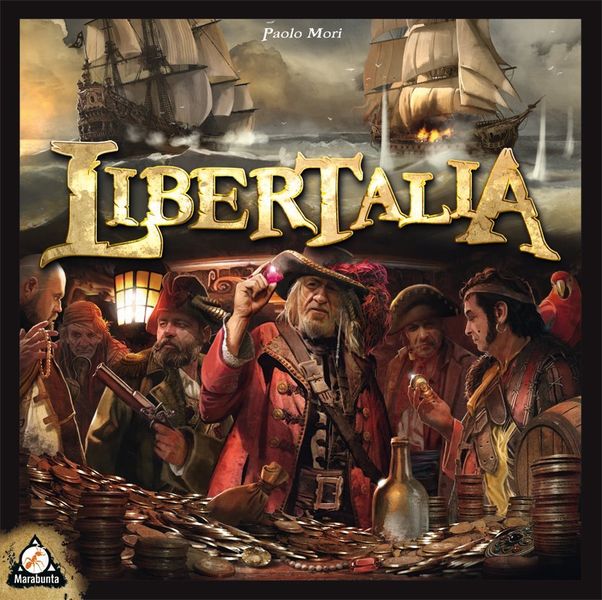
- Libertalia: Arghh me hearties! I reserve judgement until a second play.
- Nottingham: A new one to me and not to be confused with Sheriff of Nottingham. I can remember very little about it.
- Quantum: I always think it's an interesting design, and it's a good game to boot.
- Quartermaster General: My favourite game of the moment. I was Japan and my team won for the third time out of the three that I've played it, mainly by destroying the Soviet Union.
- Red7: Like it a lot.
- Roll for the Galaxy: A quicker version of Race for the Galaxy which I would recommend.
- Timeline: A much better welcome game than bloody Apples to Apples
- Undermining: A far better game than I thought that it was going to be. All to do with mining an asteroid, but plenty of opportunities to be nasty to the opposition, which I like.
Tuesday, 21 April 2015
Epicurism and Lust
And so to the theatre. I have always thought that Lear was the part that Barrie Rutter was born to play. So it was with much anticipation that I went to Northern Broadsides latest touring production. My hopes were completely vindicated although perhaps not in the way that I had expected. Rather than giving it both barrels, Rutter's performance is restrained and, dare one say it, dignified. Whilst I was initially somewhat disappointed by the lack of ham or fireworks I must admit that he and director Jonathan Miller (1), not unsurprisingly, knew better than me. The production is of high standard throughout, from Fine Time Fontayne's Fool, through the excellent nastiness of Regan and Goneril, to the campest of Oswalds, and indeed the rest of the cast.
I was accompanied by my elder daughter and, despite her being only twenty, this was the second time we had seen King Lear together, perhaps an indication of my cruelty to my children in the name of culture. On the previous occasion we had been to see it, with Tim Piggot-Smith giving us his take on the role, the lady sitting next to us died half way through the first act, at considerable inconvenience to all, except for those on stage who carried on regardless in the finest traditions of show business. This time nothing untoward happened, the empty seat to my left maybe indicating that someone had had the courtesy to pass away before setting off instead of spoiling the day for everyone else.
(1) Originally known of course for Beyond the Fringe alongside Peter Cook, Dudley Moore and Alan Bennett. Cook and Moore are sadly no longer with us, but thankfully Bennett is still around to keep Miller company.
 |
| He loves a hat |
I was accompanied by my elder daughter and, despite her being only twenty, this was the second time we had seen King Lear together, perhaps an indication of my cruelty to my children in the name of culture. On the previous occasion we had been to see it, with Tim Piggot-Smith giving us his take on the role, the lady sitting next to us died half way through the first act, at considerable inconvenience to all, except for those on stage who carried on regardless in the finest traditions of show business. This time nothing untoward happened, the empty seat to my left maybe indicating that someone had had the courtesy to pass away before setting off instead of spoiling the day for everyone else.
Sunday, 19 April 2015
Sabot bases
When I first came into contact with the surprisingly large number of wargamers based in Ilkley one thing that I couldn't understand was the propensity of some of them to constantly rebase their figures for different rulesets. I swore to myself that I wouldn't ever go down that route. No matter how idiosyncratically I'd structured my unit and element sizes new rules would just have to be twisted and tortured until they could somehow be made to work.
I was therefore delighted when I discovered C&C Napoleonics as they have allowed me to utilise my collection of very many, very small units of Russian, Prussian, French, Bavarian and other assorted nationalities without doing anything to the way that I had organised them many years ago: for example nine man infantry units on three 20mm x 40mm stands. It works very well and gives a good game. The main remaining problem (apart from calculating the line of sight on a board of offset squares) is the fiddly nature of the small bases, the time it takes to move them about and the incidental damage as they were being handled. I had been wondering whether perhaps they needed rebasing after all.
My Wars of the Roses figures however left me with a different problem. I had based the nobles, knights etc individually, mostly on pennies, but others on any old odd size that must have seemed a good idea at the time. The various rules that I have actually tried, or indeed would like to try at some point, all require leaders to be essentially just another stand. I therefore broke my rule and knocked up some temporary bases of the same size as a stand (40mm x 40mm), which held the leader and displayed his name, specifically for the battle commanders at Tewkesbury. I rather liked these and have therefore double broken the rule and made some permanent such stands for all sixty or so such captains that i have. The consequent dilemma was how to differentiate between battle commanders and unit captains now that I had, well, based them all the same again. Thus my last order from Warbases included some 60mm x 40mm sabot bases to allow higher level commanders to be identified by an attached stand of heralds. Unfortunately the heralds - of which I have an inexplicable dozen or so stands - were based on arbitrary sized scraps of card, because presumably I never really thought that I'd use them. I therefore triply broke my rule and rebased all of them on 20mm x 40mm bases.
It was only while admiring all this work that it occurred to me that the same sabot bases could serendipitously also be used for the Napoleonic infantry. So, a further order was placed and the C&C faffing about problem has been solved without rebasing dozens of units and hopefully they will be easier to handle without bending guns etc. Now, if only the line of sight issue were so amenable.
I was therefore delighted when I discovered C&C Napoleonics as they have allowed me to utilise my collection of very many, very small units of Russian, Prussian, French, Bavarian and other assorted nationalities without doing anything to the way that I had organised them many years ago: for example nine man infantry units on three 20mm x 40mm stands. It works very well and gives a good game. The main remaining problem (apart from calculating the line of sight on a board of offset squares) is the fiddly nature of the small bases, the time it takes to move them about and the incidental damage as they were being handled. I had been wondering whether perhaps they needed rebasing after all.
My Wars of the Roses figures however left me with a different problem. I had based the nobles, knights etc individually, mostly on pennies, but others on any old odd size that must have seemed a good idea at the time. The various rules that I have actually tried, or indeed would like to try at some point, all require leaders to be essentially just another stand. I therefore broke my rule and knocked up some temporary bases of the same size as a stand (40mm x 40mm), which held the leader and displayed his name, specifically for the battle commanders at Tewkesbury. I rather liked these and have therefore double broken the rule and made some permanent such stands for all sixty or so such captains that i have. The consequent dilemma was how to differentiate between battle commanders and unit captains now that I had, well, based them all the same again. Thus my last order from Warbases included some 60mm x 40mm sabot bases to allow higher level commanders to be identified by an attached stand of heralds. Unfortunately the heralds - of which I have an inexplicable dozen or so stands - were based on arbitrary sized scraps of card, because presumably I never really thought that I'd use them. I therefore triply broke my rule and rebased all of them on 20mm x 40mm bases.
It was only while admiring all this work that it occurred to me that the same sabot bases could serendipitously also be used for the Napoleonic infantry. So, a further order was placed and the C&C faffing about problem has been solved without rebasing dozens of units and hopefully they will be easier to handle without bending guns etc. Now, if only the line of sight issue were so amenable.
Saturday, 18 April 2015
I love a good bum on a woman, it makes my day
As no one has yet said: "work is the curse of the blogging classes". However, although the inconsideration of my clients has interfered with the pleasure of my readers, it hasn't stopped me doing stuff. And among the things I have been doing is to go and see Fake Thackray. John Watterson channelled Thackray during the songs and spoke amusingly and movingly about him in between; enhanced by the presence of a couple of people in the audience who had known the singer during his early years.
One small quibble - no turtleneck.
One small quibble - no turtleneck.
Sunday, 12 April 2015
The quack who's gone to the dogs
"Everyone knows rock attained perfection in 1974, it's a scientific fact." - Homer Simpson

I went to see Dr Bob and the Bluesmakers last night, a band who I hope so very much took their name from the character played by Rowlf on the Muppets that I am going to make no attempt to find out the truth.
Unsurprisingly they played the blues, and played them very well. A fairly classic lineup of two guitars, bass, drums and harmonica were fronted by a female vocalist noticeably younger than the rest of them. Their repertoire leaned heavily on Peter Green era Fleetwood Mac type stuff plus more soul/jazz standards such "I'd Rather Go Blind" and "Stormy Monday" which suited the lead singer's voice very well. They also performed their own compositions which sounded good, especially to those of us who believe that Homer had it right (1).
Among their encores was "Shake Your Hips", nominally a Slim Harpo cover, but actually heavily reliant on the Rolling Stones version of the song on Exile on Main Street; and none the worse for that.

I went to see Dr Bob and the Bluesmakers last night, a band who I hope so very much took their name from the character played by Rowlf on the Muppets that I am going to make no attempt to find out the truth.
 |
| "You're right, Fred is a terrible name for a hospital." |
Unsurprisingly they played the blues, and played them very well. A fairly classic lineup of two guitars, bass, drums and harmonica were fronted by a female vocalist noticeably younger than the rest of them. Their repertoire leaned heavily on Peter Green era Fleetwood Mac type stuff plus more soul/jazz standards such "I'd Rather Go Blind" and "Stormy Monday" which suited the lead singer's voice very well. They also performed their own compositions which sounded good, especially to those of us who believe that Homer had it right (1).
Among their encores was "Shake Your Hips", nominally a Slim Harpo cover, but actually heavily reliant on the Rolling Stones version of the song on Exile on Main Street; and none the worse for that.
Didn't move her head,
Didn't move her hands,
Didn't move her lips,
Just shook her hips.
Do the hip shake, babe,
Do the hip shake, babe,
Shake your hip, babe,
Shake your hip, babe,
Well ain't that easy.
Didn't move her hands,
Didn't move her lips,
Just shook her hips.
Do the hip shake, babe,
Do the hip shake, babe,
Shake your hip, babe,
Shake your hip, babe,
Well ain't that easy.
(1) astonishingly it is now virtually as long since the first broadcast of the episode of the Simpsons from which that quote was taken, as it was between then and 1974.
Friday, 10 April 2015
Milton Keynes Still Ain't Much of a Town
I have been back to Milton Keynes and, apart from the sun shining, it was much the same as when I left it. However there have been better times at the Casa Epictetus, some of which I feel in the mood to share.
I went to see 'Feast of Fiddles', whom I have reviewed here a couple of times. They remain rather fine, opening this time with the theme from Mission Impossible and covering the usual blend of folk, rock, jazz, and yet more film themes in their own style. I had suggested seeing them to someone and was relieved when she really liked them, because they are somewhat idiosyncratic. So, recommended, but with a caveat.

Only one boardgame was played and that was Bohnanza which is of course a card game. I hadn't played it for a long time had forgotten how much I liked it.
Wargaming took place in the annexe. James, or more accurately his wife Lucy, is hors de combat and so I took the French forces against Peter's Prussians in the Dennewitz scenario from the C&C Napoleonics Expansion 4. While setting it up I was struck by how lopsided it looked and having drawn the French I expected to lose. However, I won by dint of the usual route in this game; I managed to draw cards that were useful. In particular with small hand sizes there is limited scope for building a hand before launching a co-ordinated manoeuvre. It did highlight the importance of well placed artillery and the use of them in Combined Arms attacks.
I went to see 'Feast of Fiddles', whom I have reviewed here a couple of times. They remain rather fine, opening this time with the theme from Mission Impossible and covering the usual blend of folk, rock, jazz, and yet more film themes in their own style. I had suggested seeing them to someone and was relieved when she really liked them, because they are somewhat idiosyncratic. So, recommended, but with a caveat.
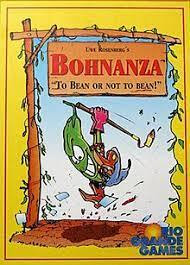
Only one boardgame was played and that was Bohnanza which is of course a card game. I hadn't played it for a long time had forgotten how much I liked it.
Wargaming took place in the annexe. James, or more accurately his wife Lucy, is hors de combat and so I took the French forces against Peter's Prussians in the Dennewitz scenario from the C&C Napoleonics Expansion 4. While setting it up I was struck by how lopsided it looked and having drawn the French I expected to lose. However, I won by dint of the usual route in this game; I managed to draw cards that were useful. In particular with small hand sizes there is limited scope for building a hand before launching a co-ordinated manoeuvre. It did highlight the importance of well placed artillery and the use of them in Combined Arms attacks.
Friday, 3 April 2015
Mckinley Morganfield
Today may, or just as likely may not, be the centenary of the birth of Muddy Waters.
Got a gypsy woman offering me advice
Got a gypsy woman offering me advice
Got a whole lot of tricks keeping her around
Ain't that the truth.
Uncle Seagull's Orchard
And so to the theatre. I have been to see the Reduced Shakespeare Company do the Complete History of Comedy. which whilst not as good as their Complete Works of Shakespeare was nonetheless full of funny moments.
Personal favourites included an Elizabethan Abbot and Costello routine and a number of variations on the chicken-crossing-the-road joke, including a Greek tragedy version and a take à la Samuel Beckett. However, for me at least, the high spot was the Chekhov sketch. Building on the fact that while Anton Pavlovich claimed to write comedy nobody else seems to find his plays amusing, they skewered him good and proper. For someone who recently suffered through Uncle Vanya those few minutes were sweet revenge.
 |
| A chap with a beard |
Personal favourites included an Elizabethan Abbot and Costello routine and a number of variations on the chicken-crossing-the-road joke, including a Greek tragedy version and a take à la Samuel Beckett. However, for me at least, the high spot was the Chekhov sketch. Building on the fact that while Anton Pavlovich claimed to write comedy nobody else seems to find his plays amusing, they skewered him good and proper. For someone who recently suffered through Uncle Vanya those few minutes were sweet revenge.
Wednesday, 1 April 2015
Pot39pouri
So, still no wargaming, although a largish and mixed order has gone off to Warbases. The games it's aimed at are:
Boardgaming resumed (by the way I still intend to dedicate a whole post to the whys and wherefores, but the world of boardgaming in Leeds has been riven by a schism every bit as deep as that of wargamers in Ilkley) with the usual wide range of games:
- trying Basic Impetus using the Celts and Romans that I have for the Pony Wars variant we played a few months ago.
- extending C&C Napoleonics to deploy more units on a wider battlefield
- differentiating between battle commanders and unit leaders in the Wars of the Roses
Boardgaming resumed (by the way I still intend to dedicate a whole post to the whys and wherefores, but the world of boardgaming in Leeds has been riven by a schism every bit as deep as that of wargamers in Ilkley) with the usual wide range of games:
- Kobayakawa: another excellent minimalist Japanese game. In fact it's so minimalist that once you know the rules - themselves, er, minimalist - one could play with a normal pack of cards (or even better 6 Nimmt!) and not need to buy it at all.
- Abluxxen: I like it, but still can't work out a strategy to follow.
- Mysterium: Cosa? Dove? Chi? Still don't like it.
- The Three Musketeers: I was the cardinal and was given the runabout by the musketeers. I'd like to play it more often.
- Hanabi: Much discussion of conventions - I think I'm against - and a solid 20.
- Fidelitas: A new one on me which I'd like to play again now I understand it. I didn't win because I couldn't count to nine.
Saturday, 28 March 2015
Milton Keynes ain't much of a town
And it hasn't been much of a week here at the Casa Epictetus, with no wargaming and no boardgaming. I have been both to Milton Keynes and to Birmingham Airport, but can think of nothing interesting to say about either. So instead, let's take a look at Janita's belly button.
She really did used to dance like that on stage. Happy days.
She really did used to dance like that on stage. Happy days.
Saturday, 21 March 2015
Pass it on
And so to the theatre. I have been to a very fine performance of 'The History Boys', written of course by the thankfully-still-with-us Alan Bennett. I've seen the play in the theatre before, as well as having watched the film, and admire it for many reasons. Its ability to transcend being set in the 1980s without any references to that decade - indeed with all the detail about Oxbridge entrance being well out of date even at that time - and still not annoy even the most pedantic members of the audience (i.e. me) shows how dramatically strong it is. Plus it addresses the value or otherwise of the various ways of engaging with culture. Does one allow it inside oneself, to change one as an individual slowly over time, or does one simply acquire 'gobbets' to be regurgitated to impress?
Salvador Dali disparaged the performing arts because of their ephemeral nature. It has been suggested that Bennett was in this play drawing a parallel between history and theatre; both existing only for a moment and then living on solely in the memories of those who witnessed it and what they pass on to others. I think that, in its own small way, wargaming is also like that. I shall in future classify my opponents into the Lintott-like sticklers for fact, the Irwin-like cynical win-at-all-cost types and, my own clear preference, the poetic Hectors (minus the ball-cradling obviously).
There has been some comment on your bloggist's tendency to include passages and quotations in foreign languages, and his possible motivations for so doing (*). The History Boys contains a longish scene early in the first act which is entirely in French. Bennett clearly sees no need to translate or explain and it didn't seem to affect the enjoyment of the audience last night. Discuss.

 |
| Not dead yet |
Salvador Dali disparaged the performing arts because of their ephemeral nature. It has been suggested that Bennett was in this play drawing a parallel between history and theatre; both existing only for a moment and then living on solely in the memories of those who witnessed it and what they pass on to others. I think that, in its own small way, wargaming is also like that. I shall in future classify my opponents into the Lintott-like sticklers for fact, the Irwin-like cynical win-at-all-cost types and, my own clear preference, the poetic Hectors (minus the ball-cradling obviously).
 |
| A dog in a hat |
There has been some comment on your bloggist's tendency to include passages and quotations in foreign languages, and his possible motivations for so doing (*). The History Boys contains a longish scene early in the first act which is entirely in French. Bennett clearly sees no need to translate or explain and it didn't seem to affect the enjoyment of the audience last night. Discuss.

(*) For once Monsieur Fwa is incorrect; I don't do it to annoy. I do it because I am a superficial pseudo-intellectual regurgitating my gobbets.
Friday, 20 March 2015
Großbeeren
"Ein Optimist ist ein Mensch, der ein Dutzend Austern bestellt, in der Hoffnung, sie mit der Perle, die er darin findet, bezahlen zu können." - Theodore Fontane


But that's enough about the budget. And the solar eclipse was just as bad. It's tough being a blogger sometimes. I have just received a very nice compliment from this blog's faithful though irregular reader in Luxembourg. If only he knew the struggle I go through. Within the last few weeks there was a period where so little happened that I had to resort to writing about the wok that I bought for £1.50. And as a digression I have to say that the non-stick coating on that wok has turned out to be not of the highest quality. But today I am so replete with things to write about I don't even have to mention the disaster that I just had with a jar of pickled onions.

Tuesday, 17 March 2015
Tales of old Dartmoor
That's an obscure title for a blog posting even by my standards. Hercules Grytpype-Thynne would understand. In any event I feel the urge for a boardgame round-up.
Cuthulhu Fluxx: Fluxx is a game that's fascinating the first couple of times that you play it and then gets dreary. I don't understand fantasy in general or H.P. Lovecraft in particular. Enough said.
Trains: This is a bit like Dominion with a board and with, well, trains. I'm not a particular fan of deck-builders, but this was as good as any I've played.
Eight Minute Empire: It actually lasted about twenty minutes, but it provided a good game for five of us. I'd play it again.
One Minute Unltimate Werewolf Daybreak: Which is the same old stuff, but with extra chrome (Alpha Wolf, Paranormal Investigator). Someone had brought in a loudspeaker to play their smartphone through. Strangely this didn't make it any better.
6 nimmt!: I like this, and don't understand why people think it's random; they're just not playing it properly.
Rococo: A nice game with all sorts of mechanics that mesh together well. My only quibble is that it is very difficult to work out who's winning whilst playing. It's about dressmaking and - please remember that logic doesn't always apply in these circumstances - I won essentially by making the most dresses.
Skull: Another game that I like. My logic was impeccable on every turn and yet somehow I failed to call people's bluff correctly. I'm not sure how that works.
R-Eco: We played this with the same rules (the correct rules?) for the second time running and it's growing on me. If you do try it then bear in mind that it's a very low scoring game when making decisions.
The Secret of Monte Cristo: Firstly this game has some lovely components - the marbles and the jewel value markers - and some really tatty ones - especially the jewel placement markers. Any heaviness in this game comes from placing one's marble after the end of one's turn, but my impression was that the number of possible outcomes makes it all so complex as to actually be far more luck than skill. It does however have my new favourite feature: in-game scoring on a track with a clear victory target. By the way, the game has nothing whatever to do with the story in the book.
It is also some time since I posted a photo of me on top of Haw Pike surrounded by women of a certain age. So here goes.
Cuthulhu Fluxx: Fluxx is a game that's fascinating the first couple of times that you play it and then gets dreary. I don't understand fantasy in general or H.P. Lovecraft in particular. Enough said.
Trains: This is a bit like Dominion with a board and with, well, trains. I'm not a particular fan of deck-builders, but this was as good as any I've played.
Eight Minute Empire: It actually lasted about twenty minutes, but it provided a good game for five of us. I'd play it again.
One Minute Unltimate Werewolf Daybreak: Which is the same old stuff, but with extra chrome (Alpha Wolf, Paranormal Investigator). Someone had brought in a loudspeaker to play their smartphone through. Strangely this didn't make it any better.
6 nimmt!: I like this, and don't understand why people think it's random; they're just not playing it properly.
Rococo: A nice game with all sorts of mechanics that mesh together well. My only quibble is that it is very difficult to work out who's winning whilst playing. It's about dressmaking and - please remember that logic doesn't always apply in these circumstances - I won essentially by making the most dresses.
Skull: Another game that I like. My logic was impeccable on every turn and yet somehow I failed to call people's bluff correctly. I'm not sure how that works.
R-Eco: We played this with the same rules (the correct rules?) for the second time running and it's growing on me. If you do try it then bear in mind that it's a very low scoring game when making decisions.
The Secret of Monte Cristo: Firstly this game has some lovely components - the marbles and the jewel value markers - and some really tatty ones - especially the jewel placement markers. Any heaviness in this game comes from placing one's marble after the end of one's turn, but my impression was that the number of possible outcomes makes it all so complex as to actually be far more luck than skill. It does however have my new favourite feature: in-game scoring on a track with a clear victory target. By the way, the game has nothing whatever to do with the story in the book.
It is also some time since I posted a photo of me on top of Haw Pike surrounded by women of a certain age. So here goes.
 |
| I'm a little teapot |
Subscribe to:
Posts (Atom)