I shall be using Lion Rampant rules for the siege game on the table for no better reason than they're what the article in MW is written around. I have forgotten pretty much everything I ever knew about LR, so thought it worth listing what I think I remember before reading them again. Apart from anything else it's an entry for the most pointless rules review ever. What I am describing is the first edition and the second edition is being published literally next Thursday. So, please ignore what follows.
Haven't got it
I don't think I bought the first edition, I'm pretty sure James passed them onto me having received them from Osprey in return for doing something or other. We had a couple of games and my memory tells me that most of the problems were self inflicted. There was no particular issue with using figures grouped on stands rather than single bases, or with the bookkeeping side of the game. I vaguely recall quite liking the combat resolution element, but I seem to remember being dissatisfied overall because:
The playing area was too big. The book suggest 6ft x 4ft, but says smaller would work. My table is 2.5m x 1.5m, we used essentially the whole thing, but everything was too far apart and it took far too long for anything to happen. There's an activation mechanism which provides a nice fog of war, but also slows things down on its own without adding in an oversize table as well. For this game I shall use 120cm x 90cm.
There wasn't enough terrain on the table. As I digression I've always found it a bit of a paradox that the larger the scale of the combat being modelled the more the terrain is abstracted away and the table bare, while for smaller scales the opposite is true. Basically, I ignored my own rule of thumb, left big open spaces and it was all very uninteresting. So, put more stuff out this time.
The 3" rule. There is a strict prohibition on units coming with 3" of each other, which we followed to the letter and which was a monumental pain in the arse without seeming to have any upside to compensate. Subsequently I saw a group playing the rules at a show and they ignored this rule totally, and, who'd have guessed, nothing bad happened. This rule is in the bin.
There you go, a list of the things I probably did wrong, but possibly may not have, quite a few years ago with a set of rules that have been updated since anyway. This blog remains at the cutting edge.
Having bigged up the 'Lion Rampart' article in the July Miniature Wargames I do have a slight complaint: it was a tad vague on one detail. "Surely not," I hear you cry "wargames rules that are ambiguous? Say it ain't so!". The issue relates to what I see as the key difficulty with gaming a siege on the tabletop, namely that sieges are clearly campaigns. They go on for a long period, with happenings in slow time punctuated by happenings in quick time. If one wishes to get all one's toys out on display - and what else are they for? - then one ends up with the table being the map and the map being the table.
This typically means that the slow-time stuff works fine, but there is a problem when we need to move to the quick-time stuff, typically assaults and sallies. The 'Vauban's War' answer to this is to pretend there isn't a difference and that one can just switch to a tactical ruleset and carry on. This was so obviously bollocks that we didn't even try it. Instead I quickly knocked up an abstract high-level set using C&C dice, but they haven't been used to date because in our playtests everyone seemed to prefer the grind of bombardment and starvation. I think that the answer to this dilemma which has been decided on by the author of 'Lion Rampart' is to admit defeat and put the toys back in the cupboard. A lot of action will be pen and paper until there's a need to set terrain up, get the little men out and play a scenario. I say that's what I think because it would seem implicit, but he never actually comes out and says it.
It all makes sense, but I rather like the look of how my home made town and castle all looks and want to leave it set up to be admired, although admittedly only by me and the window cleaner. So, I've chosen to go for two 'tables' side-by-side. The first is the town and is the one on which the final assault (*) will be fought; the other is a space on which scenery will be set up and taken down to fight out the smaller actions along the way. I think this is not only aesthetically pleasing, but actually beneficial based on what I remember of how 'Lion Rampant' plays in practice. More of this in due course.
* And one thing I really like about these siege rules is that there will definitely be a final assault come what may.
Last year we played some horse and musket siege games in the annexe using 'Vauban's Wars'. It was the publication of those which had led me to laser cut a fortress and take up resin casting in order to make some saps. That was all a bit of a digression from what I was previously doing, which was using the laser cutter to make myself a modular castle and some town walls. That in turn had been driven to some extent by having owned models of medieval siege equipment for years and never really having got them on to the table.
My attention was therefore caught by an article by David Hiscocks in the July issue of Miniature Wargames entitled Lion Rampart, described as a siege campaign for Osprey's 'Lion Rampant' rules. I had briefly thought about trying to rejig VW for an earlier period, but had abandoned the idea as those rules are definitely written for the age of a structured and scientific approach to siege warfare. However, having read and played them was good background to reading this article because I could see how he was attacking the same challenge, but had come up with a very different approach. I was sufficiently impressed to think about trying it out. I've had a bit of a play around and have come up with the following:
I'll do another post as to how I ended up with that layout and what the marked off area is all about. Note that the sun is still shining in West Yorkshire despite it being late July.
Don't enquire too closely into the period or the place; let's just say late medieval, somewhere in Western Europe.
We played the second half of our initial Soldiers of Napoleon game last night. I don't own a copy of the rules, but both James and Mark do. When I arrived they were both observing that they had re-read them since the previous Wednesday and were engaging in mutual congratulations as to how we had got absolutely everything correct despite it being the first game. Now, one doesn't have to be as big a cynic as me to realise that this was all a bit of a hostage to fortune. Inevitably enough, a series of errors became steadily apparent throughout the evening: saving throws against artillery (there aren't any), what happens when you fail to pass a morale test to charge home (you fire instead, which I rather liked without being able to justify it thematically), the way reserves arrive (not intuitive at all, but makes sense once we'd bothered to read it), and too many others to mention. In the end we called it a draw and decided to start again next week. Mark and I had nearly won by then by throwing everything into a cheesy attempt to achieve one of our hidden objective cards and accept that quite a few units would evaporate in the process. It came down to the need to throw a 4,5 or 6. I threw a 2.
James wondered whether the rules had been written around how the playtesting group played the game rather than it being fully thought through as to how anyone picking them up cold would do it, which I thought was quite astute. But, having said that, we all changed our approach over the two evenings and no doubt will do so even more next week. We're going to try the big battle rules - main difference apparently being that each player has their own hand of cards - and use a larger playing area. I hope we drop the 'How Goes the Day?' bit, because it's pants; not the idea as such, just the manifestation of it.
I have stayed away from commenting on the current Tory leadership contest because it's obvious they're all headbangers without me having to point it out. However I do need to draw your attention to a letter in the Yorkshire Post earlier this week which declared: "Rishi Sunak should not be allowed to stand for Conservative Party leader because he wears Norman Wisdom suits".
"The public rightly expect government to be conducted properly, competently and seriously."
I get free access online to the Yorkshire Post through membership of The Leeds Library. Perhaps more surprisingly membership also allows me to read Miniature Wargames for nothing. An article in the July edition has unexpectedly led to a burst of activity in the wargames annexe. I hope to post about it here soon.
And I'm not talking about the weather which, at nineteen degrees and raining, is about par for high summer in a normal year in the lower Wharfe valley. Last night there was a full turnout in the legendary wargames room: Peter (*), James (**), Mark (***) and me. We had a first game of 'Soldiers of Napoleon', a new set of rules which are creating a bit of a buzz.
And the verdict: they were all right. I got the impression that the others were more enthusiastic than I was, but it all has to be interpreted in the context of us almost certainly not playing them correctly on this first occasion. I like a card driven game, so that aspect was good. It uses a system whereby each card can be used in a variety of ways, but only one can be chosen each time you play it. It's a very common mechanism in boardgaming, but I'm not sure whether I've ever come across it in wargaming before. I also quite liked the relatively simple idea it uses to encourage one to switch successive activations from one command to another. Combat resolution seemed very bland and I was bemused by artillery being so underpowered and vulnerable on a Naploeonic battlefield. The biggest disappointment was the much vaunted 'How goes the day?' concept of one playing a small section of a larger battle with what happens elsewhere affecting what's happening in your sector. All it actually amounts to is rolling dice every turn and the winner getting some victory points.
We shall carry on next week, with the biggest challenge being to stop James introducing house rules before we've even finished the first game.
* Who I'm very pleased to say looked well after an unavoidable absence.
** Who seemed a bit out of sorts; perhaps it was the heat.
*** Who was wearing shorts. I know one can't expect everyone to live up to my standards - I always wargame in a tie and sleeveless sweater - but really!
I like getting questions about blog postings, despite them usually being along the lines of "Why do you bother?" or "I suppose you think you're funny?". I am glad to say that I have received one which is marginally more constructive, an observant reader asking why I spelled 'gaily' as 'gayly' in the title of the previous post. Don't blame me, blame Sir Walter Scott. The quote comes from his narrative poem 'The Lady of the Lake'. I haven't read it - Scott is one of those authors who I firmly intend to read when the time is right, but as to when that time might be I can't say - but I have just been to a performance of Rossini's 'La donna del lago'.
The lady and, believe it or not, the lake
I'd never seen it before, and have read various theories as to why it isn't put on more often: either the staging and set requirements are too demanding or it's difficult to assemble the combination of voices needed seem to be the favourites. This production was a bit odd, but the music and singing was excellent and I enjoyed it thoroughly.
The oddities included archaeologists and museums, neither of which appear to feature in Scott's original and no kilts or tartan, both of which certainly (*) did. The driver of the plot is the apparent real-life tendency of James V to wander around in disguise. He was, of course, the father of Mary Queen of Scots, but if you can guess 16th century from the pictures then you're doing better than me. The chap on the chair is the baddie, who bears the fine Scottish name of Rodrigo, and as whom John Irvin stole the show, brilliantly portraying the character's MacHeath-like psychopathic tendencies. The eponymous lady was wonderfully sung by Máire Flavin, whose Violetta for Opera North this autumn I am very much looking forward to.
* For 'certainly' read 'probably'; hard to know for sure without putting in the effort of actually reading it.
I've been away again, this time to here amongst other places:
I may write about my experiences if the next few days are as doubleplus scorchio as we are being promised, meaning that I have to skulk indoors to keep cool.
In the meantime, here is my old mate Robb Johnson with his view of recent events:
I am motivated to put finger to keyboard by James having done the same. His report on last week's game is here. He draws attention to the luck inherent in the scenario having rather swamped the luck inherent in the game. However, he was also spot on in saying that it was a good and entertaining evening. Fortune swung backwards and forwards and I wasn't that far off winning before anybody's reserves had turned up.
In fairness though, that last bit is actually a negative. Having broken the British cavalry division with my own cavalry charge (basically by dint of good dice rolls), I only had to break one more division to win. One of the infantry divisions attacking the town hadn't started with much morale and so, once it was clear I was going to lose the town anyway, I made an assault which, had it succeeded, would have won me the game. My estimate was that I only had about a twenty five percent chance of success, but as I know that I have mentioned before, the morale rules currently being used in the Peninsular games do very much encourage cheesy play.
Anyway, I probably deserved to lose because I tried to - and indeed did - capture both objectives, but in doing so left myself so stretched that I couldn't realistically have hoped to hold either for the remainder of the eight turns required. We're having another crack this week with a revised scenario and slightly altered terrain. I've been offered my choice of sides. I think I might stick with the French and try a more measured strategy; or will I?
I've been away on a bit of a road trip, including to this place:
I haven't got anything much to report, I'm just trying to get back in the habit of posting. There's a game tomorrow; details over at James's blog.
I have had a little play around with the Peter Pig Mexican Revolution figures that I bought recently. Were I to buy any more - which of course I won't - I am leaning towards basing them singly and using sabot bases to allow the playing of different sets of rules (*). I bought 15mm figures because PP do a complete range, but wonder if they are a bit small to be based in that way. Here's where I am at the moment:
* And I do have rather a few sets which could be tried out, hypothetically.
beloved sensation, return and take me - when the memory of the body awakens, and old desire runs again through the blood; when the lips and the skin remember, and the hands feel as if they touch again.
Return often and take me at night, when the lips and the skin remember...
It's been a while since wargaming featured here, but there has been a bit going on in the background. Mark and I had a run through of Friedland in the annexe using C&C, but came nowhere near finishing, which was a bit disconcerting as the ability to play a game in an evening has always been a big attraction to me. I don't think we were playing particularly slowly; just an effect of having lots of troops on the table perhaps. Before setting the game up I had a vague idea of the strategic significance of the battle, but couldn't have told you any of the tactical detail. Having read some background it reminded my why I started tweaking the victory conditions on official C&C scenarios. Historically the Russians were trying to evacuate across a river, but don't get any victory points for doing so, only for destroying enemy units.
Speaking of rivers, the next game I played in was a couple of weeks later in the legendary wargames room of James 'Olicanalad' Roach was set in the Peninsula and featured a British attempt to deny a bridge to an advancing French force. You can just see the bridge at the top of the photo. The French collapsed rather quickly, and in the after game debrief there some tentative suggestions that the scenario would have been better if they had a bit more morale. When we met again the following week for another peninsula game James admitted that he'd cocked the calculation up and the French should have had twice as much morale; proving I suppose that sometimes one's instincts are correct.
The new game, which took place over the last couple of weeks, proved to be the best of the three, despite me as the French losing to a tag team of British commanders in Peter the first week and Mark the second. If I could summarise James's intention in developing a Piquet variant specific to the Peninsula, it isn't especially to recreate history. You will recall that, by and large, British lines always beat French columns. Instead it is to make an enjoyable game in which the French, using columns, can sometimes close with and overwhelm British lines, but will sometimes be repelled by firepower. The rules have a lot of moving parts which all need to gel together, but if I was going to pick one change which occurred over the time we have been working on them, and which appears to have helped, it would be the handling of skirmishers. When we started we kept trying to make skirmishers do what they did - or what we thought they did - historically. Where we have ended up is using them in an essentially abstract way to make it easier for troops that have them to move up to charge range. It all comes back to whether one is striving for a historical simulation or an enjoyable game.
Lastly, you are all no doubt wondering how I am getting on painting the packs of Peter Pig Mexican Revolution figures I bought some weeks ago. Well, in the way these things always work out, such limited painting as I have been doing has been of some Kennington Grenadiers à Cheval.
Just over a year ago I reviewed Dr Tom Lewis's 'Medieval Military Combat' and so too, albeit in a more dismissive fashion, did Graham Evans over at 'Wargaming for Grown-ups'. In Volume XXXII of The Ricardian, journal of the Richard III Society and hot off the presses, is another review. This one is by Peter Hammond, Research Officer of the society, and author of many books on the period himself.
He is of much the same mind as me on Lewis's tome. His concluding paragraph reads:
"This book is an interesting mixture. As described it contains some interesting practical points which are not usually discussed. It is not well written, being badly organized but it is worth reading for the discussion of battle aspects not often covered. Unfortunately there are very few illustrations, all in black and white and very badly reproduced and the index is poor."
And so to the opera. For some reason this blog has been neglecting its self-ordained role of bringing reviews of the most life-affirming of the arts to wargamers who don't give a toss. Half a dozen operas have passed without comment this year (plus this one which snuck in somehow), but Parsifal is going to get the treatment, not least because it lasted five hours.
Musically, it was wonderful. Five hours seems a long time (*), but as with other Wagner operas that I have seen it actually goes very quickly, especially if one takes the sensible option of just surrendering to it without constantly trying to estimate when the the next interval is. Plus of course, taking the other sensible option of going to the toilet first. As with Ian McKellen's 'King Lear' I think one should say to oneself that if those on the stage can stick it out then so can I.
The semi-staged concert production was striking, with the orchestra - on top form - present on stage, but not able to be seen clearly because of a slightly opaque curtain between them and the singers and bright lights shining from the back. The singers were uniformly excellent, although I would pick out Katerina Karnéus as Kundry for special mention. Kundry, incidentally, undergoes almost as big a change between acts as Puccini's Mimi.
But what is it all about? Good question; buggered if I know. Superficially, it's about the Grail legend Parsifal being the German version of Percival. I have seen it suggested that Wagner had convinced himself that the word was related to the Parsees of India, which seems odd because they are Zoroastrians, and this is overtly Christian, albeit layered with even more mumbo-jumbo than normal. It could be about compassion, but the characters spend more time placing curses on each other than one would expect from truly compassionate people (**). It's possible that there is some connection being drawn between castration and celibacy - this is before Freud of course - or perhaps it's a commentary on the risks men run from women who may emasculate them, Kundry again; she really is the most interesting character involved.
The programme went to great lengths to say that if one didn't know that Wagner was anti-semitic then one couldn't deuce it from the libretto. Maybe not, but equally one can see why in later decades sinister types would seize on operas about groups of uniformed Aryans with unresolved homoerotic tensions whose destiny can only be fulfilled on the arrival of a charismatic leader.
* Probably because it is
** In particular the question of who had originally placed the curse on Kundry confused me enormously. If anyone knows, please leave it in the comments.
"A strong woman is a woman determined to do something others are determined not be done"
- Marge Piercy
Yesterday's post ended with a reference to Catherine of Aragon and - is it planned? is it coincidence? - it was that queen, as portrayed by Bea Segura, who stole the show in 'Henry VIII' at the Globe a couple of weeks ago. In fact the Spanish actress was the only good thing about it, it being all too clear why no one ever puts on this collaboration between Shakespeare and John Fletcher. I'd certainly never seen it before and couldn't have told you anything about it beyond the fact that it was an accident with a cannon on the opening night that led to the burning down of the original Globe. This production gave a co-writing credit to Hannah Khalil who had been tasked with making it focussed more on the female characters. She did this by importing lines from other plays and poetry by Shakespeare and giving them to Catherine, Princess Mary and Ann Bullen (sic). I'm not entirely sure it worked, because hearing Mary speak lines which one knew really belonged to Lear just made me wish I was watching that play instead. Anyway, Segura was great as a woman determined not to be pushed aside for the convenience of others and it was good to be back in the Globe again after it had been forced to close by the plague.
Much better was 'The Corn Is Green' at the National Theatre, although as it cost literally a dozen times as much to watch then so it should have been. This semi-autobiographical piece by Emlyn Williams about a poor child from a Welsh-speaking mining community being mentored by an inspirational teacher and eventually winning a scholarship to Oxford, was heart-warming without being sickly sweet. Even a stage full of miners, faces blacked with coal dust and singing hymns, seemed to work in context. Nicola Walker as Miss Moffat, overcoming the class and gender prejudices ranged against her, was excellent. The evening also provided something I'd never seen before when the backstage machinery to bring the set on for the second half malfunctioned, and so the actors simply performed with a third of the stage bare. The show must go on.
The third really good performance of a strong woman that I have seen recently was that of Bettrys Jones, as Ellen Wilkinson, in Caroline Bird's 'Red Ellen'. Wilkinson was the only female Labour MP elected in the October 1924 election, served in the wartime coalition government and was the second ever female cabinet member as Minister for Education under Attlee, before her untimely death in 1947. There's a lot to fit in, from the Jarrow March to the Spanish Civil War, and the staging if pacey, with lots of set and costume changes occurring before our eyes. A host of supporting characters are played by the small cast - including Einstein, Hemingway, Churchill and Herbert Morrison - but the focus is always on Ellen herself, who is never offstage.
As the programme says: forever on the right side of history, forever on the wrong side of life.
I find that I didn't say everything I wanted to yesterday. I think I was distracted by listening to Test Match Special and wondering if there was an alternative timeline in which England were any good. Jonathan Agnew reported that after the first day's play he had been asked by the ICC's anti-corruption team whether he thought there was anything suspicious about the loss of so many England wickets in such a short time. He had given the only possible answer: "Haven't you been watching for the last two years?".
Anyway, what I wanted to mention was that I don't mind alternative history fiction, because it's, you know, fiction. I'm not talking about about time-travelling fantasy where someone goes back to the middle ages with a machine gun, but simply a novel set somewhere sometime where things have turned out differently. Robert Harris's 'Fatherland' would an example probably known to many readers (*), and a Nazi victory in the Second World War has spawned many others. The only one of these currently on my to-read list is Philip K. Dick's 'The Man In The High Castle'. However, this blog's recommendation in the genre is 'The Alteration' by Kingsley Amis.
The two main alternative path taken in the book is no Protestant Reformation, and therefore no Enlightenment and so scientific progress has been slowed and restricted. The Roman Catholic church now dominates a totalitarian Europe through what is a cross between the Inquisition and the Gestapo. The novel is set in the 1970s and a number of people prominent in that decade pop up in different guises, as do many historical figures. There are many allusions to familiar cultural artefacts in this different context, but perhaps the one to highlight is an alternative history book within a book: 'The Man In The High Castle' by Philip K. Dick in which Henry VIII has had a son by Catherine of Aragon.
* If, of course, the blog had many readers in the first place.
I am not particularly a fan of counterfactual history, but have been reading 'The Armchair General' by John Buckley.
The premise of the book is not so much what if things had happened differently, but more specifically what if allied commanders had made different decisions at various stages during the Second World War. The structure is that for each of eight scenarios the reader is presented with binary options, then for each of those routes there is another binary option and so on, leading to a small number of alternative situations. The author claims these to be 'plausible rather than fantastical' and that seems a reasonable description to me.
The reality is that readers will go back and take all the alternative paths anyway, so it ends up being not so much one counterfactual history as a group of possible outcomes collectively illustrating why and how choices were made. The areas covered are all of a strategic nature with Market Garden being the most operational.
I don't think there are any huge surprises in it, especially for the sort of person who reads wargaming blogs, but it's well put together and I found it an enjoyable read.
It's a long time since I did some boardgame reviews, and it's even longer since I combined them with a Ronnie Hawkins track. Let's start with the recently departed Hawk:
And on to the boardgames:
7 Wonders Duel: A two-player version of the original, which is equally good. It doesn't really work with one of my regular playmates whose Peace Studies degree - featured here once or twice in the past - precludes her from ever engaging with the military side of things, meaning she loses an awful lot of games by being conquered. It highlights what to me is an obvious practical flaw in being a pacifist, namely that one has rejected one potential solution before one even knows what the problem is.
Bargain Quest: This is a clunker. To start with it's about heroes fighting monsters, which is not really my sort of thing. But the twist is that the players don't even get to take the part of the heroes. Instead you play shopkeepers seeking to lure the fighting men into your shop to fit themselves out with armour, weapons etc. Who on earth thought this would be a good idea?
Carcassonne: Great game for two people, bit slow with more players. We only play with the Inns and Cathedrals expansion.
Cat Café: A roll-and-write game about cats and the ludicrous things that people buy for them. Probably best to visit a mad cat lady to orient yourself before you play it. Not a bad little game though.
Concept: This is a sort of cross between Codenames and Pictionary with no drawing involved. To my surprise I rather enjoyed it.
Cover Your Assets: I enjoyed this one as well, possibly because the winning strategy was obvious to me, but not apparently to everyone else, which meant I won with ease.
Fairy Tale Inn: Despite the theme and the spatial awareness part (it takes place on a kind of Connect Four vertical grid) I like this. It needs a wider variety of characters; given how many fairy tales there are, there should be plenty of scope. It's a two-player game.
Ganz schön clever: A very good roll-and-write game where you try to choose dice in such a way that they give you not just as high a score as possible, but also the best bonus combinations. It plays up to four, but I prefer it with two as you get to do more. The sequel Doppelt so clever is just as good, although I haven't yet cracked the best strategy for the blue dice in that one.
Half Truth: It's a trivia game, but one that caters for varying levels of confidence in one's answer. Not especially memorable though.
Jaipur: A two-player trading game, which is quite unusual in itself. It's an enjoyably tight game in which one has to choose one's moment to collect camels for fear of the next cards being drawn all being jewels.
Lost Cities: This is a cracking two-player card game, ostensibly about explorers' expeditions into the unknown, but actually a challenge to avoid throwing away something your opponent may want without clogging up your own hand with dead wood.
Patchwork: Another good two-player game. Get buttons into your design early is my advice.
Pit: Now here's a blast from the past, 1903 to be precise. I doubt that I had played it for fifty years. Still good fun in the right environment.
Power Grid: Excellent game. We played the China map and I won.
Qwinto: Das Kartenspiel: Not available in English - I think my copy is Dutch - it's a flip-and-write version of a dice game. Despite the cards only being laid out in a two by two matrix I struggle with the spatial awareness aspect. Pathetic really.
Qwirkle: I got this out to demonstrate it to a couple who were looking for a game to play with their 8 year old grandson. Given that they were completely bladdered when we did so I'm not sure how well they were able to judge it; your bloggist has become very censorious in the years since he last had a drink. For the record, I think it would be a good game to play with one's grandchildren.
Sagrada: A rather pretty game where you lay out coloured dice to imitate designing a stained glass window. The theme doesn't really carry forwards into the scoring, but it's all perfectly light and pleasant.
Shanghaien: As the name might suggest the theme is shanghaiing sailors in Shanghai. Neither the rules nor the scoring are that intuitive, but when you get the hang of them it's a good, thinky, two-player game. It's out of print though.
Splendor: This is the game I have played the most in recent months. It's not a gamers' game, indeed most serious gamers turn their nose up at it, but when playing with non-gamers it hits the spot. No real theme, but easy to pick up and with very tactile components. There are a variety of strategies and the winning one will inevitably be something your opponents are doing.
Spyfall: Not for me, but then social deduction games never are.
Startups: From Oink Games, this is a small but interesting game that was perfectly OK. You really have to put to one side anything you might know about the way that investment in start-up companies actually works.
Trek: Another old game, 1960 this time, but not one that I had played before; mountains not stars. We played with an original copy, with the rules printed in the lid and poorly moulded plastic pieces. It was inevitably unsophisticated, with a lot of 'take that', but also relatively short. I'd have another go in the unlikely event that I bumped into someone who owned it.
Targi: I think I might have mentioned before that this is my top recommendation for those seeking a two-player game. It's excellent.
Wingspan: One of the best-selling games of recent years. The gameplay is fine, although there isn't a great deal of player interaction, and it's certainly very nice to look at.
Zillionaires On Mars: I'm not generally a fan of auction games, mainly because no group of players ever seems to collectively judge values in a way that makes them work. Inflation on Mars seems even worse than on Earth and all bids are in zillions, which I'm not sure makes it any easier to pitch them at the right level.
I haven't forgotten my promise to document at tedious length my adventures in London, plus there's the 211th Otley Show to report on (*). However, I have been in the dentist's chair again and am feeling a bit bashed about.
While I'm here though, an update on BT. You may remember they gave me a couple of small, seemingly arbitrary amounts of compensation for a bit of a delay in upgrading my broadband. Well, they've now given me a third payment, and this time it's £619.92, thus moving from the slightly odd to the frankly ridiculous. That amount is more than I will pay during the whole of the duration of the contract whose implementation caused the problem in the first place. Sell your BT shares immediately, they have lost the plot.
* Spoiler alert: it was pretty much the same as the other 210. Still, it was good to be there again after the pandemic gap.
I have been absent. In my absence I have been away. Lots of culture was involved, so watch out for a long boring post about it all. In the meantime here's a photo of one very non-cultural site which previously featured on this blog here.
By coincidence I bumped into the same two characters as last time, looking even more grizzled as they came out of the tunnel than they had at the old White Hart Lane. It has to be acknowledged that it's now a very impressive stadium indeed, although it by no means resembles going to the match as I remember it. As if to prove the point we brunched along the Tottenham High Road on organic eggs benedict accompanied by designer sparkling water in an expensively pretentious bottle, the days of several pints and a kebab now being merely a distant memory.
It is a truth universally acknowledged that a wargamer in possession of more money than sense must be in want of a set of rules for a period for which he has no figures. I have, therefore, bought a copy of the newish Peter Pig rules 'Fighting for Mexico'.
They consist of 132 ring-bound, black and white pages within colour covers. There are a number of photographs, mainly showing examples of suggested unit basing, terrain types etc with only a couple appearing to illustrate points from the rules. A first read through gives the impression that they are easy enough to follow, and they do contain a number of snippets of the designer's thoughts. Peter Pig have a house style which involves those explanatory sections also being used to tell anyone who questions their decisions that they are wrong, which I have always found a bit irritating. The same could be said of their approach to editing and proofreading; pages 31 and 32 for example seem to me to contain exactly the same information repeated twice in pretty much the same words each time.
They are inevitably gridded - which is good - and I understand that the RFCM rules which these most resemble are PBI and SCW, but I've never read those so can't confirm that. They do have some resemblance to Square Bashing, and many of the differences appear, at first glance, to address things I don't quite like about that set. In particular they allow units to be spread over more than one square, which would sometimes make sense in SB, and for which I have seen house rules on other blogs. It does, however, worry me that units are going to be very difficult to tell apart from each other without some sort of elaborate base marking system. That is, of course, all moot because I don't game the period. While I was ordering the rules I did take the opportunity to buy a couple of packs from Peter Pig's extensive Mexican Revolution range, but that was just by way of a look see...
Life carries on here much as usual: BT have given me another seemingly arbitrarily precise compensation payment, £26.24 this time; another family of mice have appeared, necessitating more poison to be laid out; I have spent an inordinate amount of time in the dentist's chair due to problems with decades old crowns; and I have ordered another set of rules for the Mexican Revolution, despite it being a period which I never intend to game. I shall no doubt return to the last of those when they turn up.
I mentioned in a recent post that 'The Book of Mormon' contained songs on all sorts of potentially offensive subjects. I have now been to see the much more mainstream 'Sweeney Todd' - by the late, great Stephen Sondheim - and find that much of the lyrical content is about murder and cannibalism, so not offensive at all. It was very good though.
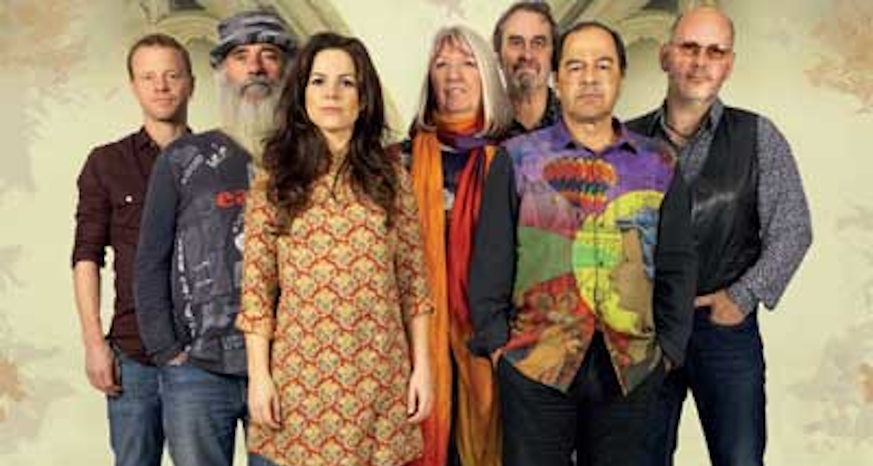
I've also been to see Steeleye Span's 50th anniversary tour. The band are, as Maddy Prior pointed out, a 'Ship of Theseus' with not many original members remaining. Indeed two of those in the official 2022 tour photograph above weren't there. Still, they were also very good. [Note to self: see if you can think of some more exciting descriptive words before writing your next review] Anyway, being folk music, the lyrical content was all a bit grim: cruel killings, seduction and abandonment of innocent maidens who then perish, hauntings by headless monsters etc. There seems to be a bit of theme developing here.
Musicians often refer on stage to others they have interacted with. Recently Nick Lowe spoke about Mavis Staples, which certainly impressed me. Maddy Prior out-namedropped them all by telling us what the Queen said to her, which was apparently: "Such jolly tunes". Still, if my ancestors had carried on in the same way as those of Her Maj, then I might also have a different threshold as to what constituted 'jolly'.
C&C Napoleonics returned to the annexe for the first time since September 3rd 2019. Could we remember the rules? What do you think?
At some point in the last few weeks we had another - and I suspect final for a while - crack at the ancient galley rules. Overall, I think everyone is happy with them. They give a quick, fun, decisive game with multiple players each controlling multiple ships and it all wrapping up in a couple of hours. If I had to search for negatives I would say that the situation where many ships end up locked together and resulting in a mass melee requires an application of wargamers' common sense to make it work. There's nothing wrong with that per se, but it will be difficult to write down and even harder to explain. I don't know if James intends to publish these, so perhaps that point is moot.
Anyway, back to C&C, which is another game that gives a quick, fun game, all over in an evening. We didn't do too badly with the rules really, our main problem being trying to keep track of all the national characteristics associated with the various units. Having said that, we also got the rules for cavalry vs square badly wrong, but it was the same for both sides. We had a go at the Laon epic scenario from the C&C Napoleonic website using the epic rules from expansion 6 and the tactics cards from expansion 5. I really like the latter in particular; they ensure that plans don't always work as intended and do it in a manner which appeals to me. The French won when the Old Guard stormed through the middle destroying everything in their path. The Prussians being a bit too feisty early on was their undoing. We shall have another go next week: Friedland I think.
Back in the day when I was of no fixed abode I occasionally explained my absence from these pages by pointing to a lack of broadband. That excuse hasn't been trotted out for a while, but one of the founding principles of this blog is that all topics will be recycled at some point. So, I haven't been here because my broadband hasn't been working.
My house is connected to Virgin cable, but another founding principle of this blog is that beardy Branson is a twat. All other fibre optic service providers are installed by BT Openreach, who have entertained me with six months of unlikely solutions to the challenge, ranging from closing the A659 completely for a couple of days while they dug a trench across it to installing my own personal telegraph pole in my garden. In the end they did what I would have done all along, namely replace the existing copper wire that was already there with a fibre optic one. At that point the existing service was turned off, and....nothing. However, a mere six days later the new system is at last up and running. It's a bit faster I suppose and I've now got one of those phones that won't work if there's a power cut; there's progress for you. I have also been given £10.08 compensation for the inconvenience caused; love the precision.
And so to the theatre. I have been to see 'The Book of Mormon', and laughed continuously from beginning to end. It's hilarious.
Is it also offensive? Oh yes, at least if you are the sort of person who is offended by songs about AIDS, paedophilia and female circumcision, all done with lots of swearing. But even if you're not then some of this stuff is so outrageous that no description by me will do it justice; it really needs to be seen to be believed. One review I saw said it was brilliantly conceived and superbly executed, and I would go along with that: 5 stars for sure.
The other question you will be asking: is it rude about the Mormons? Not particularly I would say. Individually they are portrayed as nice, well-meaning people and the tenets of their faith are laid out - admittedly in song and dance - for the audience to make up their own mind about. I shan't be giving it all a great deal of thought - Occam's Razor suggests there was an obvious reason why Joseph Smith refused to ever show anyone else the golden plates - despite the leaflet pressed into my hand by the Mormon missionaries waiting outside the theatre afterwards. But they were really nice and smiley, not like the angry evangelicals who picketed 'Jerry Springer: The Opera' when I saw that many years ago.
One final point, I only learned from research after seeing the show that there really was an African warlord called General Butt Naked.
Five or so years ago, before the galleys were put away, I think we had agreed that grids were the way to go, not least because it avoids all debate about who can ram/board/rake what and when. When the galleys once again emerged from the display cabinet last week, we picked it up where we left it: hex grids with ships occupying two hexes, principally I think because ships are longer than they are wide. Whilst last week's game was fun, there was I think a consensus that it wasn't quite right. If you look carefully at the picture below you can see that one change made was that ships are now back in one hex
.
The big difference that makes is to make turning easier, not so much for the models, but rather for the players trying to figure out how to get stuff from A to B. The whole thing was, to quote Peter, "slicker" and I'd go along with that. There were other changes, pretty much all of which seemed to work, and the traditional post-game discussion came up with potential solutions to the few that didn't. This is the type of game that needs to be played to a conclusion quickly. Grids help, the 'slicker' turning and moving help a bit more, and what would really top it off is if the ships sank or surrendered a bit sooner.
The initiative rules have ended up as somewhat of a hybrid between classic Piquet and its derivative, FoB. It includes, I think by chance, the latter's mechanism for potentially interrupting one side's long runs of initiative by a short burst of activity from the other side. I seem to remember that we've tried that combination before, and I was reminded last night of its merits. For what it's worth I vote for all 'Dress the Lines' to become 'Lulls'. While on that subject, the deck for 'Fleet of Battle' - that's what the rules are called - contains one card whose name is frankly impossible to pronounce, to the extent that I mentally think of it as the 'She Sells Seashells' card. I need some help from this chap:
I have once again had the opportunity to see live a musician whom I would love to have seen forty years ago, but for some reason didn't. This time it was Nick Lowe, or 'Nick Lowe, Nick Lowe' as he is known to anyone who listened too much to the 'Live Stiffs' album in the mid-seventies. He was every bit as good as I had expected and I don't think that's just the nostalgia talking. He performed songs from a number of his incarnations, with perhaps just a hint of bias towards those which lyrically resonate with his increasingly aging audience. This Johnny Cash influenced number for example:
And then for those of us who did indeed remember the brides when they used to rock and roll, there was this Chuck Berry homage:
But Lowe's songwriting skills run to more than mere pastiche. After he played the next song to a silent and reflective City Varieties, he expressed a wish for a world in which its message was no longer required:
I had been thinking for a while that one way of regaining my blogging mojo would be to revisit favourite themes from the past. The opportunity to do so was handed to me on a plate earlier today, when I returned home after my morning constitutional to find my spare bedroom on fire. The failure of smoke detectors to detect, well, smoke has featured here before in consideration of smouldering chariots, exploding laptop chargers and a number of others. However, damage was minimal and given that the whole episode would appear to be my fault, it's probably best to move swiftly on. Instead, I shall be looking to exploit the distinction of being the only wargames blog which reviews operas.
The plans of opera companies are fixed years in advance, and so it is entirely a coincidence that English Touring Opera are presenting Rimsky-Korsakov's 'The Golden Cockerel' at this time. The work is a satire on incompetence in war and on political corruption, first written in response to the debacle of the Russo-Japanese war and the resultant unrest in the streets, which Lenin referred to as 'the great dress rehearsal'. This could have been a 'cometh the hour, cometh the touring opera company' moment, in which art once again reflects and challenges real life. It isn't, and it doesn't, mainly because a focus on knock-about slapstick completely undermines any bite the anti-war message might have had. It is "all mirth and no matter", as Beatrice said. The director is also let down by a truly dreadful English translation of the libretto, whose sub-Gilbertian doggerel must have been really dated back the forties or fifties or whenever it was done. The original was based on a poem by Pushkin, who has presumably been turning in his grave for decades at the insult.
Sadly, despite having a fairy tale at its heart it just never managed to become magical. Having said all that, the music was good, as were the performances, especially Paula Sides as the Queen of Shemakha and Alys Mererdid Roberts as the eponymous fowl. The design placed it in the pre- Great War court of Nicolas and Alexandra, complete with Tsarevitch (two actually) and Rasputin-like astrologer. The striking design on the curtain in place between acts was apparently inspired by the Rayonists, themselves active in Moscow and St Petersburg during that period. "What can you tell us about the Rayonists?" you ask, and "Not much." I reply. According to Wikipedia they could be considered to be Cubo-Futurists, so I suggest that's how you think of them. It also rather tantalising says that in 1913 they started to paint their faces and published a manifesto entitled "Why We Paint Our Faces". What it fails to include is any reference to the contents of said publication, which is sad because, who knows, if their argument had been convincing enough I may have reached for the maquillage myself.
There was some galley action last night, more than five years after they last hit the table, or possibly just since they last hit the table while I was both there and bothered to write about them.
Mine are the three ships marked with a 6. The one on the left has rammed and sunk the wreck; the one in the centre has rammed its target to no effect, has lost its ram (that's the pink bead) and is entangled; the one on the right tried to rake its target, failed and is entangled. Believe it or not, this was the absolute high point for the Carthaginians. No sooner had our other squadrons of ships entered the fight than they were either boarded or rammed, or occasionally both. The rules? Well, they possibly need some work.
Having opened the book on Edward the Exile mentioned yesterday, I have inevitably been reading it. I'd forgotten how full it was of all sorts of interesting digressions - such as how the son of the Doge of Venice came to be King of Hungary - but it also has some sections which seem strangely relevant to the zeitgiest. For example:
"The democratic Kievan period upon which the Russians now look back with nostalgic yearning began with the coming of the Viking Varangians in the ninth century and ended in the holocaust of the Mongol invasion in the middle of the thirteenth century. Kiev's leading role was taken over by Moscow whose princes borrowed the tools of statecraft from the tyrannical Mongol system."
Concerns have been raised about whether all this snow that I referred to yesterday actually ever existed. Well, firstly, there was indeed a lot of snow, although it disappeared quite quickly. And, secondly, it is possible that readers have mistaken this blog for some sort of accurate historical record of what's going down. I, on the other hand, have always seen myself as the equivalent of a medieval chronicler.
"So, there was the Rev Ian Paisley and there was a giraffe"
"Readers liked to have a succession of bright incidents and adventures well seasoned with supernatural prognostications, but the reliability of facts did not concern them unduly. Chroniclers therefore paid more attention to amplifying their stories with anecdotes and strange occurrences than to the veracity of their sources. Closely reasoned argument, well-grounded facts and chronological cohesion did not suit an episodic style of narrative."
The lost king in the book, incidentally, is the son of Edmund Ironside, who had to flee along with his brother after their father was murdered by Canute. It's an interesting read, although the author's prose style is not particularly to my taste. It's also one of those irritating class of books which keeps telling the reader that is correcting a long-standing historical misapprehension which no one knew existed in the first place. I might have to re-read it now that I've dug it out. The bit that struck me most when I first read it was the assertion that when Thomas Moore wrote the story of the Princes in Tower - the ultimate source for Shakespeare - both he and his readers would have understood that he was merely rehashing the story of the æthelings and thus disparaging Richard III by comparing him to Canute. In the context of world events today, it is noteworthy that when the princes escape to the sanctuary of the Russian court (their maternal aunt being the wife of Grand Duke Yaroslav) the capital of that country is Kyiv.
Before the snow returned we managed to play some X-Wing. Playing it back-to-back with 'Jump Or Burn' was interesting rather than confusing. About the only things they have in common is that you use various lengths of cardboard when moving stuff, that they are good fun and they don't outstay their welcome.
The X-Wing ship/pilot combinations do seem unnecessarily complicated to me. My lack of knowledge of the films etc, means I can't be sure whether it's there to reflect the 'reality', or whether, just perhaps, it's there to prey on the gullibility of those who buy all those models, cards etc. Who can tell? The rebels won both games we played, or possibly it was the Empire; once again, who can tell?
Other wargaming activity has been limited to putting a bit more paint on the not very recent castings and taking another photo that looks awfully similar to the previous ones posted here. About half way through I think.
I'm finding it difficult to get any wargaming momentum going for some reason. Painting has slowly progressed on the new siege works resin castings. For undercoat and base coat I used those 120ml tubes of acrylic paint (orange and burnt umber respectively since you ask) that you can pick up cheaply in variety retailers . The shop I usually frequent in Otley is known by everyone as Captain Value, although they foolishly changed the name to something else a few years ago. One of the delays to the project was caused by running out of the brown when I had painted one end of all the pieces. As the replacement burnt umber was a different make and a completely different shade it all looks a bit odd now I've painted the other halves. Still, I am sure my dry brushing and blending skills will be up to the challenge.
Culture and boardgaming have been a bit more fruitful, and I may return to both. I must mention 'Nothing Happens (Twice)', which is out on tour at the moment and which I'd recommend. The title is a obviously a reference to 'Waiting for Godot', and the autobiographical piece covers the ultimately unsuccessful attempt by two young Spanish actresses to obtain the performance rights from the Beckett estate, via a stint dressed as flamingos in a shopping centre on behalf of the Andalusian tourist board. It's very entertaining and actually contains a largish slug of the original under the 'fair dealing' provisions of copyright.
I'm always on the look out for something spiritually uplifting, and so I have been listening to a three CD set entitled 'Drink Drugs Sex'. Picking out one of those CDs entirely at random, here's a track from the third one, Blind Boy Fuller with 'Sweet Honey Hole':


%20Bea%20Segura%20as%20Queen%20Katharine.jpg)