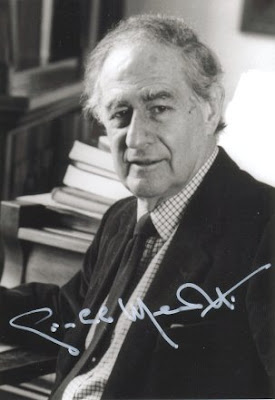
I have finished "Paddy Griffith's Game of War" and, as there was a question in the comments following my previous mention of it, I thought I'd do a review. Overall, it's an interesting enough read. I bought it on a whim and had no particular expectations. Anyone in the hobby of a similar age to me would surely be as diverted as I was by Griffith's recollections of well-known people whom he met, played against and fell out with. This wasn't originally written as a book, rather being a collection of various things, some intended for publication whilst others are private letters or merely working notes. It has all been curated by John Curry, who provides notes on the context where appropriate. It contains things like rules for games run by Griffith in a variety of places and of various sizes. I suppose it's nice that they are included, but they are actually rather dull to read. Perhaps the most telling section is the letter which he wrote following the recording of the refight of Waterloo done in 1997 for the television programme which gives the book its name. He clearly took it all very, very seriously. I do wonder what the programme makers thought when they read it.
I've embedded the video to save keen readers from having to search for it. I haven't watched it myself because the rules printed in the book turn out not to have been the one's used on the day, because judging by what he himself wrote Griffith made a pig's ear of umpiring the game, and because life is short and getting shorter.
Paddy Griffith moved away from games with figures and many of the games described in the book are more at the free kriegspiel end of the spectrum. I've never played any of those so can't comment really. He apparently tried and failed to get wargaming accepted by his employers at Sandhurst, where he lectured, as a valid learning experience. I've never been a soldier, I was a businessman (*). As such I attended, and received a postgraduate degree from, a business school. We played a business game, which sounds very similar to the sort of thing which Griffiths proposed: students in teams playing out a scenario, staff acting as umpires making decisions about outcomes supported by computer moderation. It was bloody useless and I learned nothing.
Having at some point decided that everyone else was wargaming the wrong way, he seemingly didn't hold back in telling them so (**). For example, there's one piece included here in which he comprehensively slags off competitive wargaming. I've never done that either, but I've known people who have and have very much enjoyed it. I'm really not sure what skin off Griffith's nose it is that they do so. Which I suppose brings me on to his polemic against gaming with figures. His argument goes: your ambition is to achieve a realistic simulation of war, and you can't do that with toy soldiers, especially if they are aesthetically pleasing to the eye. I may have missed out one or two steps in his logic, but that's the gist of it. My counterargument would be: my ambition is to play a fun game with nice looking toy soldiers in pleasant company, with any superficial resemblance to military history being the icing on the cake.
The best quote in the book doesn't come from Griffith himself, but from one of the other attendees at the conference at which Wargames Development was founded: "Most wargamers are stamp collectors playing at being postmen". I don't just acknowledge that description, I embrace it.
* OK, I was an accountant.
** He comes across as the sort of chap of whom a little would go a long way